

Palestinians in the West Bank are bracing for an escalation of the Israeli crackdown on their communities after armed Israeli settlers killed four Palestinians in the village of Til, southwest of Nablus in the northern West Bank, on Friday morning. The four Palestinians were executed in the field while they were defending their lands against a settler attack, during which an altercation between a settler and one of the village’s residents led to the death of the settler amid the onslaught on the village.
On Friday morning, a group of armed Israeli settlers had stormed a plot of land in Til and were confronted by local Palestinian villagers, who had rushed to the scene to defend against the settler incursion. A physical altercation ensued, during which a Palestinian grabbed the rifle of an Israeli settler and fired it, according to local reports and video footage, killing one Israeli. Israeli settlers then opened fire on the crowd of Palestinians, killing four and wounding at least seven others. A second Israeli was also killed during the incident, although it remains unclear whether he was killed by the Palestinian who fired the gun or by friendly fire.
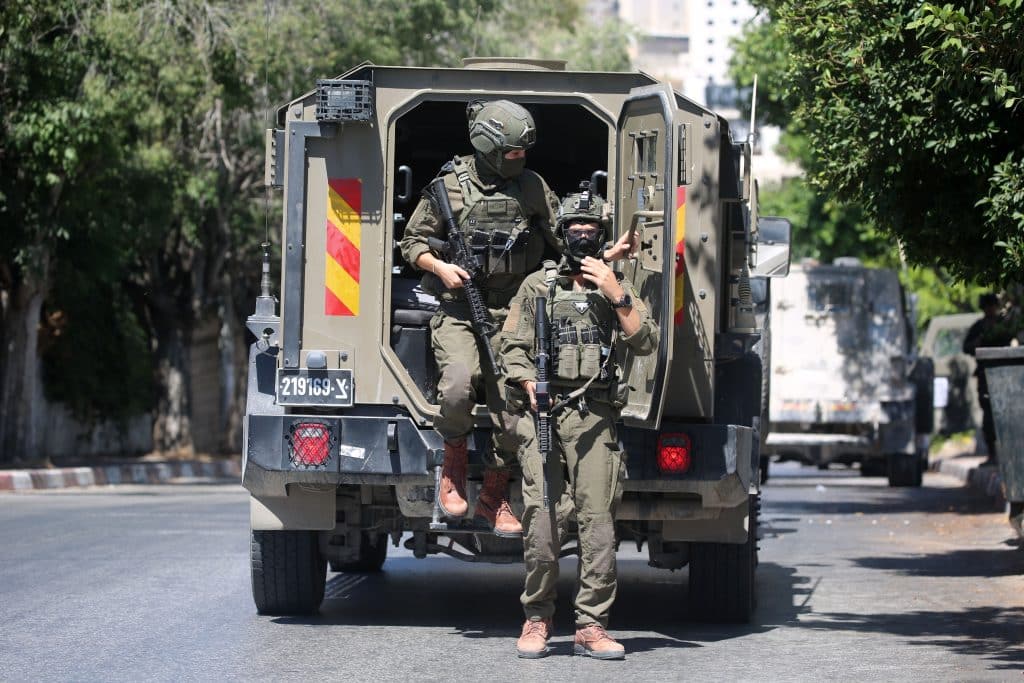
The incident sparked a wave of incitement that soon included Israeli politicians calling for large-scale military action across the entire West Bank. The Israeli army subsequently announced that it would conduct a wide-scale operation to arrest Palestinians involved in the incident. Israeli forces also sealed off the city of Nablus and its governorate, closing down surrounding roads, while settler groups went on a rampage against five Palestinian towns in the northern West Bank, torching property and opening fire at inhabitants.
Meanwhile, Israeli Prime Minister Benjamin Netanyahu held a special meeting with the Israeli army’s Chief of Staff, Eyal Zamir, and the Minister of Defense, Israel Katz, to determine next steps. In a joint statement following their meeting, Netanyahu and Katz said that they had ordered the army to demolish the home of the Palestinian who shot and killed the Israeli settler in Til, to confiscate all weapons in villages from which attacks against settlers emanate — without naming which villages — and to revoke working permits for all Palestinians who live in them. Katz and Netanyahu also stated that the Israeli government would move to legalize even more settler outposts across the West Bank.
Following the statement, the Israeli army announced the cancellation of weekend vacations for Israeli troops in the West Bank and that it had approved “offensive plans” across the territory.
The incident was promoted by the Israeli media, and later by Western mainstream media outlets, as a fatal Palestinian attack against Israeli hikers, which triggered widespread calls for reprisal. Israel’s National Security Minister, Itamar Ben-Gvir, said that “the cities and villages of [Palestinian] murderers in the West Bank must be treated like Beit Hanoun,” referring to the north Gaza town that the Israeli army completely leveled during the genocidal assault on the Strip. Ben-Gvir also said that “for every Jew killed, the enemy must lose houses and land.”
Israel’s hardline Finance Minister, Bezalel Smotrich, who holds vast powers over the West Bank as the head of the Civil Administration, said that “the villages of Til, Beit Furik, and Irak Burin must become like the refugee camps of Jenin and Tulkarem,” which the Israeli army completely displaced in February of last year, expelling at least 40,000 Palestinians from their homes.
What happened in Til?
According to Munther Shtayeh, the deputy mayor of Til, “there was no planned attack on Israeli settlers. Rather, settlers were attacking the villagers when the incident occurred.” Shtayeh pointed out that the village had been attacked in the past days, including an attempt by Israeli settlers to torch a house with a family inside it. “Villagers have been on the alert for any new attack, and that is why many young men were present at the edge of the village on Friday morning,” the deputy mayor told Mondoweiss. “That was when the armed settlers arrived, and after a standoff, things escalated, which led to the death of a settler, and then the settlers opened fire indiscriminately, killing four men from the village.”
Shtayeh pointed out that “the youngest of the victims was in his late twenties, and the oldest was in his early forties.” All had families and children, the deputy mayor added. According to the Palestinian Ministry of Health, the four victims were from the same family: Imran Ramadan, 37, Jawad Ramadan, 27, Ibrahim Ramadan, 32, and Farouq Ramadan, 41.
Shortly after the events, video footage circulated on social media showing a group of Palestinians and a group of Israeli settlers in a standoff with the presence of several Israeli soldiers. One Israeli, according to the footage, points a rifle towards a Palestinian, who snatches it from the settler. Shots are then heard, followed by more intense bouts of gunfire. Israeli media later reported that two Israelis were killed, one of them an army soldier, and said that during the incident, a Palestinian had grabbed a rifle from a settler security guard, confirming that it was not a planned attack. The Israeli army radio later said that an internal army investigation confirmed that the incident in Til was not a planned attack.
The aftermath
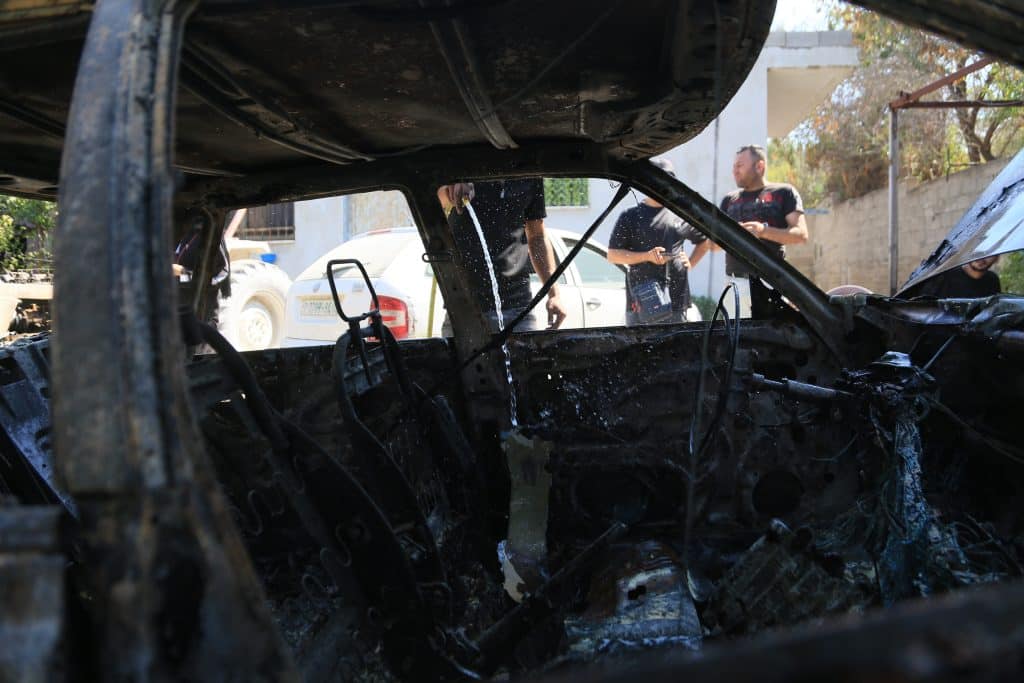
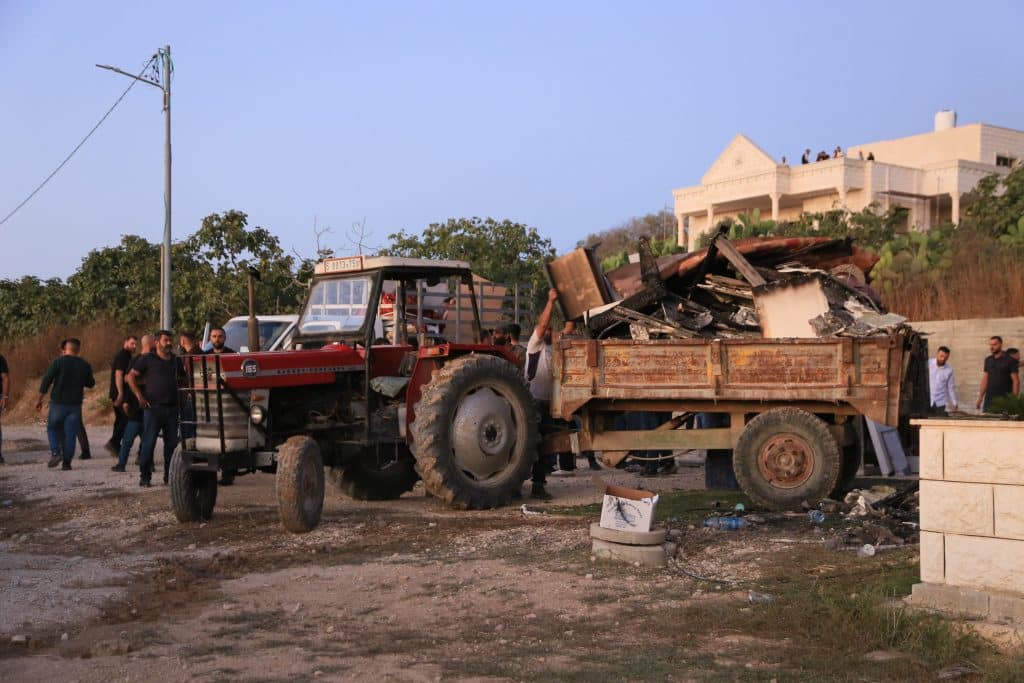
In the hours following the attack, groups of Israeli settlers launched rampages across the villages of Faraata and Jeet, both west of Nablus but falling under the governorate of Qalqiliyah. Video footage Several videos filmed by Faraata residents showed settlers burning houses in the village, Palestinians fleeing amid sounds of gunfire as one fell to the ground, and settlers roaming the streets and burning cars.
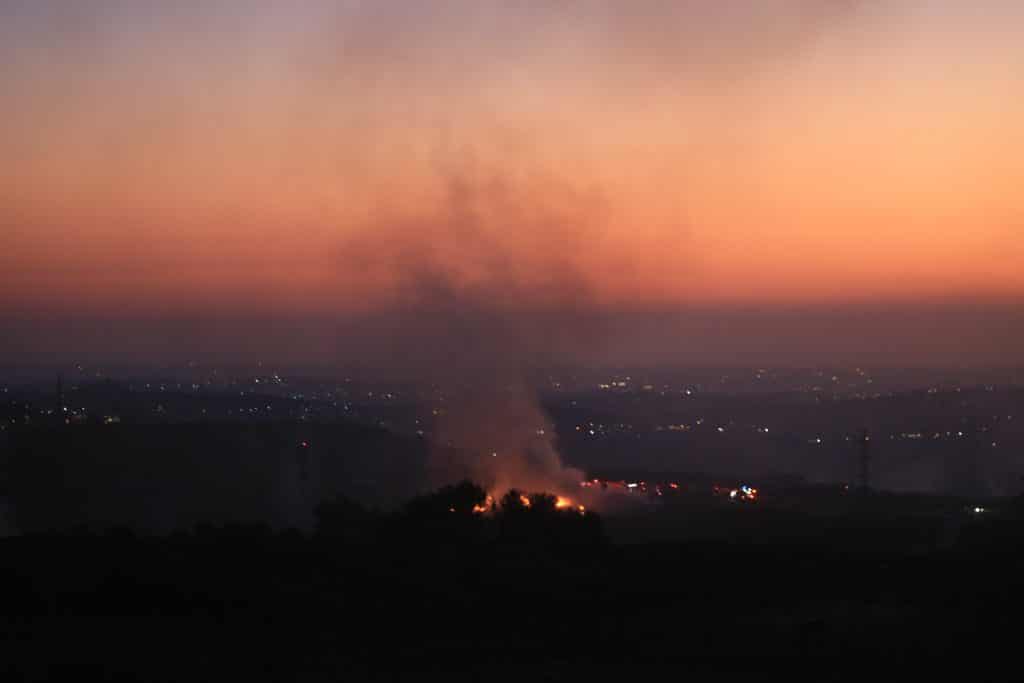
Akef Jumaa, the coordinator of the Qalqiliyah governorate’s popular committees, which coordinate local defense efforts against settler attacks, told a local radio channel that Israeli settlers had attacked the village of Jeet, where they were confronted by residents. Then the settlers continued on to Faraata, where they attacked houses and set fire to farmland, while several residents were injured. Jumaa described Faraata as “a small hilly village with no more than 1,200 inhabitants.”
Palestinian media also reported that settler groups attacked the village of Sarrah near Til, southwest of Nablus, where a Palestinian family was reportedly forced to evacuate their home. The mayor of Sarrah told the Arabic-language Alaraby TV during its live broadcast that at least 150 Israeli settlers were attacking the village from its western entrance, adding that settler attacks “have recently been occurring almost daily,” but that today was “the largest and fiercest attack.”
Meanwhile, Israeli forces raided the Nablus Specialized Hospital in Nablus City, arresting two Palestinians from Til. The spokesperson for the hospital, Wael Kharouf, told Mondoweiss that Israeli forces had arrested two Palestinians from the hospital and confiscated CCTV footage.
“Both of the men who were arrested are siblings from Til,” Kharouf said. “One of them had arrived in the morning, wounded in the hand by live fire, and the other, his brother, had accompanied him.”
Kharouf added that the Israeli army showed “no respect for the medical nature of the facility, as the soldiers had handcuffed some of the staff during the raid and forced them to lie on the ground.”
A predictable escalation
Last December, Netanyahu downplayed the violence of settler groups in an interview with Fox News, saying that it was “much bloated” and describing the settler groups as “a handful of kids …about 70 kids” from broken homes.
Yet Netanyahu’s claims are contradicted by figures from Israel’s own security establishment. In April 2026, the former head of the Mossad, Tamir Pardo, said following a field visit to the West Bank that the escalation of settler violence and the absence of accountability might lead to “a wider explosion of the situation” in the territory.
Less than a week later, the head of the Israeli army’s central command, Major General Avi Bluth, warned of the consequences of settler violence in the West Bank, which he described as “Jewish terrorism.” Bluth admitted that there were “hundreds” of Israelis involved in these attacks, which pose a danger to the security of the Israeli state. The Israeli army official added that it was “almost a miracle” that Palestinians hadn’t launched a new Intifada as a result of the settler attacks, but that they “won’t remain indifferent indefinitely.”
In recent months, attacks by settler groups on Palestinians have intensified, with settler groups moving to take over Palestinian houses in areas under the jurisdiction of the Palestinian Authority. Last Sunday, a group of settlers raided the town of Deir Jarir, east of Ramallah, killing two Palestinians, aged 55 and 26. The attack followed a confrontation between Palestinians and settlers who attempted to steal sheep from a farm in the town.
Qassam Muaddi
Qassam Muaddi is the Palestine Staff Writer for Mondoweiss. Follow him on Twitter/X at @QassaMMuaddi.
Re the West Bank this is relevant to the piece ( from Human Rights Watch ) –
Ro Khanna, Settler Violence, and What Netanyahu Got Wrong – Lawlessness and Impunity the Norm for Settlers in the West Bank...Democratic Congressman of California Ro Khanna got a taste of Palestinians’ daily life under occupation on July 8. While visiting the occupied West Bank, Khanna said he and his team were stopped by armed Israeli settlers who were soon joined by four Israeli soldiers that proceeded to hold the group for over an hour. Khanna was visiting Khirbet Zanuta, a Bedouin village whose residents were forced to flee in late 2023 following a series of violent raids by settlers from a nearby outpost….When asked about the incident in a televised interview with NBC News on July 12, Prime Minister Benjamin Netanyahu mischaracterized settler violence in the West Bank, blaming it on “vigilantes” and “150 juvenile delinquents.” …But Netanyahu’s framing obscures an underlying truth: Israeli settler violence is state-backed. Settlers responsible for attacking, harassing, displacing, and killing Palestinians operate with the government’s financial, material, and legal support.
Ro Khanna, Settler Violence, and What Netanyahu Got Wrong | Human Rights Watch