

Settler violence in the West Bank has accelerated well beyond the displacement of remote rural communities, the harassment of villagers, and the vandalization of their properties. Settler groups are now moving to take over and occupy Palestinian homes in the jurisdiction of the Palestinian Authority (PA), on the edges of Palestinian towns and villages.
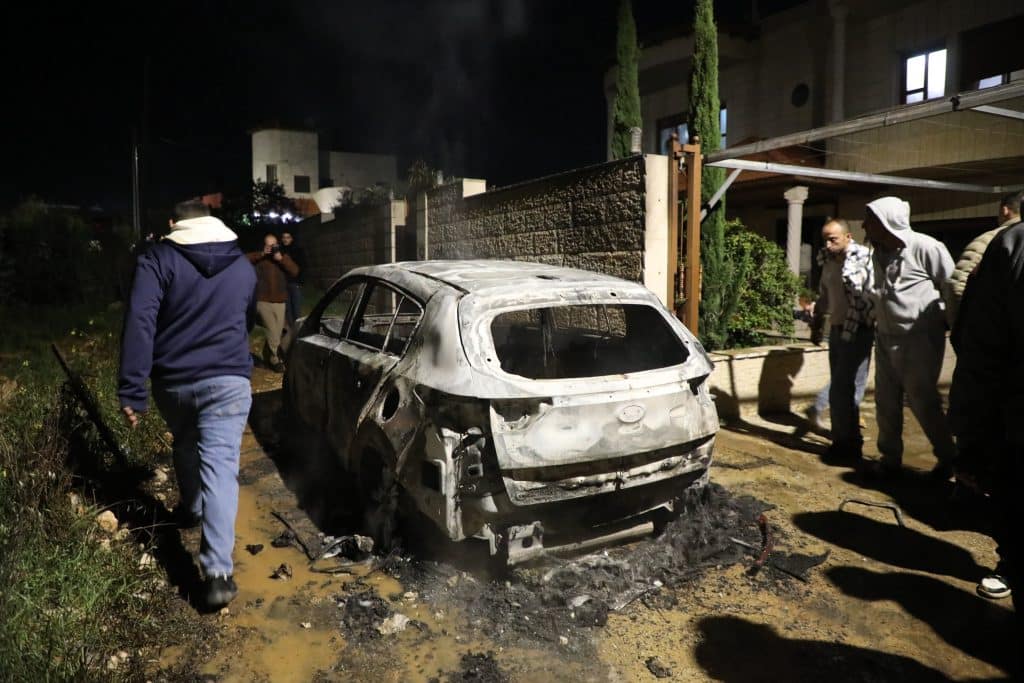
Last Tuesday, July 14, Israeli settlers took control of a Palestinian home still under construction in Beit Imrin, Nablus. The village is part of Area A in the West Bank, the 18% of the territory supposedly under full PA control as of the 1993 Oslo Accords. The seizure of the property came after a series of settler attacks on the town, which included torching cars and stealing livestock under the full protection of the Israeli army, according to testimonies from local residents.
The rise of such attacks marks a turning point in Israeli settler encroachment upon Palestinian lands demarcated under the Oslo Accords. Historically, settler expansion was concentrated in the rural parts of the West Bank, which are classified as Area C and make up over 60% of the territory. This area is under the full civil and security control of the Israeli army, enabling settlers to expand outposts on this land largely unimpeded. The other 22% of the West Bank, Area B, is supposedly split between the civil jurisdiction of the PA and the security control of the Israeli army.
Settler attacks, often accompanied by Israeli military escorts, have increasingly targeted the heart of Palestinian villages and towns in Areas A and B since October 2023. These attacks have violently escalated, displacing entire families and taking over their homes. In the last week alone, settler groups have taken over a Palestinian house in Atara, north of Ramallah, and another house under construction in Jaloud, southeast of Nablus.
These escalations have inaugurated a new phase in Israeli expansionism. Israel is rapidly eroding the Oslo demarcations, in line with hardline Israeli Finance Minister Bezalel Smotrich’s plan to “cancel the damned Oslo Accords” and “bury” any prospects of a Palestinian state.
In Jaloud, a new reality on the ground emerges
Muhammad Salameh’s family began building a new home on their land in Jaloud five years ago.
“My sons and I worked in construction in Israel, and we had saved enough money to build a home for my eldest son, who is engaged and preparing to start his own family,” Salameh told Mondoweiss. “We spent almost 300,000 shekels [$100,000] in purchasing the land, building on top of it, and securing permits from the Palestinian authorities, because the house is in Area B.”
One week ago, video footage circulated on social media showing what was described as Israeli settlers taking over Salameh’s house.
“The house was almost ready, except for the paint job and getting the furniture, which we haven’t finished because Israel revoked working permits and we were left without work,” Salameh went on. He added that building his son’s house was a big step for his family, all of whom participated in preparing the new home, building it with their own manual labor.
The village of Jaloud is located southeast of Nablus, with five settlements and settler outposts nearby. Until October 2023, settlers only moved into the farmlands surrounding Jaloud.
“I was at home when I received a call telling me that settlers were at the house. But unlike previous times, they broke in and stayed inside, and began celebrating,” Salameh recounted. “Our house is on the pathway to many farms and nearby villages, and if the settlers stay there permanently, then we will be cut off from that pathway,” he pointed out. “Most importantly, if our house falls permanently, other houses in the neighborhood might be targeted, and could fall as well.”
Misbah Hajj Muhammad, the deputy mayor of Jaloud, told Mondoweiss that “Israeli settlers have been coming closer into areas they had never reached before, without Israeli forces stopping them, until feeling emboldened to take over a house inside the village’s urban perimeter.”
According to Hajj Muhammad, Israeli settlers have taken control of 20,000 out of the village’s 22,000 dunams (2,200 hectares) of land, all of which are farmland. “Now, we are facing the threat of settlement expansion into the village,” he added.
According to Jamal Jumaa, coordinator of the Palestinian grassroots Stop The Wall campaign, direct settler attacks on houses have become more widespread around the towns and villages north of Ramallah and south of Nablus in recent months.
“The first part of this violent settler campaign after October 7 was expelling rural and Bedouin communities in Area C, but that is largely done,” said Jumaa. “Now, the settler groups’ strategy is to increase pressure on the villages and towns, taking houses as outposts from which to harass the rest of the community,” he clarified. Jumaa warned: “If this goes through, then the next phase will be one in which we see gradual takeover of houses and taking space from Palestinians in their own villages, like we have been seeing in Hebron and Jerusalem for years.”
To Jumaa, the settler groups’ campaign has managed to go this far because of international tolerance, with little to no reaction by Western countries. “If European governments think that a few critical statements and some individual sanctions will stop this campaign, then they are ignoring that this is a state policy,” says Jumaa. “While all these countries continue to say that they will not accept Israel’s annexation of the West Bank, settler groups are actually annexing the West Bank on the ground, pushing Palestinian families further to the corner,” he added.
This escalation comes a few months ahead of Israeli elections, which Jumaa believes will not bring any strategic change in Israel’s plans towards the West Bank. It also comes three months ahead of the 2026 olive harvest season in Palestine, which is expected to illuminate how entrenched settler control of Palestinian lands has become, and the impending challenge for Palestinian farmers trying to reach their groves.
A challenge that, like in the past two years, will likely pose a risk to their safety and their lives.
Qassam Muaddi
Qassam Muaddi is the Palestine Staff Writer for Mondoweiss. Follow him on Twitter/X at @QassaMMuaddi.
Settler Violence = State Violence | B’Tselem
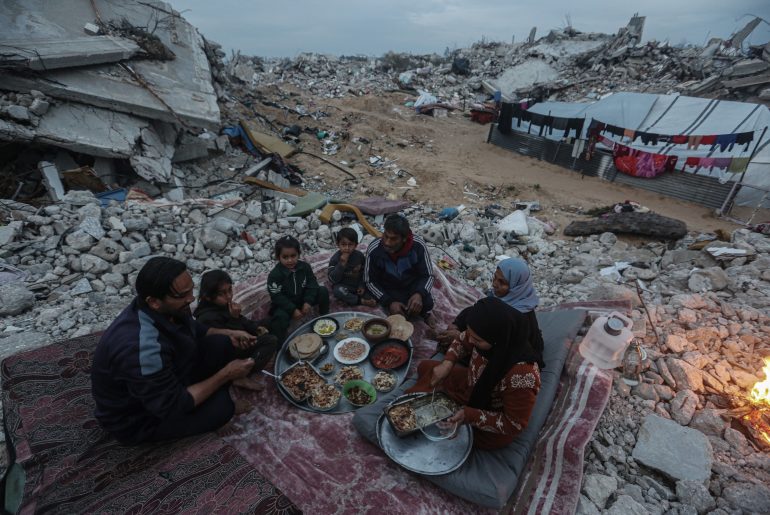
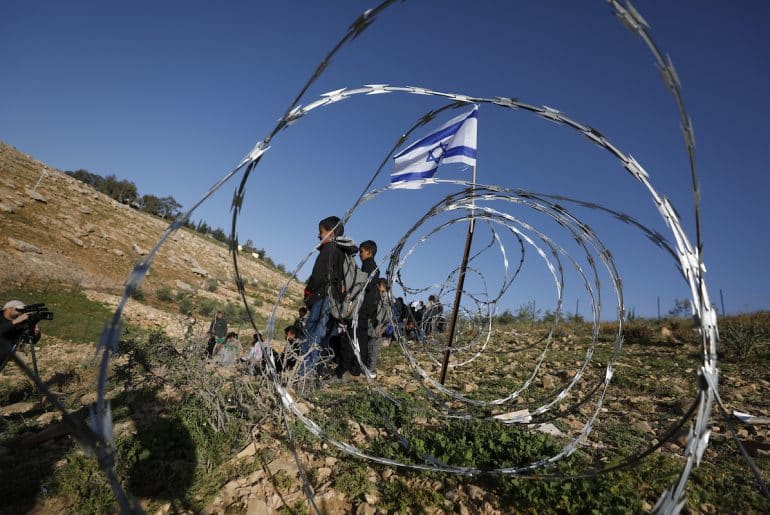
“Since 7 October 2023, military attacks and settler violence in the West Bank have led to the displacement of Palestinians on a scale not seen since Israel’s occupation of the West Bank in 1967. As of 30 June 2026, Israel forcibly displaced 63 Palestinian communities, home to more than 4,301 people, in Areas C and B, and 454 more residents were forced out of their homes in 15 partially displaced communities. At least 9 additional communities were displace before 7 October 2023. In early 2025, at least 32,000 people were displaced as a result of military attacks on refugee camps in the northern West Bank. As of February 2026, none have been permitted to return to their homes, many of which were deliberately destroyed in the attacks...”
The website contains a continually updated list of Palestinian communities expelled from their homes.
Recently the U.S. congressman Ro Khanna** visited the West Bank, where he was briefly detained by settlers. This Forward article explains:
The settler violence that Rep. Ro Khanna experienced on his recent visit to the West Bank has made headlines. But what was most important about this trip wasn’t what his delegation — of which I was a part — went through, but rather the people we met in the West Bank and the truths they told.
It’s the daily humiliations and abuse they suffer at the hands of Israeli settlers. It’s the dehumanization they feel, and the silence they encounter when they try to tell their stories to the world….The life stories we heard from Palestinians over three days were jarring. These truths will reverberate in my mind for years, long after the finger-pointing is over.
The real outrage of Rep. Ro Khanna’s West Bank visit – The Forward
**
RELEASE: Khanna, Cohen, Eshoo Lead Letter Urging Administration to Oppose the Displacement of Palestinian Families and Ensure U.S. Equipment is Not Used in West Bank Home Demolitions | Congressman Ro Khanna