For three generations, Ali Abu Khdeir’s family lived in the home his grandfather built in Deir Jarir until Israeli settlers made staying too dangerous. Now residents fear that their families are next.


For three generations, Ali Abu Khdeir’s family lived in the home his grandfather built in Deir Jarir until Israeli settlers made staying too dangerous. Now residents fear that their families are next.
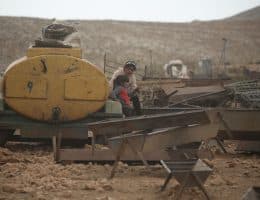
Since Israel severed the water lines feeding Ras al-Ahmar over a month ago, its 47 farming families have been rationing what little they have and weighing whether to sell their livestock and leave.
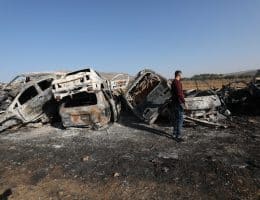
We need to collectively rethink describing Israeli settlers as “terrorists.” The label was designed to serve imperial interests, and it implies that settler violence is an aberration, not a systemic part of Zionist settler colonialism.
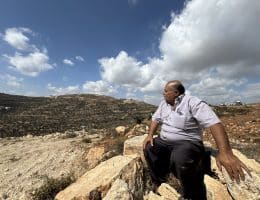
For seven months, Israeli settlers have besieged three Palestinian homes on a hilltop near Nablus, but the families refuse to leave. “We will lose ourselves if we lose Ras al-Ain,” a village leader told Mondoweiss.

A new Israeli security doctrine recasts settler violence, long regarded by the establishment as destabilizing, as a guarantor of Israel’s security. Settler leaders are now seeking to solidify this new status quo in the West Bank ahead of elections.
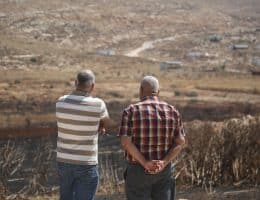
Israel’s “decisive” plan to annex the West Bank is coming to a head as the Israeli government pushes to depopulate Palestinian villages throughout the territory. Once a hub of resistance, the West Bank’s Palestinians now find themselves defenseless.

Israeli settlers have begun to escalate their colonization of Palestinian homes and lands in areas of the West Bank under ostensible Palestinian control, setting a dangerous precedent for Israel to completely take over the territory.
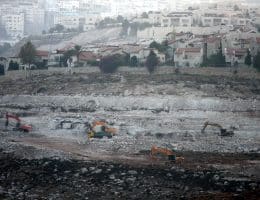
Israeli real estate companies are marketing land belonging to Palestinians in the West Bank to Jewish American buyers. We spoke to the Palestinians who are being displaced in order to make way for new Jewish settlement construction.

Israel’s Finance Minister Bezalel Smotrich has vowed to wrest control of the ancient Solomon’s Pools site from the Palestinian Authority. Palestinians are responding by reclaiming the site and resisting Israeli efforts to seize more of the West Bank.
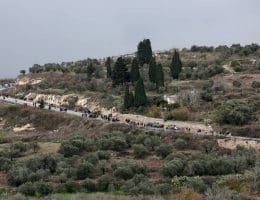
Israel has begun rebuilding the four settlements that it evacuated in the northern West Bank in 2005. Settlers and the army are trying to expel Palestinian already living in the area by making the land “impossible to live on,” residents say.