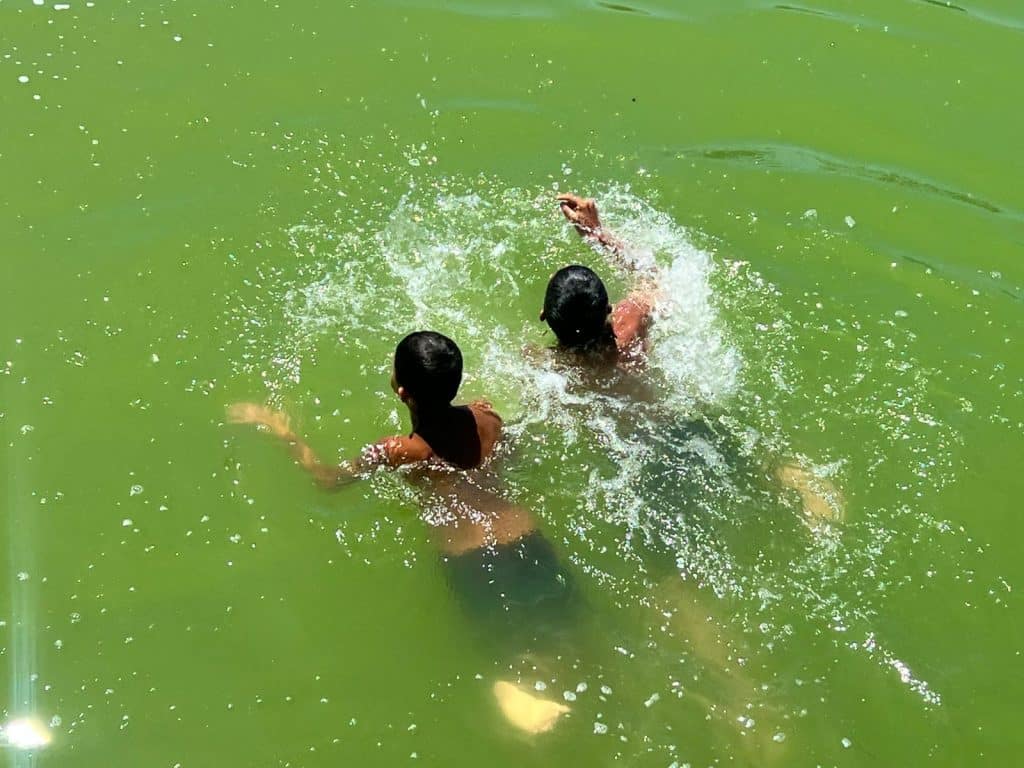
Just days after Israeli Finance Minister Bezalel Smotrich stormed Bethlehem’s Solomon’s Pools in late May, accompanied by hardline Knesset member Zvi Sukkot, both of whom went swimming in one of the pools in an act of provocation, the local Palestinian community responded. A group of residents from Dheisheh refugee camp arrived at the site, Palestinian flags in hand, and jumped in. The community’s response was more than just a knee-jerk reaction to the Israelis — it was an act of defiance.
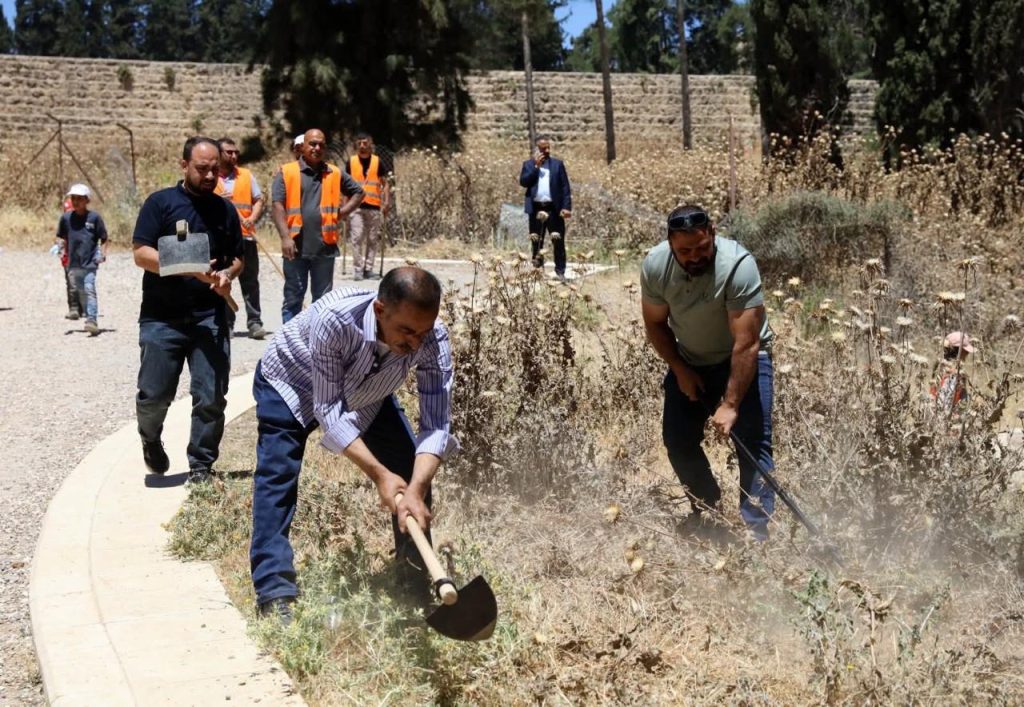
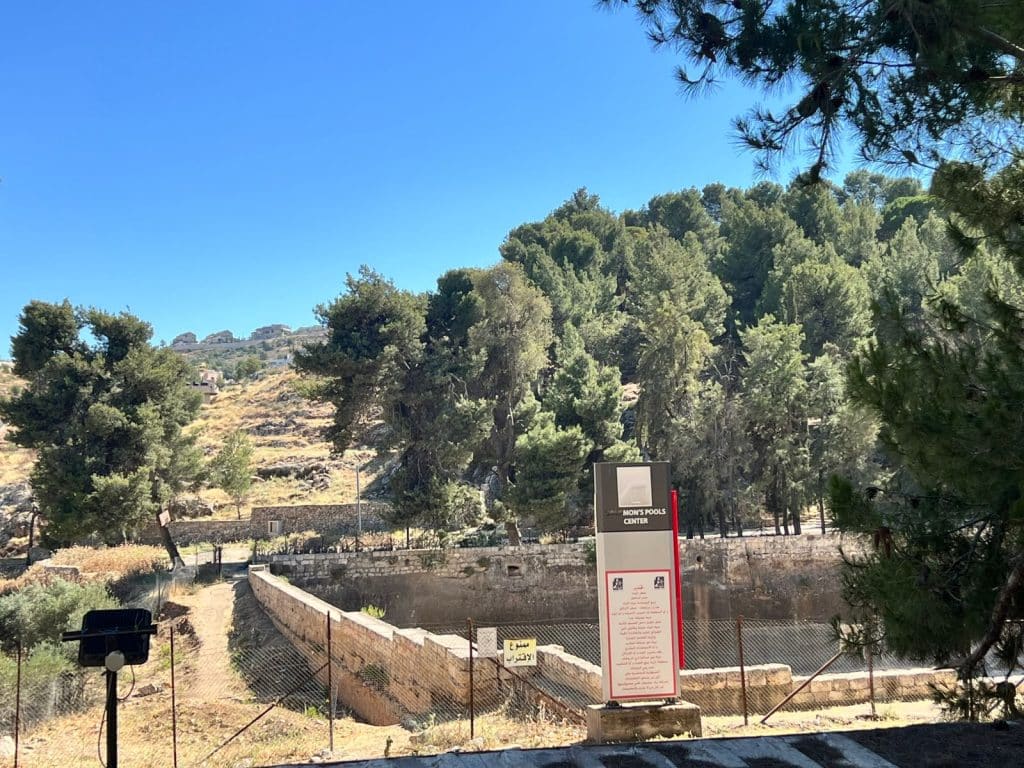
Since that first protest, the ancient site has become almost unrecognizable. Three of the pools that make up the ancient water reservoir, which are normally off-limits for swimming due to their depth of more than 20 meters, have been transformed into a space where Palestinians compete to swim every day. Activity at the pools now begins in the early hours of the morning. Fishermen arrive to cast their nets into the still waters, as if resuming a daily ritual inherited from generations before them. As the day advances, the place becomes a vibrant hub of community life. Families from Bethlehem, young men from the city’s refugee camps who lack any public spaces of their own, and visitors from different parts of the West Bank spread out along the pools’ stone edges or along the dirt paths surrounding them. Not everyone is coming to swim; some come to rest, others to simply take pictures. But everyone is ultimately here to send the same message: Smotrich and the settlers are not welcome.
Located in the village of Artas, southwest of Bethlehem, Solomon’s Pools belong to an ancient water system that evolved across different historical periods and formed part of a network for collecting and transporting water that served Bethlehem and Jerusalem, which gave it enduring significance for the Palestinians.
The pools are now the latest archaeological and historic site in the occupied West Bank that has come under threat of Israeli takeover.
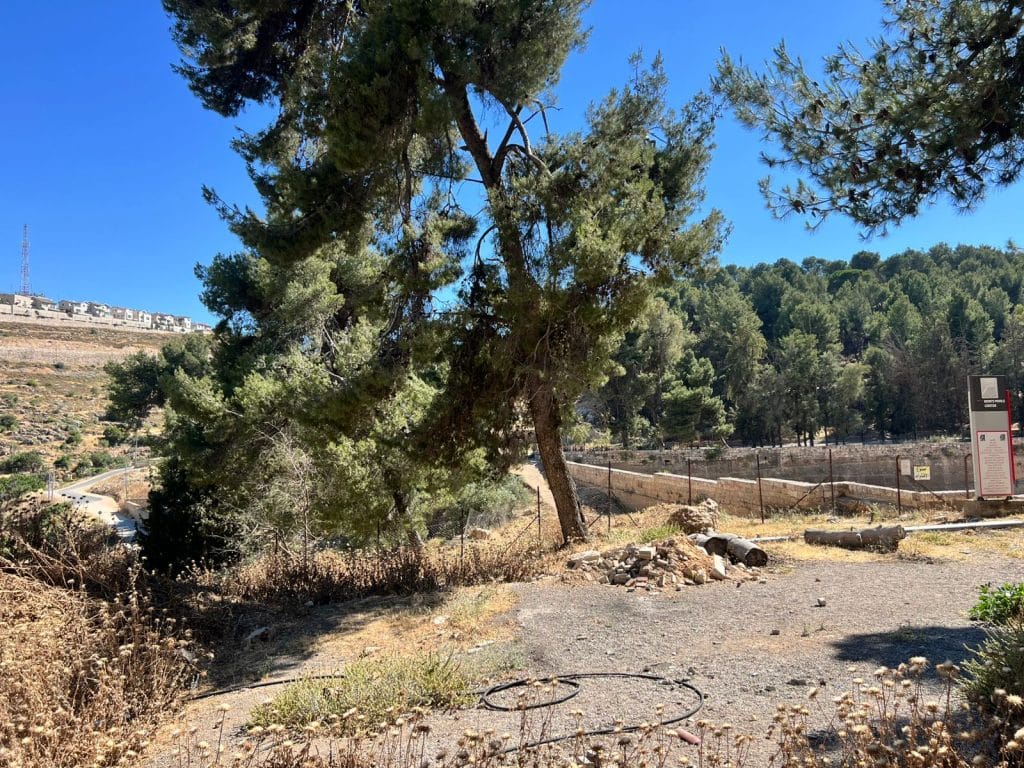
On the slopes of the mountains adjacent to the pools, no more than four kilometers away, towering over the village, is the mega-settlement of Efrat, one of the largest settlements in the Gush Etzion bloc south of Bethlehem. Efrat’s proximity to Bethlehem and Jerusalem make it a key part of a broader Israeli project to reshape the geographic space around Jerusalem through a southward and westward expansion of Israeli colonization.
The recent visit by Israeli officials to Solomon’s Pools was not an isolated incident. In an earlier visit to the site, Smotrich had stressed the need to take control of the pools. “It is unacceptable that such an important site remains under the control of the Palestinian Authority,” he declared. “We will change this situation soon and ensure it is reopened to all citizens of Israel.”
Smotrich’s statements echo those similar to what other Israeli officials have made about other archaeological sites under Palestinian control, like the Roman-era ruins in the village of Sebastia in the northern West Bank, which the Israeli government has slated for expropriation, citing “neglect” of the site.
Since Smotrich’s visit, Israeli authorities have intensified their targeting of Solomon’s Pools. Earlier this week, the Israeli army moved to close the site, firing tear gas and stun grenades at Palestinian visitors and beating three young men after arresting them. One of the local activists who helped organize the initiative at the Pools, Muhammad al-Laham, sees these measures as an attempt to alter the site’s character and drain it of its Palestinian presence. “The occupation is trying to turn the pools from a space for leisure and rest into a confrontation zone, to deter people from accessing it and being there,” he said.
“But we will stay. We will not accept the normalization of turning this place — which represents a space of calm and memory — into a security threat.”
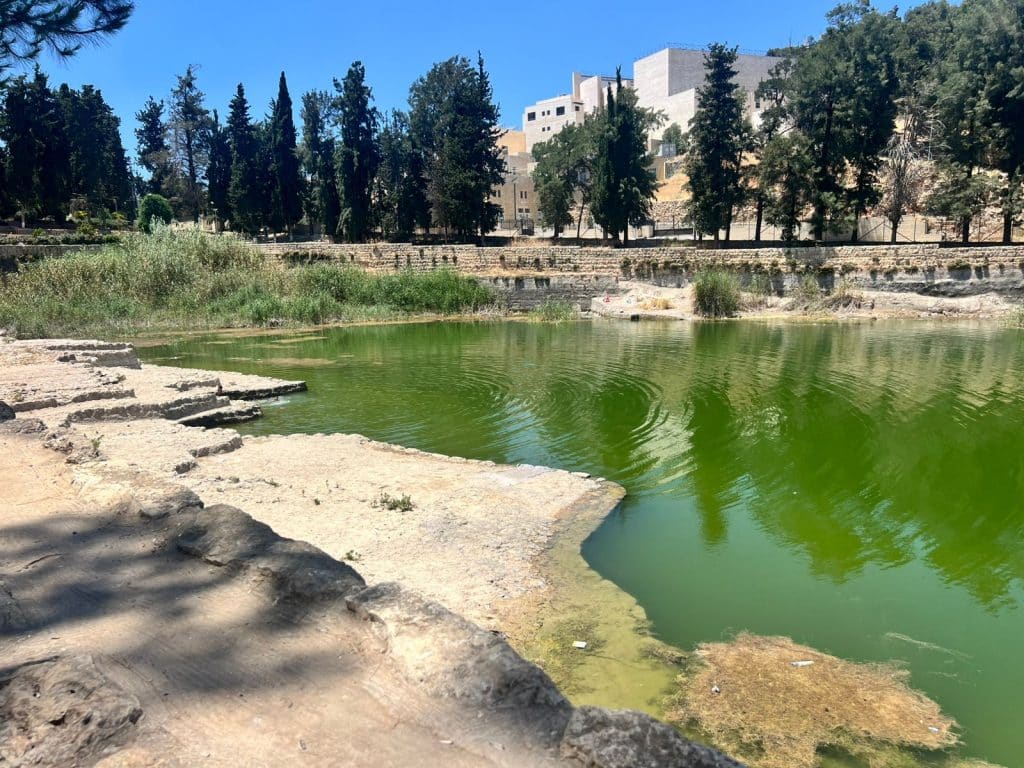
More than just a historic site
Historians and archaeologists date the construction of Solomon’s Pools back to the 2nd and 1st centuries BC. The pools were built as a massive open-air water reservoir system designed to collect, store, and manage water for the Jerusalem and Bethlehem regions.
“They consist of three terraced pools built to collect and store water within a complex hydraulic system that was historically linked to supplying Bethlehem and Jerusalem,” Ibrahim Mashaela, an agricultural engineer and tour guide in Bethlehem, told Mondoweiss. “Their combined capacity exceeds a quarter of a million cubic meters, making them not merely an archaeological landmark, but part of the region’s water infrastructure and collective memory.”
A visitor to Solomon’s Pools today would see wide green spaces stretching toward the agricultural lands of Artas to the south. To the west, remnants of historical and Islamic structures are scattered across the landscape — most notably the Ottoman Murad Castle — while mountains and valleys surround the pools, making the space feel like it’s suspended in time.
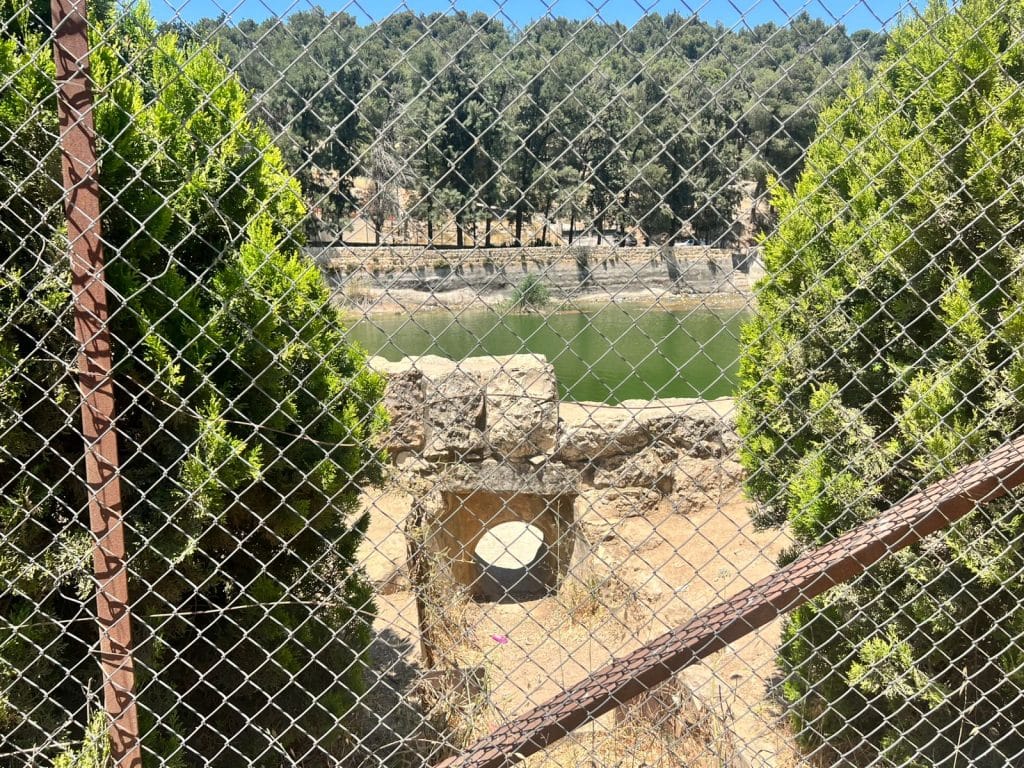
Until 1967, Solomon’s Pools formed part of a regional water system that collected rainwater and distributed it through stone channels to the lands of Artas and the villages of Bethlehem, playing a central role in supporting local agriculture and providing water to rural communities.
But after Israel occupied the West Bank and Gaza and the reorganization of water resource management in the West Bank, Mashaela noted, the role of these traditional systems gradually declined in favor of modern centralized water networks. This led to a reduction in direct reliance on the pools as primary water sources, relegating them to the status of tourist attractions.
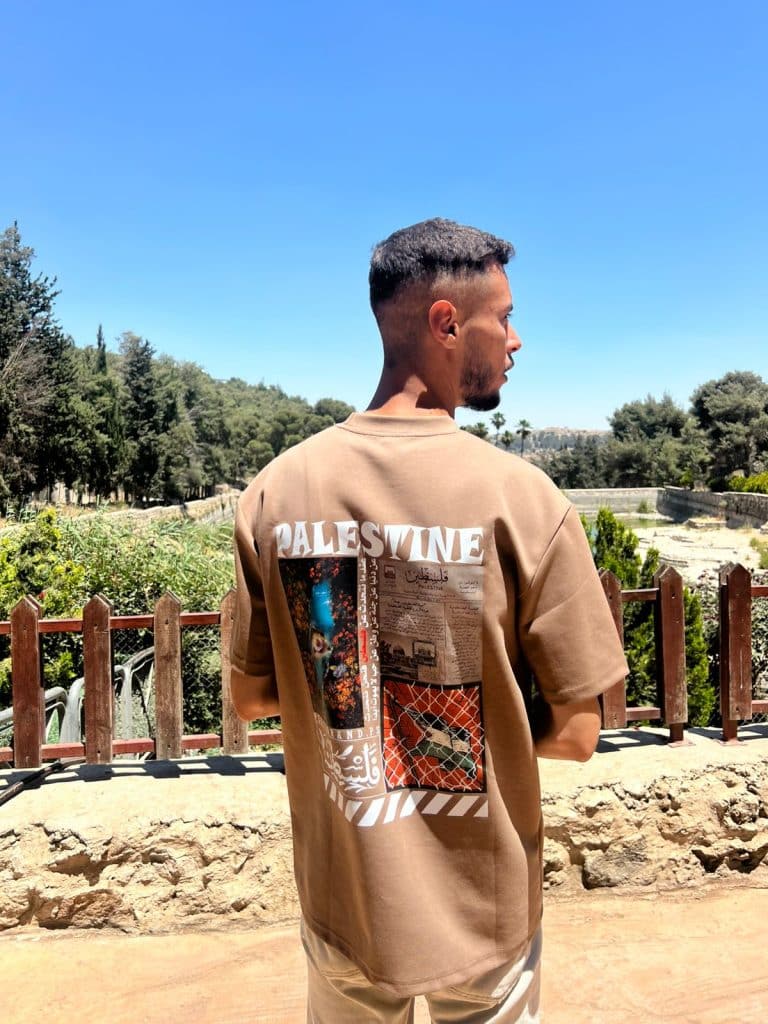
But for the people of the Bethlehem area, the pools are an integral part of the local community’s social fabric.
“We considered the pools a natural extension of our homes and fields,” Hasna Rabaiyya, a local farmer, told Mondoweiss. “During the planting seasons, the day would start here and end here. We came at dawn to check on the water or take what we needed for irrigation.”
Gathering at the pools, Rabaiyya added, was no less important than the work itself, as the site served as a kind of social hub before each farmer went on their way. “We would meet the neighbors and exchange news of the season, as if the pools were a primary meeting point for people before they were ever just a source of water.”
This connection to the land has become central to Palestinian efforts to resist Israeli colonization, and has inspired community actions such as the one at Solomon’s Pools.
‘We are asserting our right to the pools’
Under the 1993 Oslo Accords, the pools remain within Area A in Bethlehem, under the ostensibly full control of the Palestinian Authority. This has led Israel to claim that Solomon’s Pools is an “insufficiently managed” archaeological site that is “in need of development and rehabilitation,” highlighting the lack of tourist infrastructure and characterizing it as unsafe and underutilized.
In response to these claims, Palestinians have launched an initiative to clean up the site, and residents also began what became known as the “swimming challenge” — a public call to visit the pools.
“The swimming initiative came as a response to the Israeli delegation’s visit and as a call to Palestinian masses to intensify their visits to the site,” Muhammad al-Laham, the journalist who originated the idea and one of the residents who grew up around the pools, told Mondoweiss. “We are asserting our right to the pools and to our national identity.”
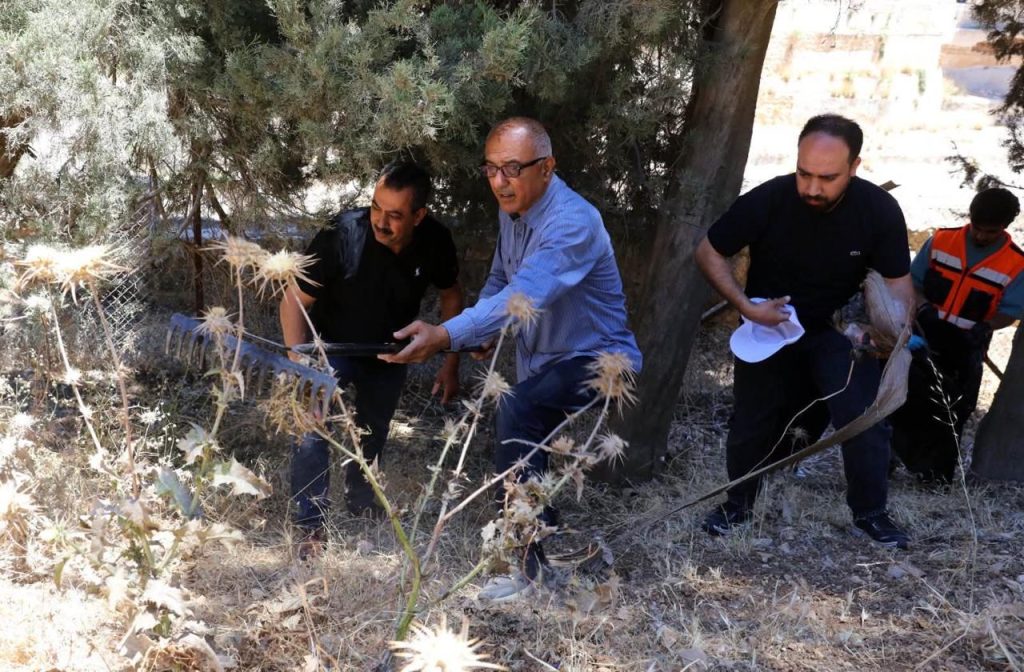
Al-Lahham said that protecting the place does not begin only with official decisions, but also with the presence of ordinary people and the deepening of their daily relationship with the site. “These pools have never been an abandoned place, as some try to portray them,” he maintained. “We grew up here, we played around them. We know their waters and their seasons. They are a part of our lives and our memory.”
“When anyone comes along to say this place needs someone to protect it, we ask: who has been preserving it all these years? We are the ones who remained,” he said.
The pools have also attracted Palestinians from other parts of the West Bank, well before the public “swimming challenge.”
During the autumn bird migration season, educational excursions to the site begin, drawn by the chance to observe the variety of native Palestinian bird species and the biodiversity surrounding the pools.
Hamdan Ghazi, a visitor from Nablus who came to the pools with 60 students from An-Najah National University in June, said that Solomon’s Pools have always served as their first destination. “They bring together the historical importance of Palestine with a living environment,” he said. “Here, you can walk among the mountains and learn about the biodiversity and the rare plants and animals that arrive here seasonally.”
Rather than just a tourist attraction, visits to Solomon’s Pools are seen as a way to reconnect with a heritage that is now under threat amid Israel’s escalating moves to annex in the West Bank.
As Ghazi walked around the pools and gestured toward the surrounding settlements, he added, “All educational trips should be directed toward areas threatened with confiscation or erasure.”
“Education cannot be separated from the difficult political reality we are living in,” he said.
Israeli colonization eyes Solomon’s Pools
The Israeli colonization of the area surrounding Solomon’s Pools has been in full motion since 2004, when a military order was issued to seize approximately 1,700 dunams of land from the villages of al-Khader and Artas under the pretext of being “state lands.” Despite a wave of widespread legal objections, the Israeli military court rejected most of the Palestinian appeals in 2009 — eight of the nine petitions filed against the order — consolidating administrative control over large swaths of land surrounding the pools.
A detailed analysis of the military order, conducted by the Applied Research Institute – Jerusalem (ARIJ), found that the targeted lands fall within the master plan of the Efrat settlement, southwest of Bethlehem. These lands do not fall within areas isolated by the separation wall in the Gush Etzion area; and while Efrat itself is located within that settlement bloc, the area declared as state land lies outside the isolated zone.
Efrat continues to undergo extensive urban expansion, with hundreds of new housing units under construction and large-scale projects such as Givat Eitam E2 moving forward.
Munther Amira, head of the Coordinating Committee for Popular Resistance in the West Bank, told Mondoweiss that these projects cannot be separated from the broader strategic Israeli vision aimed at consolidating what is known as the “Greater Jerusalem” project. The main way of doing that is to expand existing settlement blocs in Gush Etzion and connect them geographically to Jerusalem.
He added that this expansion is working in practice to prevent the natural growth of Bethlehem southward, by controlling the surrounding hills and creating a continuous settlement expansion that reshapes the geographic and demographic map of the area, foreclosing any possibility of growth for the neighboring Palestinian communities.
Israeli settler groups have also been trying to establish their presence at the site, organizing several tours to the pools. In 2013, an Israeli tour to the pools during the Passover was announced, with a note that the trip would take place with the Israeli army’s approval, despite the fact that the site falls within Area A, which is supposed to be under the full control of the Palestinian Authority. Israeli promotional materials presented the pools as a historic site tied to the ancient water systems that served Jerusalem.
These calls have since been repeated in a more organized form: in April 2025, Israeli tourism bodies in Gush Etzion announced a family tour to the three pools during Passover, which included access via armored buses and required special approval from the Israeli army.
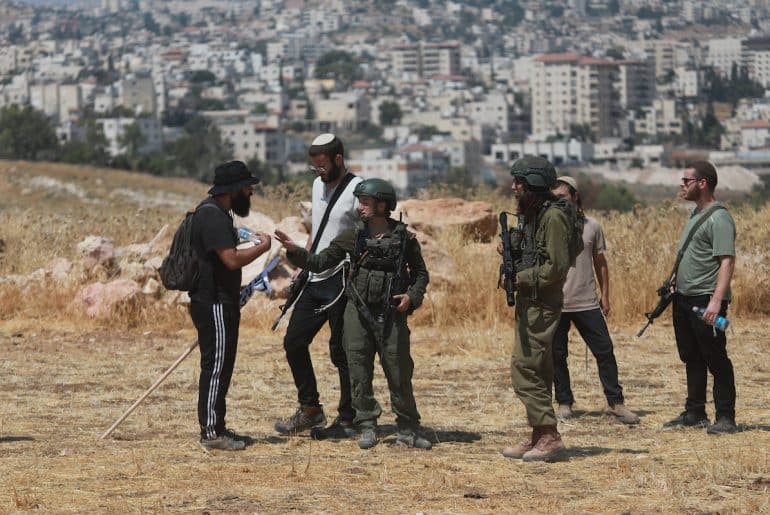
Local residents have tried, within their limited means, to sit in and protest these visits. “We organized several sit-ins and demonstrations in the area after we observed settlers and other political groups touring the pools and conducting Talmudic prayers there,” Amira said. “We maintained an almost daily presence to prevent settlers from taking over the place.”
Despite being shot with live fire multiple times by Israeli soldiers during his work with the coordinating committee, Amira still shows up at Solomon’s Pools alongside Bethlehem residents. He says his presence there goes beyond a sense of duty to defend the site; it is rooted in a personal connection dating back to his childhood.
The pools are not simply a place on a map, but part of his memory and identity, woven into who he is. “Being here isn’t just because I have a responsibility to defend this place,” he said. “It’s intensely personal. These pools are a part of my memory. I grew up with them.”
Majd Jawad
Majd Jawad is a Journalist and researcher from Jenin, Palestine, holding a Master’s degree in Democracy and Human Rights from Birzeit University and a Bachelor’s degree in Journalism.