

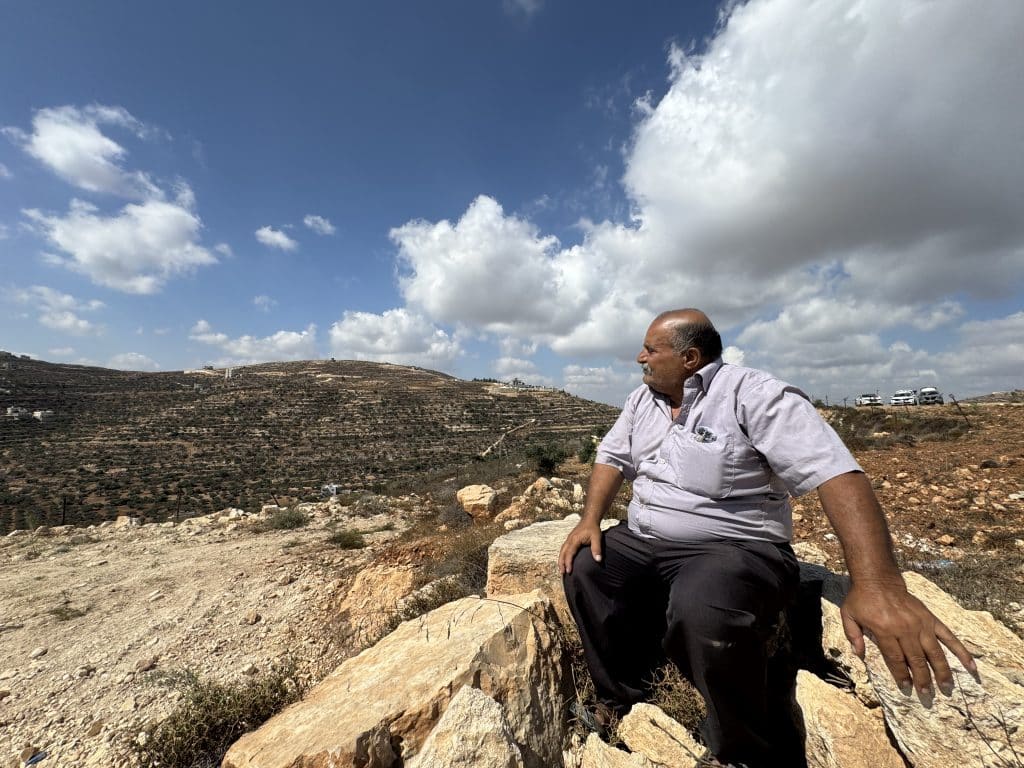
On a large rock under the midday summer sun, Abdul Karim Hassan, 63, sat exhausted by fatigue and grief, staring the whole time toward his two sons’ houses on the hill of Ras al-Ain in the village of Qusra, south of Nablus in the central West Bank. A few meters from the walls of three Palestinian homes in the town, settlers pitched a tent on August 9, 2026, and began besieging the Palestinian families in the area to force them out of their homes.
This was only the latest escalation in the series of attacks that settlers have waged on Ras al-Ain for seven months — cutting off electricity and water lines, repeatedly assaulting residents in their homes, trying to break in and burn them, setting ambushes along the road, attacking the homeowners as they moved through the area, and even attempting to kill them.
The settler-instigated siege on Qusra comes less than a month after the family of Mahmoud al-Tubasi was driven from their two homes in the village of Jalud, south of Nablus, on July 22, after which Israeli settlers seized the properties.
It is part of a broader state-backed Israeli campaign, with settlers at its head, to push Palestinians out of areas slated for future settlement expansion, which not only encompass the 60% of the West Bank falling under full Israeli control classified as “Area C” under the Oslo Accords, but has also increasingly included the 22% of the territory under the civil control of the Palestinian Authority (PA), known as Area B.
A report by Human Rights Watch published on August 20, 2026, found that settler attacks on Palestinians in the West Bank have driven the full or partial displacement of 107 towns and villages since January 2023, alongside unprecedented settlement expansion. A report from the UN Office for the Coordination of Humanitarian Affairs (OCHA) further found that the number of Palestinians forcibly displaced by settler attacks and demolition and eviction operations in the first four months of this year already exceeds the total recorded for all of 2025.
OCHA has documented an average of 6.6 settler attacks a day — the highest of any year in the agency’s records — which have left 15 Palestinians dead, including two children, as of July 24. This puts the year 2026 on track to surpass the previous record of 16 deaths from settler violence during 2023.
A grandfather separated from his two granddaughters
We met Abdul Karim on a hill in the village of Jurish, facing the hill of Ras al-Ain about 800 meters away. The spot has become a daily gathering place for residents and journalists, who spend most of their time there on alert, watching the besieged houses and tracking the movements of settlers and Israeli soldiers.
“We are going through the hardest moments of our lives, and today the family has no choice but to hold out inside the houses,” Abdul Karim, a Palestinian farmer whose sons’ homes are under siege in Ras al-Ain, told Mondoweiss. “But if the world doesn’t act and stand with us against the settlers, they will succeed in driving us out.”
Yet Abdul Karim sees no serious attempt to stop the settler attacks or prevent his family’s displacement. “Even today, the United Nations doesn’t enforce its resolutions on Palestine, and in the Arab world, not a single voice has risen in our defense,” he said. “The settlers won’t stop at the West Bank — they’ll reach everyone. Everyone has stayed silent and done nothing.”
Abdul Karim only sleeps inside his car on the hill, which he never leaves, feeling that he is guarding a family he cannot reach. Most of his family is trapped inside the two houses: his wife, 60, his daughter Aisha, 23, and his son Rizq and Rizq’s wife. His son Yousef’s family — Yousef’s wife Ruqaya and their two daughters, Hur and Kinda, aged two and four — had their home turned into a military post by Israeli forces.
“I miss them, and I’m terrified for them,” Abdul Karim said. “There’s nothing I can do but sit and watch the settlers’ movements around the houses.”
While we were on the hill, we called Aisha to check on the family. “We’re all shut in here, like a kind of prison — and we refuse to leave, because they won’t let us come back,” Aisha, Abdul Karim’s daughter, told Mondoweiss. “The settlers and the army block anyone from reaching us.”
“We don’t sleep,” she added. “We live in constant tension and fear, but we comfort each other and keep each other strong. The settlers are around the houses all the time — but there’s no way we’re leaving here. We don’t want what happened to the Tubasi family to happen to us.”
In 2015, Abdul Karim’s family began building their two homes in Ras al-Ain, believing the area — classified as Area B — was safe. Each house has two floors and covers 200 square meters, alongside a 15-dunam (1.5 hectare) farm that Abdul Karim planted with olive and almond trees. “This land is my identity,” he said. “Without it, I’m worthless.”
Abdul Karim is a Palestinian farmer who depends mainly on agriculture to support his family. He owns 55 dunams (5 hectares) in the villages of Qusra and Jalud, though settlers now block him from reaching most of it, including a 20-dunam vineyard. This year he lost the entire grape season, with losses estimated at NIS 600,000 (over $200,000). “I go and check on my land from a distance, and sometimes I go in at night,” he said. “They’ve caused enormous damage to it.”
An attempt to kill the family
Settler attacks on Ras al-Ain began escalating after an outpost was set up on the land of the neighboring village of Jalud, about three kilometers from Qusra, from which settlers launched their daily attacks on Ras al-Ain. “Their attacks were concentrated at night. They tore the door off the storage shed and destroyed the farming tools inside it, wrecked the gate, and stole the fence around the house,” Abdul Karim said. “They would attack the house with stones that came down on us like rain.”
After settlers displaced the Tubasi family from their home in Jalud following a four-month siege (April 19–August 9, 2026), the danger drew closer and grew for Ras al-Ain. “As soon as the Tubasi family was displaced, we felt we might be next,” Abdul Karim said. “We took some precautions — we bought extra supplies, rebuilt the fence, and stopped leaving the houses at all.”
“A few days later, settlers put up a tent just meters from our house and completely cut off the road, so we could no longer move or travel,” Abdul Karim added.
Settlers scattered nails and sharp tools on the road to disable vehicles and block access. Abdul Karim said settlers have begun taking turns patrolling, armed with knives and clubs. “They attach sharp tools to the clubs, which proves their goal isn’t just to beat us, but to kill us,” he said. “They refuse to talk to us. They attack directly and start beating and assaulting us.”
The two houses belonging to Abdul Karim’s family have been hit by more than 10 violent attacks and break-ins by settlers, causing extensive damage to both homes. “Once we left the house for only two hours,” Abdul Karim recalled. “They took advantage of our absence, broke in, opened a 48-kilogram gas cylinder, and let it leak inside the house before leaving.”
Despite the scale of the settler attacks, Abdul Karim’s family refuses to leave their home or surrender. “Where would we go? We have no option but our homes and our land,” he said. “Nothing will embrace us but our homeland and the land we’ve worked our whole lives.”
“This isn’t only about us as a family,” he added. “If we give up and leave our houses, it won’t just be our houses that go, but all of Ras al-Ain hill. And the settlers won’t stop here — they’ll chase us into Qusra itself and displace us from the entire village too.”
The siege has not stopped at the three inhabited Palestinian homes, extending to roughly 20 buildings under construction in the area. Their owners are barred from reaching them, and Israeli flags have already been raised over the properties.
Why Ras al-Ain?
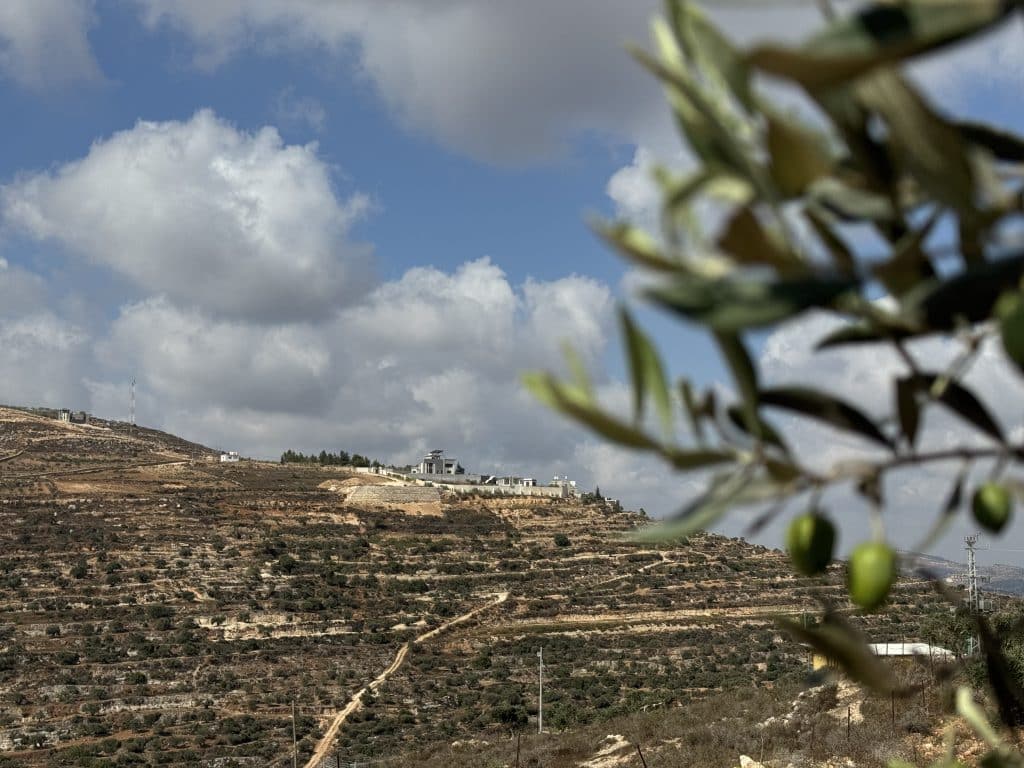
Ras al-Ain hill rises 930 meters above sea level, overlooking Jordan to the east, the Mediterranean Sea to the west, Mount Gerizim and Mount Ebal to the north, and Mount al-Asour to the south — placing it in a strategically important and commanding position.
Ras al-Ain, classified entirely as Area B, also holds another kind of importance: it contains four freshwater springs that serve as a main water source for Palestinians in Qusra and neighboring villages. As soon as settlers began attacking the area, they targeted the water lines, cutting them off completely.
“The settlers’ takeover of Ras al-Ain hill is part of an expanding, ongoing settlement process that started in Area C and reached the declared annexation of the Jordan Valley,” Abdul Azim al-Wadi, head of the Qusra village council, told Mondoweiss. “Today, it’s entering a second phase, reaching into Area B and seizing its most important areas.”
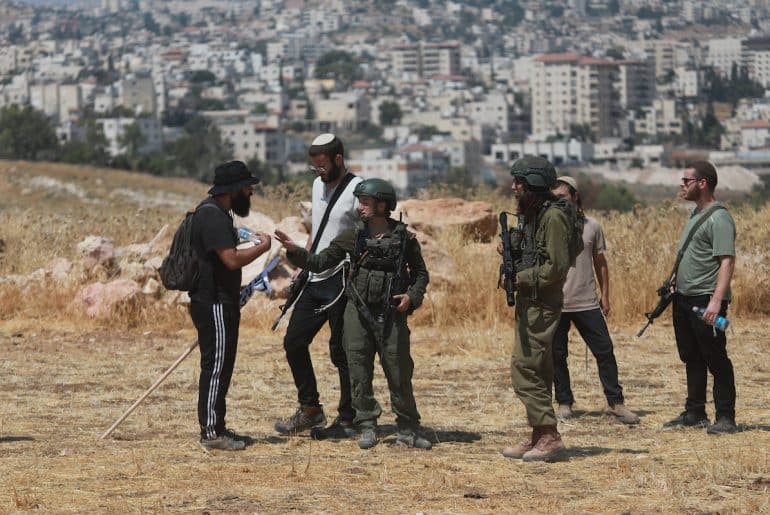
Al-Wadi said that since December 2025, Israeli forces have carried out nine formal evacuations of settlers from the hill. “The army would confiscate the tent but leave the settler and his sheep behind for us,” he said.
‘We will lose ourselves if we lose Ras al-Ain’
But the danger of a settler takeover of the hill goes far beyond seizing a piece of land. “If the settlers succeed in taking the hill, we will have no dignity or worth left, and we will lose ourselves if we lose Ras al-Ain,” al-Wadi said. “We are farmers, and we depend heavily on this hill. It’s not just a source of farming and water for us, but our identity and our history.”
The village of Qusra spans 9,200 dunams (920 hectares), of which only about a third — 3,300 dunams (330 hectares) — remains under the village council’s jurisdiction today. It is surrounded by the settlements of Migdalim, Ahiya, Esh Kodesh, and Adei Ad, which have been expanding continuously onto Qusra’s land since October 2023. Al-Wadi said pastoral settlement outposts have driven a rapid and alarming expansion, through which settlers have seized most of Qusra’s important farmland, including the areas known as Ras al-Nakhl, al-Mu’allaqa, Nabuh, Ashaki, Basalta, al-Furn, and al-Wa’ar. “Qusra has no farmland left,” he said.
Today, settlers are pursuing Qusra’s residents toward the Ras al-Ain hill, the only space that remains. “We, the people of Qusra, have pledged not to allow ourselves to lose Ras al-Ain,” al-Wadi said. “If we lose it, we lose Qusra’s future. We’ll have no space left to exist in, and we’ll turn into a crowded camp that is only allowed to build vertically.”
On the Israeli side, the siege has taken another, more dangerous turn: Israel announced the transfer of authority over the area from the army to the Israeli police, using the events to unveil the move as part of a fresh step toward annexing the West Bank.
But how will the besieged families keep holding out in Ras al-Ain?
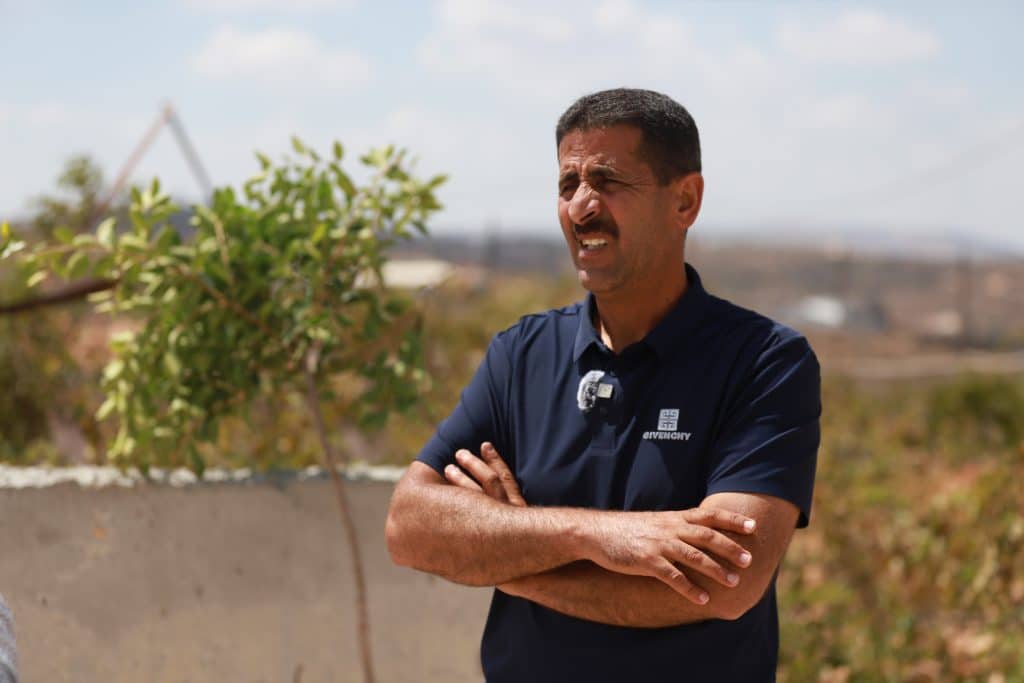
Al-Wadi explains that the only hope for the continued steadfastness of the families of Ras al-Ain rests squarely with Qusra’s residents, who have confronted settlers since 2014 and were among the first villages to form what are known as “popular protection committees,” based on groups of volunteers concerned with defending the community against settler violence.
“Since 2014, Qusra has given 11 martyrs, most of them killed while confronting settler attacks,” al-Wadi said. “The most recent was Amir Mu’tasim Odeh, 28, who was killed confronting a settler attack on Ras al-Ain on March 14, 2026.”
Israeli forces have also arrested around 40 people over confrontations between residents and settlers at the Ras al-Ain hill. Al-Wadi says the army has imposed steep fines on those arrested, to deter them from returning to the area.
On August 17, Loay Abu Reida, the owner of one of the besieged homes, returned to Ras al-Ain from the United States to join the families trying to defend their houses. Though he holds American citizenship and raised the American flag over his house as soon as he arrived, settler attacks on the homes continued, stoning the homes on his second day there.
Since the siege on Ras al-Ain’s residents began, humanitarian and human rights organizations have tried to bring in food aid. UNICEF delivered aid on Saturday, August 6, and the Israeli left-wing organization, Peace Now, also tried to reach the houses and bring in some food aid on August 14.
But according to the besieged families, this cannot stop at aid deliveries and delegation visits that only stand a few meters from the houses. What’s needed, they say, are concrete steps aimed squarely at removing the settlers and ensuring they don’t return to the area. “Speeches and slogans no longer mean anything today,” al-Wadi said. “What we need today is serious action on the ground that supports people’s steadfastness, lifts the siege on them, and removes the settlers.”
Shatha Hammad
Shatha Hammad is a Palestinian journalist specializing in in-depth features in the West Bank, where she has reported on the ground since 2011. She holds a BA in Journalism and Political Science and an MA in Contemporary Arab Studies from Birzeit University.
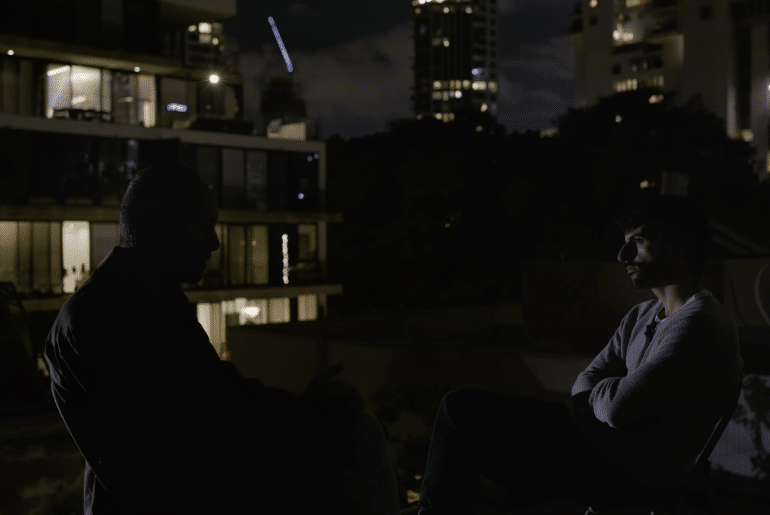
Former CIA analyst Larry Johnson and former head IAEA inspector in Iraq Scott Ritter and author of “Target Iran” 20 years ago on “Judging Freedom” weekly.
They bring up Scott Bessent’s recent comments. https://www.reuters.com/world/middle-east/us-treasury-secretary-bessent-hold-press-conference-iran-on-monday-2026-08-20/. They bring upTrump (of course) the U.S.s lack of strategy and Israel up in almost all conversations. Here they talk about the beef between Turkey and Israel. Johnson states that “U.S. and Israel the most guilty countries of “state sponsored terrorism.”
Worth the listen:
https://www.youtube.com/watch?v=KSSFkIw-_Z0
Over at Drop Site….Israel’s terrorism in West Bank
https://www.dropsitenews.com/p/qusra-siege-israeli-settlers-soldiers-palestinians-west-bank
“While the siege on the three families has garnered international media attention and statements of condemnation, the attack is not the first of its kind, but rather a more prominent example of a growing tactic by Israeli settlers and soldiers working in tandem to dispossess Palestinians from their homes in the West Bank. The attacks are increasingly focused on Palestinian communities in Area B, a designation under the Oslo Accords where the Palestinian Authority is nominally in charge of civil administration while Israel retains security control.
The latest Israeli siege targeted a small cluster of Palestinian homes that sit atop a hill on the edge of the village of Qusra, in the southern part of the Nablus governorate in the northern West Bank.
On the morning of August 9, armed settlers blocked off the only road leading to the homes and erected a colonial outpost directly in front of the door of one of the houses. They began pelting the homes with rocks and trying to break inside on a regular basis.
Israeli occupation forces eventually arrived on the scene and removed the outpost, but the settlers were able to erect it again, a pattern that repeated several times. And despite brief clashes with Israeli forces, the settlers were allowed to remain and continued to roam the area freely.”
As Peter Beinart explains in this 7 minute video, settler violence is state violence – “Thinking that a state based on Jewish supremacy will crack down on settler violence is like thinking George Wallace would crack down on the Klan.”
It isn’t a few misfits and overenthusiastic teenagers living in tents who are perpetrating this, it’s the Jewish State.
Settler Violence is State Violence – by Peter Beinart
While illIsegal Israeli land thieves continue to commit war crimes in the West Bank. ABC, CBS, MSNOW, CSPAN’s Washington Journal as so many other mainstream outlets in the U.S. are silent about these Israeli crimes being committed with impunity. Rachel Maddow, Scarborough, Dana Bash etc etc are complicit in Israel’s war crimes. Silence is complicity.
Israeli land,home, agricultural thieves continue committing war crimes never being held accountable.
https://www.facebook.com/aljazeera/videos/israeli-settler-attacks-happen-six-times-a-day-in-the-occupied-west-bank-higher-/1356034870012004/
https://www.facebook.com/Reuters/videos/us-envoy-condemns-settler-land-grab-attempts/1714808949573485/
https://www.instagram.com/reel/DcQO1AAoLZ4/
https://www.facebook.com/aljazeera/videos/israeli-settler-attacks-happen-six-times-a-day-in-the-occupied-west-bank-higher-/1356034870012004/
We know Rachel Maddow, Chris Hayes, Joe Scarborough, Dana Bash, Jake Tapper etc etc will not be covering this story about a Palestinian American citizen trying to get to his home in Qusra. Illegal Israeli land thieves supported and protected by the IDF trying to steal Loui Ridi’s home.
Democracy Now covering this critical issue. Not Rachel Maddow etc. Maddow way more concerned about her million dollar pay checks from MS Now/Comcast than justice and facts.
Meet Loui Ridi: Palestinian American Returns to West Bank Home Besieged by Israeli SettlersStoryAugust 21, 2026
https://www.democracynow.org/2026/8/21/west_bank_settlers
Violent illegal Israeli land thieves steal Palestinians homes, land, animals in West Bank. When will more U.S. Reps, other officials respond and force the right wing, terrorist government of Israel to stop these ongoing war crimes? When?
https://www.youtube.com/shorts/zllLMqBEHSk