For three generations, Ali Abu Khdeir’s family lived in the home his grandfather built in Deir Jarir until Israeli settlers made staying too dangerous. Now residents fear that their families are next.


For three generations, Ali Abu Khdeir’s family lived in the home his grandfather built in Deir Jarir until Israeli settlers made staying too dangerous. Now residents fear that their families are next.
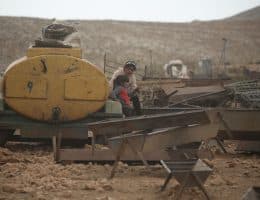
Since Israel severed the water lines feeding Ras al-Ahmar over a month ago, its 47 farming families have been rationing what little they have and weighing whether to sell their livestock and leave.
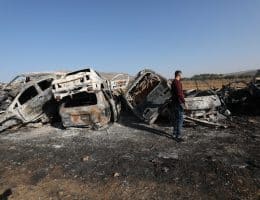
We need to collectively rethink describing Israeli settlers as “terrorists.” The label was designed to serve imperial interests, and it implies that settler violence is an aberration, not a systemic part of Zionist settler colonialism.

The arrest and detention of Philadelphia resident Hussein Jabarin is one example of the broader escalation of violence Palestinians are facing across the occupied West Bank.
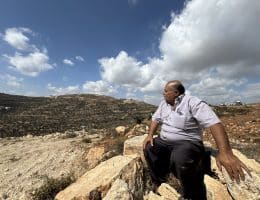
For seven months, Israeli settlers have besieged three Palestinian homes on a hilltop near Nablus, but the families refuse to leave. “We will lose ourselves if we lose Ras al-Ain,” a village leader told Mondoweiss.

Settler violence and army raids are erasing the West Bank village of al-Mughayyir. In recent months, villagers have seen a teenager killed defending his neighbors, thousands of olive trees uprooted, and nearly all the village’s lands stolen.
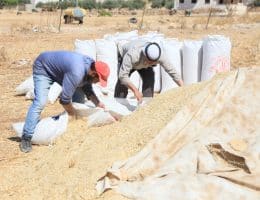
For generations, Palestinian farmers timed the wheat harvest by the stars and the rain. Now, Israeli settlers set the harvest instead, as their cows graze freely in Palestinian wheat fields across the West Bank after displacing Bedouin herders.
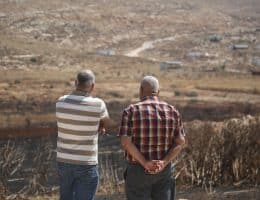
Israel’s “decisive” plan to annex the West Bank is coming to a head as the Israeli government pushes to depopulate Palestinian villages throughout the territory. Once a hub of resistance, the West Bank’s Palestinians now find themselves defenseless.

Israeli settlers have begun to escalate their colonization of Palestinian homes and lands in areas of the West Bank under ostensible Palestinian control, setting a dangerous precedent for Israel to completely take over the territory.

Twelve Palestinian families in the northern West Bank have barricaded themselves in their homes to protect against ongoing settler attacks as Israel moves to assert total control over the occupied territory.