There are two things I cannot deny after meeting Mosab Abu Toha, 29, an inspiring writer and poet from Gaza whose first collection of poetry titled Things You May Find Hidden in My Ear: Poems from Gaza debuted in April.
First, is that suffering produces creativity, and second, is that writers and poets are not born as such, but rather there is a moment in their lives, or a deep feeling, that brings out the writer in them. In Abu Toha’s case, many of these feelings center around depression and loneliness – something many of us in Gaza feel.
“In Gaza, breathing is a task, smiling is performing plastic surgery on one’s own face, and rising in the morning, trying to survive another day, is coming back from the dead.”
This is how Abu Toha expresses life in Gaza, a life impacted by unexpected wars and the effects of a long siege. In his book Things You May Find Hidden in My Ear: Poems from Gaza, Abu Toha takes readers on a journey, from the moment he began writing poetry in the midst of an Israeli offensive on Gaza in 2014.
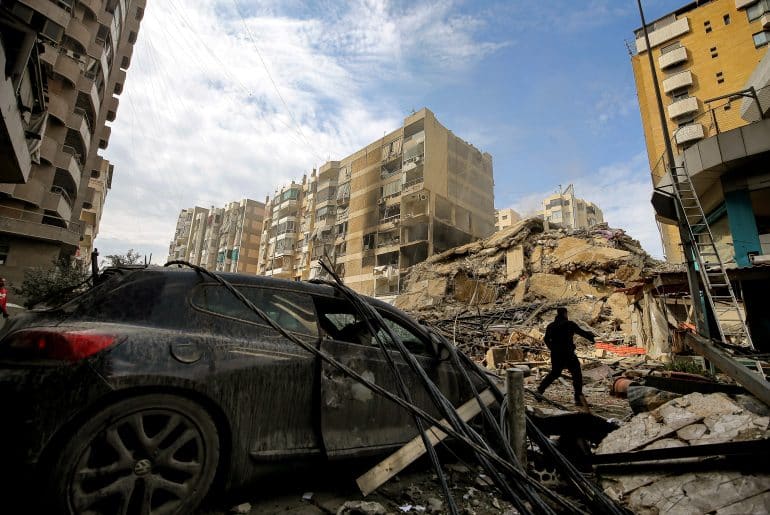
His collection of poems feature stories about poverty in Gaza, life under the siege, unemployment, and tales of bombs, on almost every page. This of course is no coincidence, as Abu Toha’s poetry was born in the midst of the 2014 war.
Mondoweiss interviewed Abu Toha at his home in Gaza City about his collection and the stories behind his poems.
Mondoweiss: When did you begin writing? What inspired you to start writing poetry?
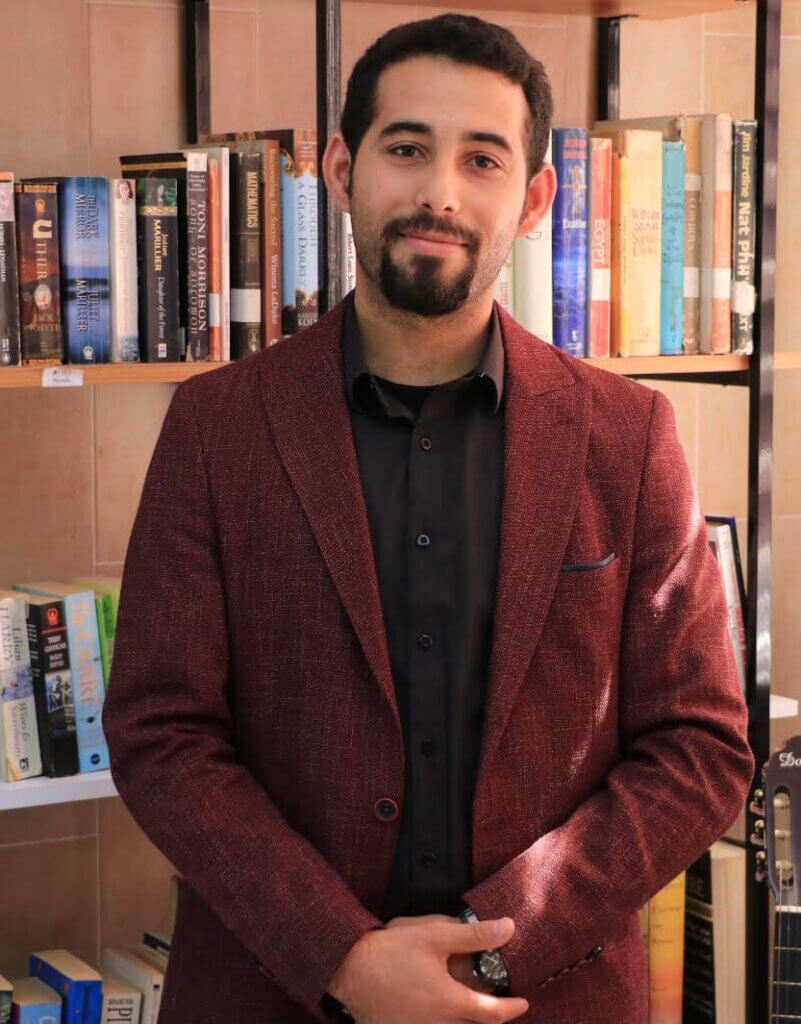
Abu Toha: Before the war of 2014, I was not writing, I had not yet discovered my talent of writing. During the war, I started writing about bombed homes and people who were killed, but in a different way than the news and the usual storytellers.
Finding a supportive audience pushed me to consider that writing could give me the chance to document history – not only by writing what is going on now, but by imagining what life might look like from other places and from other points of view. This is a duty I hold as a poet, to imagine the life of others and live through it.
Those who died at war, it was only by coincidence that they died and I survived. It could have been me in their place. I was touched by the lives of the Tanani family who were wiped out in the 2014 war. A family of six were all killed. It could have been my family, but by coincidence the warplane pilot chose their home instead of mine.
Imagining that I would be in their place inspired a painful poem I wrote about them, called “Shrapnel Looking For Laughter”. In this poem, I write that shrapnel not only killed the mother and the father, but also the laughter that was inside their home, the words on the children’s books. Even the radio in their home, when it was destroyed, the producer at the station felt the bomb when he said the news.
Shrapnel Looking for Laughter
The house has been bombed. Everyone dead:
The kids, the parents, the toys, the actors on TV, characters in novels,
personas in poetry collections, the I, the he and the she.
No pronouns left. Not even for the kids when they learn parts of speech
next year. Shrapnel flies in the dark,
looks for the family’s peals of
laughter hiding behind piles of disfigured
walls and bleeding picture frames. The radio
no longer speaks. Its batteries have burnt,
the antenna is broken.
Even the broadcaster felt the pain when the radio was hit. Even we, hearing the bomb
as it fell, threw ourselves
to the ground, each of us counting the others around them.
We were safe, but our hearts still ache.
Mondoweiss: So you are inspired by the visual scenes around you?
Abu Toha: Yes. War, siege, psychological suffering, denial, deprivation and so on. Man is created by the environment surrounding him. If I was born in the Amazon jungle, my writings would be about trees, sparrows, and lizards.
I reached the age of 27 and I hadn’t left Gaza once, that is a deprivation. I never got a chance to have even an aerial view of Gaza or my home, because there is no airport. There is a siege from all sides. I realized eventually that in Gaza, we are prevented from even imagining the world around us.
Mondoweiss: In some of your poems like “Sobbing without sound”, you speak about the bad conditions people in Gaza live in. What are some of your personal experiences with this topic?

Abu Toha: We wish for the simplest things. In this age there is a place where people wish they would wake up and find power is on. Instead of thinking of studying at the greatest universities in the world or going on a trip into the ocean, no, we wish to hear the sound of the birds without the buzz of drones in the sky. Our wishes are daily habits for all people, they live through it without even thinking that there are people who are denied such things.
We are under siege, and there is always a war on our doorstep, and our sobs are not heard by the world. We are desperate and hopeful for a normal life.
Mondoweiss: I was going to ask you how war affected your writings, but it seems war is what created you as a writer. How did that happen?
Abu Toha:When you read the work of great poets and writers, you are touched by the injustice they described and wrote about in their times. But you will find out that Palestinians have faced much worse conditions.
We are living in the 21th century, and still live with the the fear of going to the bathroom, because in a second maybe your house could get bombed, and you think – I don’t want to be killed while I’m naked. These humiliating feelings bring up a desire to express myself. I found out that writing is one of the ways that I can express my feelings from the war happening inside my head.
Mondoweiss: How did wars affect your childhood, and how has the siege continued to impact your life?
Abu Toha: When I write, I write on behalf of my generation. Occupation took away our childhood.
I remember when I was a child, there were lessons at school, like in geography, there was an activity talking about going on a trip to a mountain in Palestine, and going to discover a zoo. But at that time, those things weren’t possible for us, and they still aren’t possible.
Now every war takes something away from us, from our souls and lives. That’s why we grow up so fast. I was nine years old when I saw a helicopter firing towards a building and knocking it down.
We are forced to leave our childhoods behind when we are put into these new circumstances. War makes us older by mounting our suffering and pain. Now as a father of three, I see myself through my kids eyes, they are now living in even worse conditions than when I was a child.
Mondoweiss: Do you think your children will live in worse or better conditions than when you were a child?
Abu Toha: I hope they would not go for worse. I hope that we can give all kids like my sons better life conditions. For me, I’m in a little bit better situation than my father when I was a child, so I can give my kids what I could not have. Until now I’m ironically asking my mom for a childhood room full of toys, because I could not have one when I was a kid.
Mondoweiss: Throughout the book, you include many themes and motifs of darkness. Does this reflect your vision for what a future Gaza will look like? Or is it more so a reflection of the current situation?
Abu Toha: Most of my poems speak about the dark reality in Gaza. People here think of death and wars, they can not think of tomorrow or the future, because we always fear that history will repeat itself.
In Gaza, people measure their lives and time with war. For example, someone would say: “My son was born during the war, or, my son was born 2 months after of the war.”
It is true that I speak about wars and destruction in my book, but I’m bringing up what is hidden behind the details. I write what cameras can’t show, like the shrapnel which targets the smiles and laughs to kill.
When I write in English, I think of a western listener, as I speak directly to them to tell them what is going on here in Gaza. I had a friend who was a football player and a fisherman. He was killed by the Israeli navy while at sea. His death really affected me, so I wrote about him in a poem. I said: “His body will not float over the water, because scattered ships do not float.”
I write about our conditions to tell the world about the unfair life we live. That is my duty, to speak about my people.
Mondoweiss: You have a poem title “My Grandfather is a terrorist”, where you describe your grandfather doing normal, mundane things such as picking oranges, having tea, and smoking a cigarette. Can you tell us what the message was behind titling this poem in such a way?
Occupation attempts to manipulate the facts of the victims – Palestinians – and twist them as terrorists. If someone hates someone else, he will think everything he does is bad. For example, if he saw him tending to his orange tree he would think that he is planning to use it against him. If he saw him go to his land, he would think that he is going to attack him. People under the cover of occupation are always afraid of us, no matter what we do, because they know it is not their home or land.
To me, my grandfather represents Palestine. The occupier thinks that my grandfather or any Palestinian is a terrorist, but I’m showing you who they really were.
My Grandfather Was a Terrorist
My grandfather was a terrorist— He tended to his field,
watered the roses in the courtyard,
smoked cigarettes with grandmother on the yellow beach,
lying there like a prayer rug.
My grandfather was a terrorist—
He picked oranges and lemons,
went fishing with brothers until noon, sang a comforting song en route
to the farrier’s with his piebald horse.
My grandfather was a terrorist—
He made a cup of tea with milk,
sat on his verdant land, as soft as silk,
My grandfather was a terrorist—
He departed his house, leaving it for the coming guests, left some water on the table, his best,
lest the guests die of thirst after their conquest.
My grandfather was a terrorist—
He walked to the closest safe town, empty as the sullen sky,
vacant as a deserted tent, dark as a starless night.
My grandfather was a terrorist—
My grandfather was a man,
a breadwinner for ten,
whose luxury was to have a tent,
with a blue UN flag set on the rusting pole, on the beach next to a cemetery.
Mondoweiss: How does writing help you endure through war?
Abu Toha: I think writing sometimes comes as a therapy, but not necessarily a self-therapy. Sometimes unexplainable nightmares come to any person, writing creatively somehow helps to put down these thoughts that remain in our souls, suddenly these ideas and thoughts show up on the paper.
I ask myself sometimes, what sin has the paper committed to include all that deaths and destruction, what sin has it committed!
I think writing is a way of therapy. I do not mean that I treat myself, but sometimes we can not interpret nightmares. War trauma remains in our souls, it does not necessarily show up immediately but by time, its effect comes later, prompted by a familiar action or even a word.
Mondoweiss: What is the main takeaway you hope people will have after reading this collection?
I hope my book will find a way to the feelings and thoughts of readers, not only by sympathies, but maybe turning it into an attempt to change. People in the West can play an effective role within their societies to act against our occupation and suffering. To end the wars and the siege, they can urge their governments to take real steps towards achieving justice for the Palestinian case.
I want people to know that we did not choose to be born in this place, just as they did not choose to be born in their circumstances. I want people to imagine themselves in my place, under siege, surrounded by the occupation. You can’t travel, your life is filled with war, and you do not know if you will survive or not. You have no shelters, not even a helmet to wear when you’re running from bombs.
Imagine that, would you accept that kind of life for yourself?
“Shrapnel Looking for Laughter” and “My Grandfather Was a Terrorist” from Things You May Find Hidden in My Ear: Poems from Gaza. Copyright (c) 2022 by Mosab Abu Toha. Reprinted with the permission of City Lights Books