
A poet once said, “Things that have value in a person’s life are only things that give him the ability to retain human dignity.”
Last month, I was working on some difficult stories, like suicide in Gaza and how it has become more common in the community than ever in the past. Life is precious. Every human being believes this and spends his life trying to survive. But in Gaza, just surviving can sometimes be an impossible task.
Through many phone calls, I surprisingly met some people who said they thought once of ending their lives but luckily changed their minds. But then I met someone trying to do something that may be even more desperate than suicide.
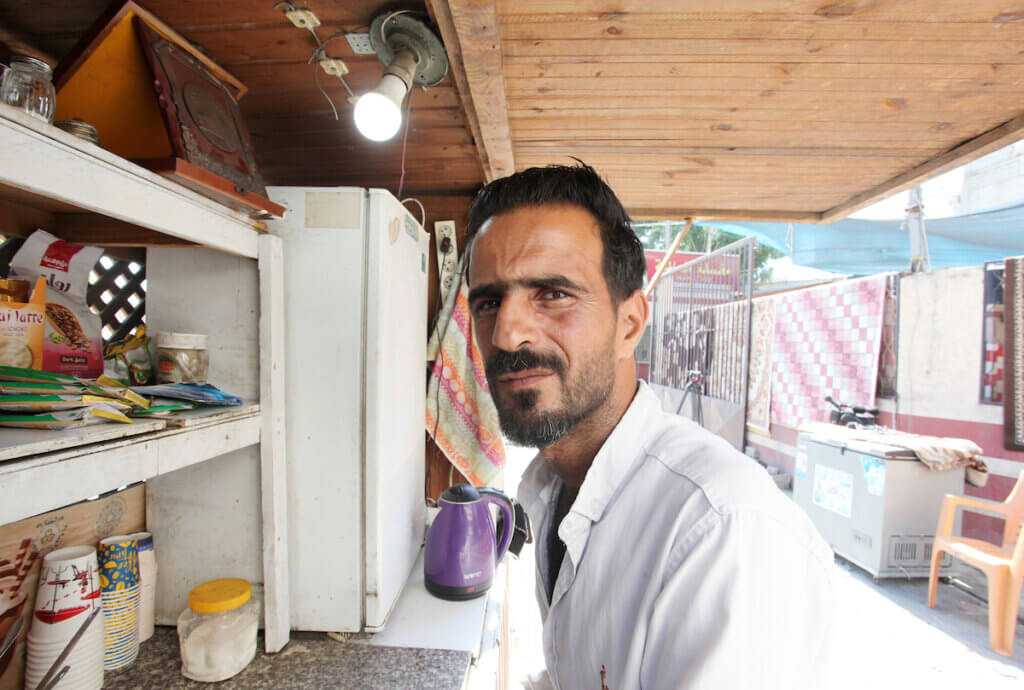
Talal Kullab, 31, is trying to sell his kidney to meet his debts. He recently built a home in his family building, and now he cannot pay. Unfortunately, it’s a common story in Gaza. Some contractors did not excuse his inability to pay and turned the bills over to the police. Talal spent a week in prison over his obligations in the last couple of months when he could not pay 50 Jordanian dinars. His father paid for it after a week and got his son released.
Talal recently remarried and is waiting for a child after years of wishing to have kids. He admits that what he’s doing is nothing but a slow suicide. “I’m offering to sell my health to live a normal life, and I do not know what will happen in the next five years. But I’m trying to help myself as I have no other option,” he told me over the phone.
When I called him, I asked if he received any aid from the government, UNRWA, or any aid organization because many programs aim to help the poorest people in Gaza, but he said he did not. I asked him if anyone had contacted him about buying his kidney. “You are the first person who has called about it,” he replied.
I was moved by his answer and started to ask him more. He is a peddler located on Al-Rimal Street, one of the most crowded areas in Gaza. He sells boiled corn in cardboard cups to passengers. His daily income is 15 shekels ($3.90). During his full day of work, he gets one meal that costs him five shekels and another five for his transportation, so he returns home with only five shekels ($1.30).
He asked me, “Tell me, if you leave your home all day to work and work hard under the sun and bear all that tiredness and get back to your family with only five shekels, what can you get for them? How will you feel when your pregnant wife asks you for anything, and you cannot cover it?” I answered him as sincerely as he asked his question. “I can get nothing for that,” I replied.
I tried to tell him what he was doing was not a good option and he may spend the rest of his life regretting it. But he was serious, waiting for anyone to call him to say they wanted to pay him for his kidney.
“I only have two choices, and the first is to go to prison and tear my family apart and lose everything. The second is to sell my kidney and stay among my family, maybe not in full health, but at least I will be with them,” he said.
Talal’s story is not unique in the Gaza Strip. Most people his age face endless economic crises and have trouble securing food for their families. But only some people’s thoughts are like Talal’s. He may be described as courageous or reckless; it doesn’t matter at this point. What matters now is the despair he has reached in his life and the consequences that may face him and his family.
The long siege and occupation have made people lose what would be considered valuable principles in traditional Gaza society. A story like someone selling his kidney for money would typically be unheard of – in a place that is free and not under siege.
On the other hand, maybe this is the exact result that occupation was meant to achieve: turning Palestinians to suicide or selling their organs just to survive the horrible situation they are living in. When you are worried about putting food on the table for your family, it becomes easier to forget about retaking the homeland that was stolen from you.


Our colleagues at Hasbara U will say that the whole problem is Hamas, which wants to destroy Israel. The proper response to this is Peter Beinart’s essay –
https://peterbeinart.substack.com/p/if-israel-eliminated-hamas-nothing
“If Israel Eliminated Hamas, Nothing Fundamental Would Change…Read staements by AIPAC or the Conference of Presidents of Major American Jewish Organizations and you’ll find endless references to “Hamas” and “terrorists” but few, if any references, to Palestinians….[ they] imply that if only Hamas could be eliminated, things would grow calm….If not for those radicals, who rile everyone up, Palestinians would quiet down and accept things as they are….All this is profoundly wrong. If Israel eliminated Hamas, nothing fundamental would change…It would not change because as long as Israel denies Palestinians’ basic rights, Palestinians will keep fighting Israel. That fight began long before Hamas was created. If Hamas were somehow destroyed, it would continue long after Hamas was gone…But whether Hamas exists or not, some Palestinians will continue responding to the violence of state oppression with violence of their own. There’s nothing unusual about this. Nelson Mandela supported violence—in the 1960s he helped turn the African National Congress from a nonviolent organization into one that employed armed struggle……..My point isn’t normative: Nothing justifies Hamas’ rockets against Israeli civilians, which may constitute a war crime. It’s descriptive. Eliminating Hamas won’t eliminate Palestinian violence any more than eliminating the ANC or IRA would have eliminated Black South African or Irish Catholic violence in the 1980s. The only way to stop oppressed people from responding to the violence of oppression with violence of their own is to end their oppression.”
The rest of the essay is worth reading.