Democratic voters are much better than most Democratic politicians when it comes to understanding Israeli apartheid.


Democratic voters are much better than most Democratic politicians when it comes to understanding Israeli apartheid.

On Monday, Israeli forces raided the West Bank village of Qarawat Bani Hassan in Salfit, injuring three Palestinians. A day later, armed fighters announced the creation of the “Salfit Battalion” and claimed responsibility for an attack on the nearby Ariel settlement.

Khader Adnan’s hunger strike protesting his imprisonment by Israel has surpassed 80 days and his life is in danger. “This time is different, he is feeling the toll that previous hunger strikes have had on him,” says his wife Randa Moussa.
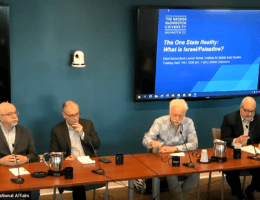
Beltway scholar Marc Lynch says even the White House understands Israel practices apartheid, even if it won’t say so publicly, because Palestinian intellectuals have led the way in shifting the foreign policy establishment.

A new poll by the University of Maryland shows that 44% of Democrats believe Israel is a “state with segregation similar to apartheid,” and 41% of Democrats support the BDS movement.

What will happen to the Israelis in Palestine after Palestinians are liberated from Zionism? The choices facing the “Pied-Noirs” at the end of colonization in Algeria may give us an idea.

At 18, the struggle in Nabi Saleh was my initiation to Palestinian confrontation, and to hope. Now, twelve years later, I am covering a new generation of Palestinians fighting to survive the slaughterhouse.

Jonathan Ofir interviews Israeli playwright Einat Weizman about her play “Prisoners of the Occupation” and how theater can become a vehicle for political mobilization and change.

The twin Israeli offensives on Palestinians in Jerusalem during Ramadan and Easter made one thing clear: the war to assert the Zionist presence over the city has entered a new phase.

A conversation between two leading U.S. rabbis show how strong the red lines still are in the organized Jewish community with regard to Israel.