

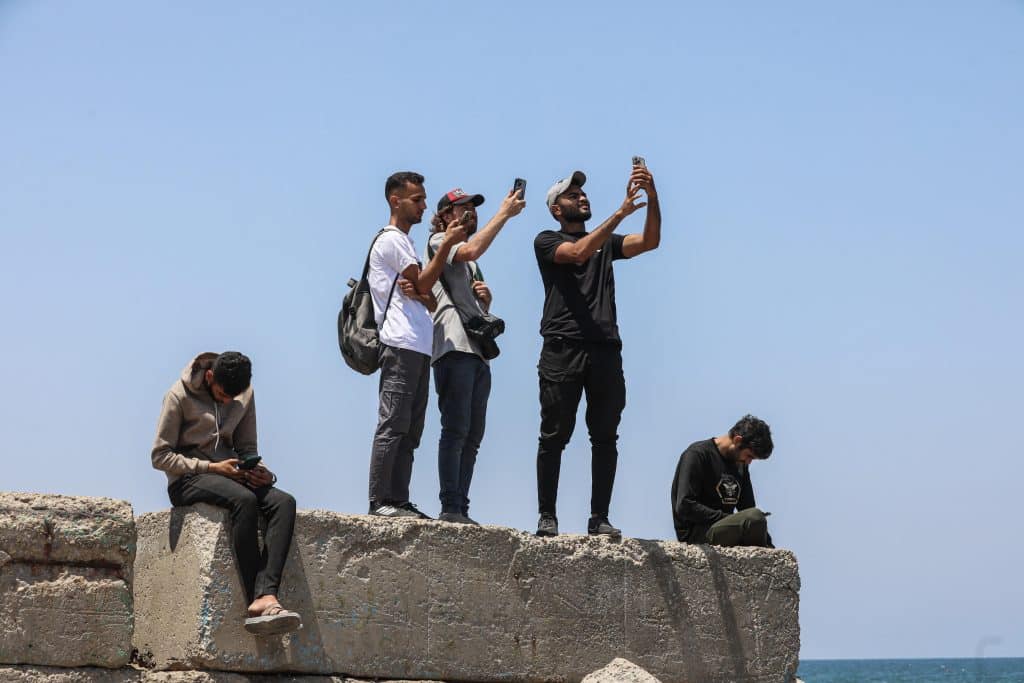
Two different worlds stand before my eyes.
In one, there is safety, order, and calm — a place of exile that has offered me shelter, yet never quite felt like home. In the other, there is Gaza: wounded, shattered, and distant, yet closer to me than anything else. Even amid the quiet of this new life, the image of my destroyed homeland remains suspended before me like a mirage I cannot stop chasing.
I spent my entire life in Gaza City. It is the place where my family belongs, where generations before me lived, and where every street carries a memory. Growing up, I watched uncles, cousins, and friends leave in search of opportunities, stability, and futures they could not find at home. I also witnessed something else: the distance that quietly grows between those who leave and those who remain.
In Gaza, people often say, “Those who are far from the eye are far from the heart.”
I used to think that saying was unfair.
Now I understand why people say it. I’ve watched it happen — to a cousin who left years before me, to friends I grew up with, whose calls grew shorter and then stopped altogether. The distance doesn’t announce itself. It just arrives.
When Palestinians leave a place shaped by occupation and arrive somewhere free, they encounter an entirely different reality. Things that seem ordinary to others become extraordinary. Wide roads. Organized cities. A plane landing just minutes away. Store shelves that are always full. The freedom to move from one city to another without checkpoints, permits, or fear. For many Palestinians, these are not everyday experiences. They are glimpses of a life that occupation has denied.
Most people I know who left become absorbed by the demands of starting over. Work, survival, paperwork, responsibilities, and the endless effort of building a life in a new country gradually pull their attention away from home. Not because they stop caring, but because life leaves little room to carry two worlds at once. I have seen it happen to people I grew up with — people who once spoke about Gaza every day, and then one day simply didn’t anymore.
Yet my experience has been different.
The work I do every day pulls me back toward Gaza.
Reporting on Gaza is not simply a profession. It is a form of belonging.
Every morning begins with messages, calls, updates, recordings, interviews, photographs, and testimonies. Every story leads to another story. Every voice carries the weight of a place that refuses to disappear. The hours spent reporting, listening, writing, verifying, and publishing are not merely journalistic tasks. They are threads connecting me to a homeland that remains physically distant but emotionally inseparable.
Perhaps the old saying is incomplete.
Maybe places, too, can be far from the eye and far from the heart.
But Gaza refuses to disappear from either.
Every report from Gaza passes through networks of journalists scattered across different locations. Some remain on the ground, documenting events from within the Strip. Others, like me, work from outside. Together, we form a bridge across the distances that war has created. Through our reporting, we reconnect neighborhoods, cities, and communities that have been fragmented by displacement, destruction, and military occupation.
Often, during video interviews, I find myself looking beyond the person speaking.
In the background, I see streets I once walked through. Buildings where I worked. Intersections I crossed countless times. Sometimes I recognize a tree standing alone and remember the others that once surrounded it. Sometimes I search for familiar landmarks only to realize they are gone.
The landscape has changed, but memory has not.
The people speaking may be describing a military operation, a destroyed home, or another day of survival. Yet I am also quietly searching the frame for traces of the Gaza I knew.
Gaza comes close again.
Close to my eyes.
Close to my heart.
Journalistic work about Palestine creates a relationship that goes beyond reporting. Listening to people’s stories and writing them down becomes more than an interaction between a journalist and a source. It becomes a connection between two human beings.
There is a particular kind of understanding that exists when the person asking the questions has lived the same reality. The grief being described is not abstract. The fear is familiar. The loss requires no translation.
Perhaps that is why I continue to feel Gaza so intensely despite the distance.
Because every story I write is also, in some way, a conversation with home.
And every day that I report on Gaza, Gaza reports back to me — through its people, its streets, its memories, and its wounds — reminding me that while I may be far from the land, the land has never been far from me.
Tareq S. Hajjaj
Tareq S. Hajjaj is the Gaza Correspondent for Mondoweiss and a member of the Palestinian Writers Union. Follow him on Twitter/X at @Tareqshajjaj
Re Gaza:
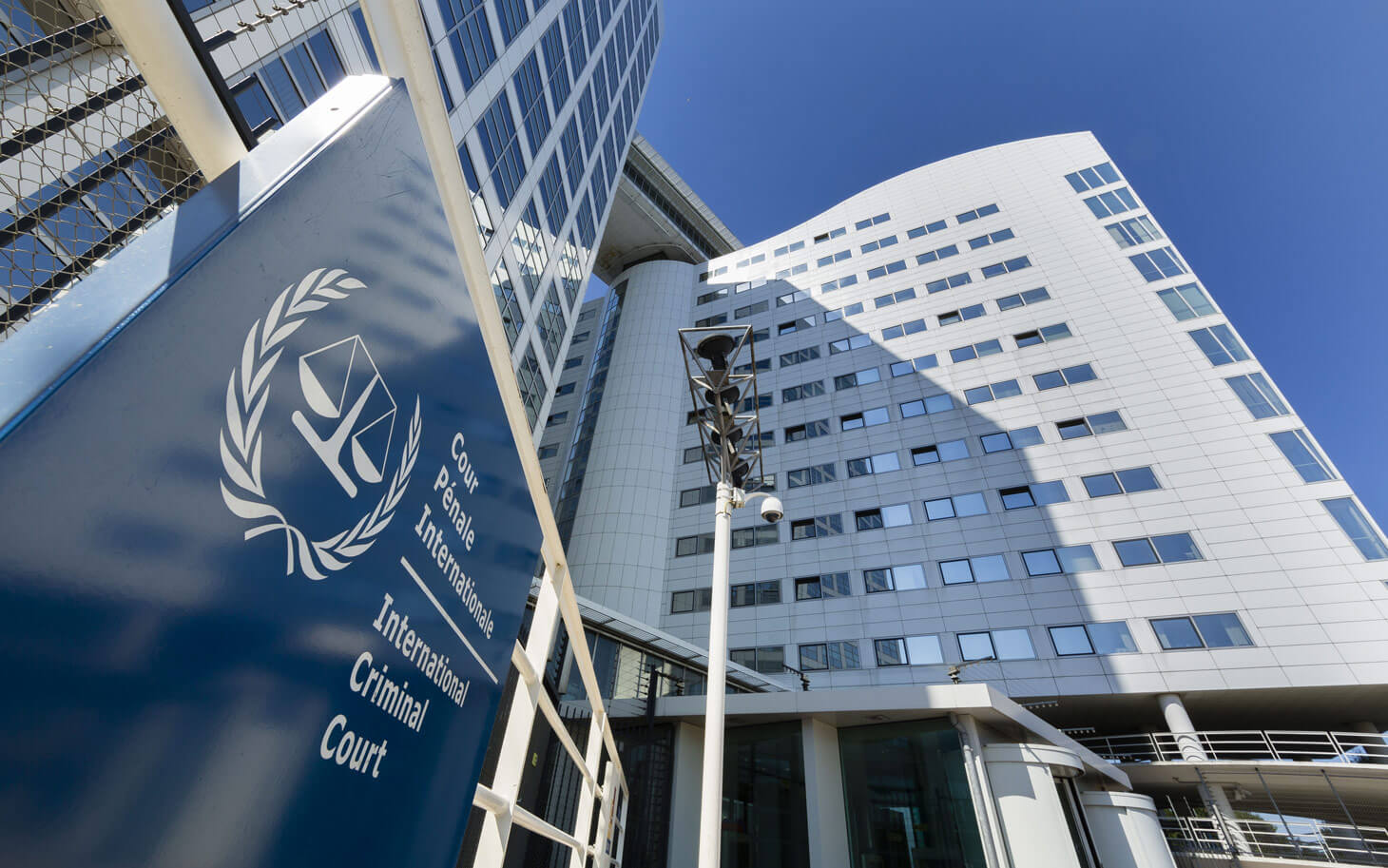
Israel continues to commit genocide, atrocity crimes by deliberately targeting Palestinian children, UN independent commission finds | UN News
Israel continues to commit genocide, atrocity crimes by deliberately targeting Palestinian children, UN independent commission finds….“The evidence shows that Palestinian children have been deliberately targeted and killed by the Israeli security forces,” said Srinivasan Muralidhar, chair of the UN Independent International Commission of Inquiry on the Occupied Palestinian Territory, including East Jerusalem, and Israel.
The report:
a-hrc-62-crp-2.pdf
As an occupying power, Israel is legally bound to ensure the protection, care and survival of Palestinian children. However, through the nature, scale and extent of Israel’s military operations in Gaza, the Israeli government and security forces have deliberately carried out acts inflicting death and severe bodily and mental harm on hundreds of thousands of Palestinian children, irreparably destroying the sanctity of childhood, including family ties, identity, innocence, safety and future. The Commission found that much of the harm suffered by Palestinian children was not incidental but intended to destroy the existence of the Palestinians in Gaza as a group.
Incredibly poignant!