


The Zionist end game in the West Bank is upon us. The last eleven months leave little room for doubt as settlers continue to actively depopulate Palestinian communities, kidnapping and torturing young men and establishing new colonies. Israeli National Security Minister Itamar Ben-Gvir openly boasts about seeking to build a synagogue on top of the al-Aqsa Mosque compound.
None of this should be understood as a new phase of Zionist settler colonialism; rather it is its sharpening, its coming out into the open in a more brazen way. What is happening in Gaza can and will happen elsewhere in Palestine. Not because the contexts or conditions are identical, but because they stem from the same supremacist logic and system of colonial domination.
It is a mistake to believe that a ceasefire, regardless of its form, will put the genie back into its bottle. We will not go back to the pre-October 7 status quo and move on with our lives until the next time Gaza is bombed. If anything, October 7 showed how completely unprepared the West Bank is for what is coming, partly due to stubborn self-deception nurtured over the last three decades: the idea that there can be any semblance of normal life under occupation in return for obedience.
How else can we explain building fragile glass commercial towers in cities under occupation? This is not the infrastructure of a society in confrontation or that plans to fight. Meanwhile, barely a few kilometers away, settlements are designed like fortresses, even though they are not under military occupation. They are designed in a way that aids in their function, which is the colonization of Palestinian land. This invites the question: what function do various Palestinian communities in the West Bank perform today?
Domination and resistance
This is not to say that the West Bank has been sitting idly by. The last few years have witnessed the rise of different resistance groups, especially in refugee camps, and hundreds of Palestinians have been martyred. These groups have developed their capabilities and challenged Zionist colonialism to the point where the Israeli regime reinstated aerial bombardment in the West Bank, something it hasn’t resorted to since the Second Intifada.
While not everyone can actively resist in the same way, everyone is responsible for creating the conditions that allow for resistance. In this way, there is still more that the West Bank could be doing, especially on the popular level. Perhaps one of the most urgent arenas of struggle where more mainstream participation is possible is the economic one, as this is a primary way through which Israel maintains its control over Palestinians and hampers all kinds of resistance.
The de-development of the Palestinian economy and reducing the rural Palestinian population into a proletarianized captive workforce inside the colonial economy have been key tools for the demobilization and domestication of Palestinians. Palestinian livelihood is held hostage by the Israeli regime, which imposes a very high price for resistance. To paraphrase Ismat Quzmar at a lecture on the occupation’s economic policies since October 7, Palestinians are always stuck between their immediate material interest and their long-term nationalist interest. This is why the battle to weaken and dismantle this system of domination is key to reinforcing Palestinian steadfastness on the ground and establishing a more contentious political and economic order.
Simply put, if we cannot feed ourselves, we cannot free ourselves. If we cannot independently sustain the infrastructure of life, then this same infrastructure will be used to cage us. Upon the occupation of the West Bank, Moshe Dayan said that if Israel could “pull the plug” and cut off Palestinian cities from resources, then it would be a more effective control mechanism “than a thousand curfews and riot-dispersals.”
These are not foreign or novel ideas. Self-reliance formed the basis for an economy of resistance preceding and during the First Intifada. Projects such as “Victory Gardens” saw land plots and house yards turned into productive vegetable gardens to promote self-reliance and independence. This meant that Palestinian cities and villages could withstand closures and sieges for prolonged periods, ensuring that no matter how much conditions deteriorated, Palestinians would not starve.
After the signing of the Oslo Accords, these self-reliance efforts would be gradually undone under the guise of “state-building.” Instead, disenfranchised Palestinian farmers would be encouraged to shift to cash crops, such as growing flowers to export to European markets and integrate into the world economy. Coupled with land annexations and working in the colonial economy, these transformations have left Palestinian farmers in dire straits, with barely 26% of them reporting agriculture as their primary source of income. This falls in line with the concept of food security, where food is procured through trade or aid. What this approach neglects, however, is how food is produced and marketed, the monopolies on seeds, and other power relations determining who gets to eat. It also neglects that Palestinians are suffering under settler colonialism and that they could be cut off from the outside world according to the whims of petulant Israeli politicians.
Food sovereignty in Palestine
The concept of food sovereignty arose to challenge the shortcomings in the food security paradigm. It centers on small-scale farmers and seeks to build sustainable local food production. It also focuses on reclaiming land and resources, creating communally organized production, and building the infrastructure needed to support resistance. Adopting such a paradigm will help create alternatives to extricating Palestinian labor from the colonial economy, supporting the steadfastness of farmers on their land, and repulsing settler encroachment.
Our economic resistance strategy should be decoupled from pure profit motivations and place heavier emphasis on the strategic value of controlling our production of critical resources, such as wheat. Even if this is more costly in the short run, it should be viewed as a communal investment in a different future where resistance does not automatically mean destitution. This goes beyond merely changing consumption habits and will need to be accompanied by a social and political movement that seeks to transform Palestinian communities into resilient hubs of resistance.
What was it about a modest dairy collective of 18 cows in Beit Sahour during the First Intifada that made it such a threat to the occupation that no effort was spared to shut it down? What is it about Palestinian dairy corporations today, with thousands of cows, that does not elicit a similar response? This is the key question we need to unpack.
The political order of the last 30 years has reached its end and refusing to acknowledge that will not shield us from the repercussions. It has failed to protect us or offer a vision for a free future. It is understandable when a complicit international community continues to sell us this delusion of temporary occupation and two states, but another matter entirely for us to deceive ourselves. We should act accordingly, and support -by all means available- a widespread return to the land as a dynamo towards reestablishing the resistance economy of the past and developing it to tackle the challenges of the present.
Palestinians must work to support the infrastructure for resistance. We need to feed each other as a collective or starve in our individual households.
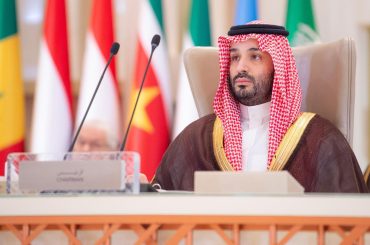
Trump’s Ambassador to Israel, David Friedman, has been showing up a lot in various news stories. Naturally, he has a book out so he is making the rounds. For example:
https://forward.com/fast-forward/649830/david-friedman-book-donald-trump-israel-wes-bank-annexation/
Thank you, Fathi. Too little attention is given to the economic impact of colonialism upon the colonised. By the same token, not much is being given to the serious effects Netanyahu’s prolonging of the war is having on the Israeli economy either.
I expect you are right about a “coming genocide.” At least “a little” genocide. After all, what’s going on now? What has been going on? Who is going to stop it? But hopefully, right-minded people might say, it won’t be a “total” genocide. Still, one wonders what is in the cards? When Phil Weiss advocates a one state solution, I am pretty sure he means one with equal rights for all. I’ve been surprised at times when some folks known as “liberal Zionists” reveal that is not at all what they want or will tolerate. I’m not surprised, of course, when right-wingers say the same. Such thoughts raise the question of what the future holds.
Below is another paragraph from the Forward article I cited above, a paragraph that describes one vision. Whether it is realistic or excessively optimistic, I
don’t know.
“The last few years have witnessed the rise of different resistance groups, especially in refugee camps”____________________________________________________________
Both Saeb Erekat and Sheik Yassin concluded arms to settle the conflict were no longer workable.
Not having a one-gun (one authority) frame, reinforces their approach.
Be it Harris or Trump, rocks and rifles have run their course.
The world’s sympathy is a powerful political tool if wisely used.
Genocide can take various forms. One form in Gaza, another in the West Bank. The New York Times earns much valid criticism here for its reliable and influential pro-Zionist slant. Still, sometimes facts are allowed to intrude. Those with access to NYTimes.com may wish to see the videos in today’s story titled “Israeli Bulldozers Flatten Mile After Mile in the West Bank.” The story is by Erika Solomon, Lauren Leatherby, and Aric Toler. I would include a link, but I assume it is behind the paywall. The text dutifully reports Israeli words, but the pictures speak volumes.