


As head of Health and Environment management at the Gaza City municipality, I am responsible for processing and disposing of all types of waste, including household, medical, industrial, agricultural, and marine waste. With a population exceeding 800,000 people, our city generates over 700 tons of waste daily. Before the Israeli genocide began on October 7 almost a year ago, managing this volume of waste in a city under siege was already challenging. The Israeli occupation systematically prevented us from importing or building the necessary equipment to carry out our work, including garbage trucks or waste treatment facilities, over nearly two decades. After the genocide began, the Israeli occupation launched a war on all our sanitation facilities and waste management systems, with the objective of creating an environmental and health crisis in Gaza.
Over the years, I have lived through several Israeli assaults on Gaza — in 2008, 2012, 2014, and 2021. Each time, we adapted and continued our essential services. But this war is unlike anything we have ever seen. It is not just another assault, but a genocide aiming to take away our city’s ability to function. Every day feels like a Sisyphean race against time to maintain essential services for a city being systematically obliterated.
The occupation targeted our teams in East Gaza where our landfill is located, making it impossible to transport waste there and forcing us to pile it in the middle of the city, creating hazardous conditions for Gaza residents.
From the very beginning of the war, I constantly worried about my family’s safety. When the Israeli army ordered evacuations, I took my family to Khan Younis in the south as instructed. The image of my mother’s tearful plea for me to stay with them when I decided to go back north will forever haunt me. Yet, I felt compelled to return to Gaza City to continue my work for those still there.
Driving back alone, I passed a vehicle hit by an airstrike. I saw bodies scattered across the road, and rubble was everywhere. I pressed on despite my fear.
Upon my return to Gaza, I was alone. We struggled to salvage what remained of the waste management system and to keep basic services operational for those who remained. Amid the dire conditions, I lost over 8 kilograms within a month. My mother almost didn’t recognize me when we spoke together on a video call.

Managing solid waste during a genocide
Before the genocide, the blockade had already prevented us from importing proper equipment like compactors or incinerators. Our entire system was already fragile as a result of the 17-year-long siege.
Waste management is supposed to take place in three stages — collection, transportation, and disposal. The blockade forced us to resort to makeshift solutions, such as using 300 carts pulled by animals, which for years kept the city functional until the genocide started.
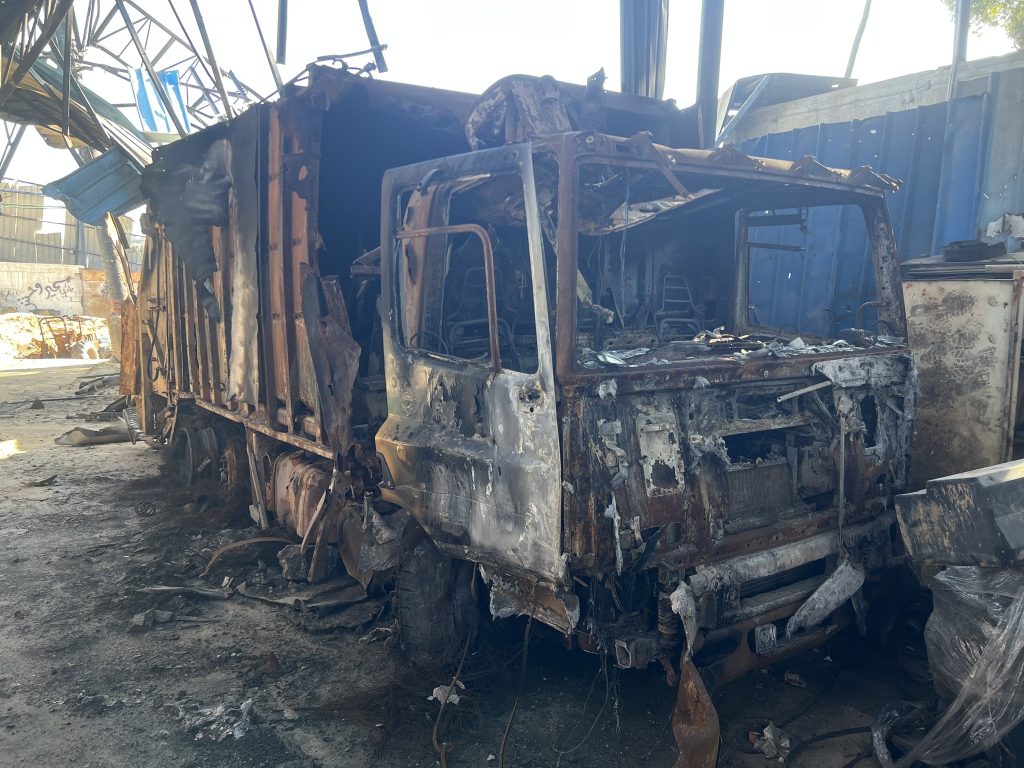
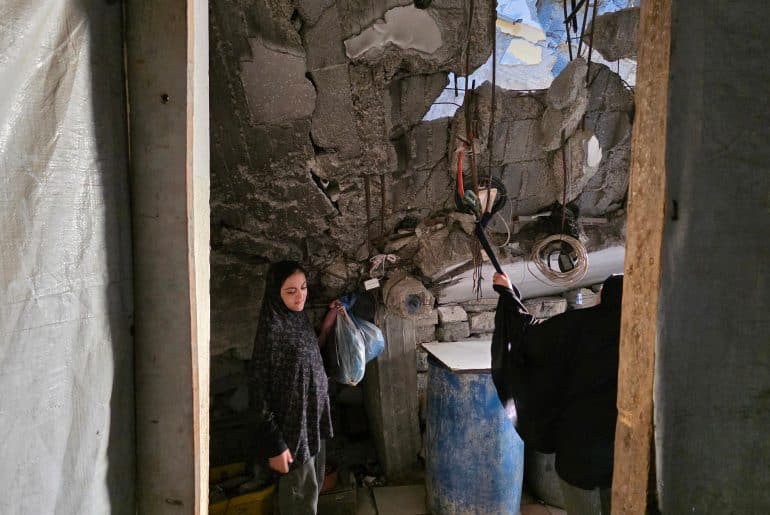
On the first day of the genocide, Israeli forces targeted our workers at the landfill, injuring many and destroying $1.5 million worth of equipment. We had no choice but to dump waste in the city center at makeshift locations like Yarmouk market and the open spaces in al-Feras market. These areas, once lively, are now overwhelmed with rotting garbage, posing severe health risks to the few residents who remain.
Managing over 500 workers became nearly impossible. Half of my team lives in northern Gaza, where they continued to use carts in the early days of the war. As the fighting intensified, even this method was no longer safe. The northern part of Gaza faced heavy bombardment, and many of the workers were displaced, taking refuge in school shelters.
Their carts were parked in nearby yards, but those were destroyed by airstrikes. Many workers lost their livelihoods and means of survival. In one strike, we lost over 40 staff members who had been sheltering in our main garage. Eight missiles destroyed over 120 vehicles used for waste collection, wastewater management, and water distribution. Half of my team was injured, many of whom will never be able to return to work.
A city drowning in its own waste
With over 150,000 tons of waste piling up in Gaza City, the environmental and health consequences are dire. As we approach winter, these waste piles will block drainage systems, leading to potential floods in an already devastated city. Many displaced residents living in makeshift shelters will face the added horror of flooding. The air is thick with the stench of burning garbage as desperate residents try to manage the waste by setting it on fire. The toxic fumes are worsening the situation, causing an increase in respiratory illnesses. The Gaza Ministry of Health has reported over 250,000 cases of skin diseases due to exposure to waste. With medical and hazardous waste accumulating alongside household trash, we are on the brink of a catastrophic health crisis.
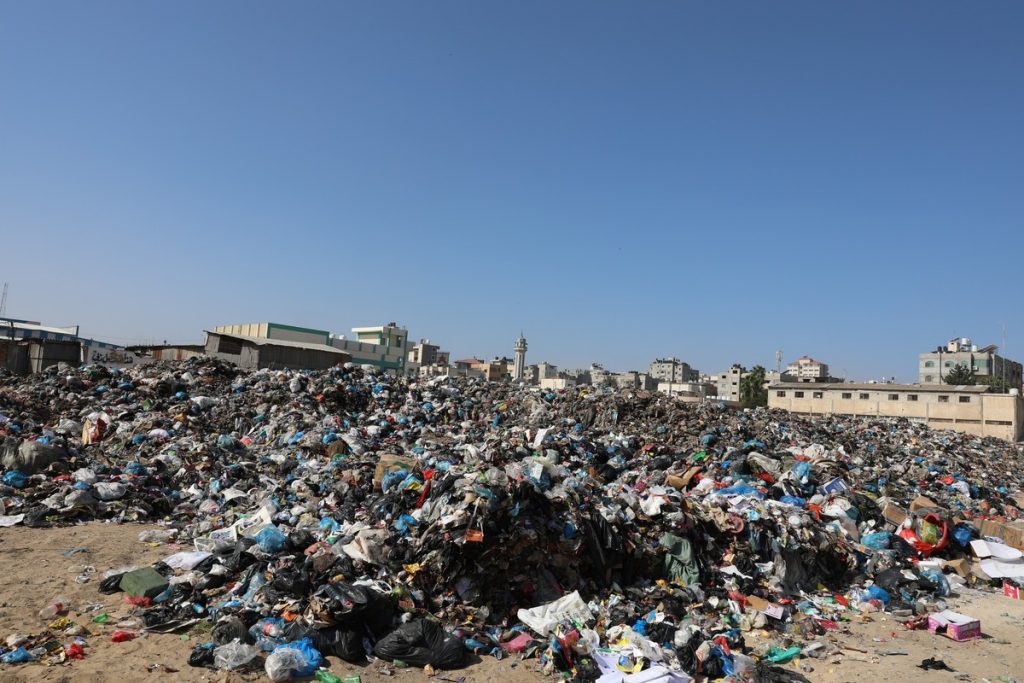
Our waste management system, once fragile but functional, is now in ruins. Over 150,000 tons of waste are poisoning the city, and the rainy season will only exacerbate the situation. We urgently need assistance. Gaza’s infrastructure is collapsing, and its people are overwhelmed by the weight of genocide. We cannot endure this much longer. The world must act before Gaza becomes uninhabitable, its people left with nothing but memories of a once proud city now buried beneath its own waste.
Ahmed Abu Abdu
Ahmed Abu Abdu is a seasoned expert in solid waste management and environmental issues currently navigating the complexities of humanitarian crises and the impact of climate change. With over a decade of experience and a background in hazardous waste management from Japan, he is dedicated to addressing the multifaceted challenges facing communities in conflict zones like Gaza.
Another was crime to add to the long list.
As best I recall, with some prior assaults , the US media paid attention and eventually pressure was brought to end the assault. Other times, e.g., “the Great March of Return,” US media pretty much ignored it. In any event the result was similar: continued status quo with more oppression. This time, the broadcast media seem to have settled in to a routine of low-level reporting largely filtered through a Zionist gaze. One can find a bit more diversity in print or online, if one looks. Given Biden’s policy and bipartisan support for it, and zealous Zionist lobbying, we again have arrived at the same destination, here in the US. In Gaza and the West Bank, of course, things only get worse.
“The Israeli occupation systematically prevented us from importing or building the necessary equipment to carry out our work, including garbage trucks or waste treatment facilities, over nearly two decades.”
This would be a good time to examine a breaking story about Israel’s restrictions on Gaza imports: Pro Publica reports that U.S. agencies have determined that Israel has blocked humanitarian aid from entering Gaza, but Anthony Blinken told congress that Israel is not restricting aid!
Israel Deliberately Blocked Humanitarian Aid to Gaza, Two Government Bodies Concluded. Antony Blinken Rejected Them....Blinken told Congress, “We do not currently assess that the Israeli government is prohibiting or otherwise restricting” aid, even though the U.S. Agency for International Development and others had determined that Israel had broken the law….The U.S. government’s two foremost authorities on humanitarian assistance concluded this spring that Israel had deliberately blocked deliveries of food and medicine into Gaza…The U.S. Agency for International Development delivered its assessment to Secretary of State Antony Blinken and the State Department’s refugees bureau made its stance known to top diplomats in late April. Their conclusion was explosive because U.S. law requires the government to cut off weapons shipments to countries that prevent the delivery of U.S.-backed humanitarian aid. Israel has been largely dependent on American bombs and other weapons in Gaza since Hamas’ Oct. 7 attacks….But Blinken and the administration of President Joe Biden did not accept either finding. Days later, on May 10, Blinken delivered a carefully worded statement to Congress that said, “We do not currently assess that the Israeli government is prohibiting or otherwise restricting the transport or delivery of U.S. humanitarian assistance.”...Prior to his report, USAID had sent Blinken a detailed 17-page memo on Israel’s conduct. The memo described instances of Israeli interference with aid efforts, including killing aid workers, razing agricultural structures, bombing ambulances and hospitals, sitting on supply depots and routinely turning away trucks full of food and medicine….
https://www.propublica.org/article/gaza-palestine-israel-blocked-humanitarian-aid-blinken
Dear Mondoweiss Team,
Thank you for sharing my article about the critical waste management crisis in Gaza. Your platform plays a vital role in raising awareness and conveying the urgent realities our community faces.
I would like to extend a special thanks to Faris Giacaman for his support and dedication. I hope that by continuing to highlight these issues, we can amplify the voices of resilience in Gaza and call for the necessary support to address this humanitarian disaster. Together, we can ensure that the world hears the call for life and dignity amidst the challenges we endure.
Thank you once again for your commitment to this cause.
Warm regards,
Ahmed AbuAbdu
Juan Cole has another take on Israel’s destruction of Gaza’s public health infrastructure today:
https://www.juancole.com/2024/09/water-weapon-institute.html