

Casualties
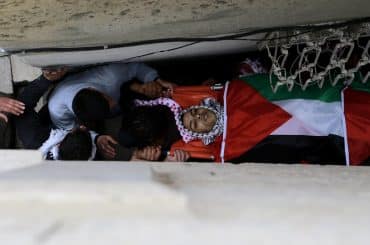
- 41,909 + killed* and at least 97,303 wounded in the Gaza Strip. 32,280 of the slain have been identified, including 10,627 children and 5,956 women, representing 60% of the casualties, and 2,770 elderly as of August 6, 2024. Some 10,000 more are estimated to be under the rubble*
- 743+ Palestinians have been killed in the occupied West Bank, including East Jerusalem. This includes at least 146 children.**
- 2,083 Lebanese killed and more than 9,869 wounded by Israeli forces since October 8, 2023***
- Israel revised its estimated October 7 death toll down from 1,400 to 1,189.
- The Israeli army recognizes the death of 720 Israeli soldiers and the injury of at least 4,100 others since October 7.****
* Gaza’s branch of the Palestinian Ministry of Health confirmed this figure in its daily report, published through its WhatsApp channel on October 7, 2024. Rights groups and public health experts estimate the death toll to be much higher.
** The death toll in the West Bank and Jerusalem is not updated regularly. This is the latest figure according to the Palestinian Ministry of Health as of October 7, 2024.
*** This figure was released by the Lebanese Health Ministry, updated on October 7, 2024. The counting is based on the Lebanese official date for the beginning of “the Israeli aggression on Lebanon,” when Israel began airstrikes on Lebanese territory after the beginning of Hezbollah’s “support front” for Gaza.
**** These figures are released by the Israeli military, showing the soldiers whose names “were allowed to be published.” Israeli daily Yediot Ahronot reported on August 4, 2024, that some 10,000 Israeli soldiers and officers have been either killed or wounded since October 7. The head of the Israeli army’s wounded association told Israel’s Channel 12 that the number of wounded Israeli soldiers exceeds 20,000, including at least 8,000 who have been permanently handicapped as of June 1. Israel’s Channel 7 reported that according to the Israeli war ministry’s rehabilitation service numbers, 8,663 new wounded joined the army’s handicap rehabilitation system since October 7 and as of June 18.
Key Developments
- Gaza branch of Palestinian Health Ministry says death toll surpasses 41,788, with 96,794 wounded since October 7, comprising 33% children, 18.4% women, and 8.6% elderly; at least 115 Palestinian children born and killed by Israeli forces since October 7.
- Palestinian Health Ministry says the death toll by the Israeli army or settlers in the West Bank and Jerusalem has reached 722 since October 7.
- Lebanese Ministry of Health says 1,974 Lebanese people killed, over 9,384 wounded in hundreds of Israeli airstrikes across Lebanon, especially in the south and the Beqaa Valley as of the beginning of escalating hostilities between Hezbollah and Israel in September 2024.
- Hamas military spokesperson Abu Obeida says resistance “will continue a long and painful war of attrition” against Israel in speech marking first anniversary of October 7; says Israeli captives are “in difficult conditions” and could have been returned to their families “had it been in Netanyahu’s interests.”
- Israel kills at least 25 Palestinians in the bombing of two schools and a mosque in central Gaza.
- Palestinian photojournalist Hasan Hamad killed in an Israeli strike in Jabalia, marking 175th journalist to be killed in Gaza by Israel since October 7, 2023.
- Israel launches new ground invasion of Jabalia refugee camp in northern Gaza for sixth time since start of war.
- Israel orders Palestinians in eastern Khan Younis, mostly already displaced, to leave again ahead of ground operations.
- Five rockets launched from Gaza fall in Tel Aviv area, with two Israelis wounded.
- Israel increases airstrikes on Beirut’s southern district and towns across the south.
- Two hospitals in Beirut stop functioning after damage caused by Israeli airstrikes.
- Israel continues attempts to infiltrate Lebanese territory in the south, is faced with Hezbollah resistance.
- Hezbollah continues to launch rockets on the Galilee, including the cities of Haifa, Tiberias, and Akka.
- One Israeli killed, 13 wounded in shooting and stabbing attack in Bir al-Sabe (Bersheeba).
- Israeli army admits the death of two soldiers, injury of 20 other in drone attack from Iraq at military base in occupied Syrian Golan heights.
Hamas says Israeli captives in ‘very difficult situation’ as Israel orders new evacuations in Gaza
The spokesperson of Hamas’s Qassam Brigades, Abu Obeida, said that the remaining Israeli captives in Gaza “could have been returned to their families if it would have fit with Netanyahu’s interests,” noting that the lives of the remaining captives are in danger.
Abu Obeida’s remarks came in a recorded speech on the occasion of the first anniversary of the October 7 attack. In the speech, Abu Obeida saluted the resistance movements in Lebanon, Yemen, and Iraq, commenting on the recent string of Israeli assassinations against Hezbollah in particular.
“If assassinations were a military victory, the resistance would have ended long ago,” Abu Obaida said.
Abu Obeida also said that after a year of fighting the Israeli army, Palestinian factions were determined to continue a strategy of attrition. “Our option is to continue a long and painful war of attrition against the enemy,” Abu Obeida said, adding that Israel “is only sustained by the strings of the U.S. administration.”
On Monday morning, the Qassam Brigades announced the launch of a barrage of rockets on Tel Aviv to mark the first year of the war. Israeli media reported that five rockets impacted the Tel Aviv area in central Israel and that two Israeli women in their 30s were injured.
Meanwhile, Israeli forces bombed two schools and a mosque sheltering displaced civilians in Deir al-Balah in the central Gaza Strip. The strikes killed at least 25 Palestinians, including children, according to Dr. Khalil Daqran, the spokesperson of the Al-Aqsa Martyrs Hospital.
Daqran added in a phone interview with Al-Araby TV that the hospital, which is the last remaining functioning medical center in the central Gaza Strip, was overwhelmed with patients and the wounded, and was lacking medical supplies. Daqran said that the wounded from the latest bombings were placed on the floor for lack of beds.
Simultaneously, Israel launched a new ground invasion into the Jabalia refugee camp, ordering its remaining residents to leave south. The invasion marks the sixth invasion of the camp since October 7, and the third major military operation. The Israeli army had last invaded Jabalia between May and June following the regrouping of resistance forces in the camp.
During the current invasion of Jabalia, the Israeli army had used a pathway it established on Street 9, east of Jabalia refugee camp when the area was invaded last May.
On October 6, shelling and bombing rained on top of the area to pave the way for the tanks to invade.
“The Israeli army has been bombing many buildings since yesterday morning, without any warning that they would invade Jabalia,” Raneem Mousa, a Jabalia resident, told Mondoweiss.
Raneem and her family thought they would have to evacuate when they first noticed initial warning signs and irregular army movement in the area. It followed a similar pattern to what they had noticed in previous invasions: continuous bombing and shelling, followed by armed clashes in the area, meant a likely invasion.
“Neighbors could not leave, and they were still besieged in their homes and were calling for help.”
“If they walk out, they are shot by the Israeli army. I saw my neighbor and his son trying to leave before the full invasion, but the quadcopter shot him and his son, and they lay on the ground bleeding.”
Raneem Mousa
“We woke up yesterday to find the army among us,” Raneem said. “Neighbors could not leave, and they were still besieged in their homes and were calling for help.”
“If they walk out, they are shot by the Israeli army,” Raneem says. “I saw my neighbor and his son trying to leave before the full invasion, but the quadcopter shot him and his son, and they lay on the ground bleeding.”
“Bystanders were able to drag the son away and save him, but his father man was left for stray dogs,” she recounted.
Among the casualties of the bombing on Jabalia was photojournalist Hasan Hamad, 19, who had been covering the Israeli war in Gaza for a year. Hamad became the 175th Palestinian journalist to be killed by Israel in Gaza since October 7.
The casualties of the invasion are expected to be high, but the numbers can be revealed only in the aftermath.
Meanwhile, the Israeli army ordered four areas in the city of Khan Younis to evacuate their homes on Monday morning, publishing a map indicating the areas encompassed on the evacuation order. These included all the eastern parts of Khan Younis.
Israel continues to bomb Beirut, faces resistance on Lebanese border
Israel continued to bomb Lebanese towns across the south of the country and its capital city of Beirut. On Monday alone, Lebanese authorities reported nine airstrikes on Beirut. The Sainte Therèse Hospital and the al-Rasoul al-Aazam Hospital in Beirut reportedly stopped functioning after being damaged by Israeli airstrikes.
The airstrikes intensified on the southern border towns of Kafr Kila, Idaiseh, Rmeish, Kifoun, and Mays al-Jabal. The Israeli army also ordered some 70 towns across the south of Lebanon to evacuate as it continues its ground operations along the Lebanese border.
The Israeli army had earlier announced last week that it had launched a “limited ground operation” into southern Lebanese territory, although the exact scale and degree of penetration into southern Lebanon has remained unclear in media reports.
Early on Monday, the Israeli army admitted to the killing of one soldier and the wounding of another in combat against Hezbollah fighters in southern Lebanon, raising the recognized number of Israeli casualties since the start of the ground invasion a week ago to 12.
During the past week, Hezbollah announced that it successfully fought off several Israeli attempts to invade Lebanese territory through the towns of Kafr Kila, Maroun al-Ras, Yaroun, and Ain Ibl. On Thursday, the Israeli army reported a “painful event” in south Lebanon involving casualties in the ranks of the elite Golani Brigade.
Hezbollah also increased its rocket barrages on the Galilee, targeting Haifa, the Karyot residential area near Akka, Safad, and Tiberias.
Since October 8, 2023, Israeli attacks on Lebanon have killed 2,083 Lebanese and wounded 9,869 others, according to Lebanese authorities.
Two developments: First, the media has been generally reporting the Iranian missile attack as inconsequential, but analysts have been pointing out that isn’t the case. The Wall Street Journal, not known for its anti-Israel sentiment, reports
“Iranian Missiles Overwhelmed Israeli Defenses at Some Sites, Analysts Say…
While damage was limited, Tuesday’s strike suggests Iran could cause serious pain if it hits Israel’s civilian infrastructure…”
If it escalates no doubt Iran will suffer the worst of it, but there will be large craters in Tel Aviv.
https://www.wsj.com/world/middle-east/iran-missiles-israel-overwhelm-defence-a7cbd9af
Second, on Day 367 the lack of an Israel plan is becoming more and more apparent:
Israel’s lack of vision in multi-fronted war may be fatally exposed…A year into Israel’s fast metastasising multi-front war that now includes Iran, Lebanon and Gaza, Yemen, Syria and Iraq, Israel’s undoubted military and intelligence superiority is faltering on several fronts.
In Israel’s expanding war, as Israeli security analyst Michael Milshtein told the Guardian last week, there have been “tactical victories” but “no strategic vision” and certainly not one that unites the different fronts.
https://www.theguardian.com/world/2024/oct/06/israel-iran-war-idf-lebanon-military-doctrine