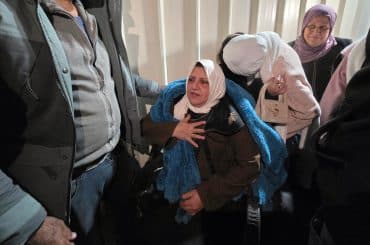
Last week, I read the news that all residents of Rafah must evacuate. The words hit me like a thunderbolt, reopening wounds I thought had healed. Rafah was not just a place of displacement; it became a part of my soul, a space where I lived through unforgettable moments, balancing between pain and hope, fear and the sheer will to survive. I spent nearly five months there, each day etching itself deep into my memory.
I am from Gaza, from the south, specifically from Al-Zawayda Al-Sawarha, approximately 25 kilometers north of Rafah. My first journey to Rafah started on December 30, 2023. That day was a living nightmare, an uprooting from a place of safety and belonging. Leaving was not a choice; it was a forced separation.
I only had minutes to decide what to take. In the end, I carried one bag with essential items and one notebook — the one where I documented my journey with the English language, my progress, my efforts, my dreams. It felt like the last thread connecting me to my past life.
The road to Rafah was long and terrifying. We recited the Quran and whispered prayers, expecting to be targeted at any moment. The occupation was bombing cars, and we were in one, holding our breath and saying our final prayers, preparing for the worst. It was the most nerve-wracking journey of my life, but our prayers gave us a sliver of comfort amidst the chaos.
When we arrived in Rafah, it was still breathing with temporary life. People moved about, trying to adapt in vain. But everything changed after the Israeli occupation conducted an operation in Rafah on February 11, 2024, to retrieve Israeli captives held in Gaza.
That night was the worst we had ever endured. I remember how we grabbed our essential bags as news spread that an airborne raid was taking place in our area. People screamed, urging everyone to flee. Explosions roared through the night. We left in pairs, making our way to a nearby school for shelter. I walked hand in hand with my sister, Sajoud, gripping her tightly. We kept whispering, “Hasbunallahu wa ni’mal wakeel”—”Allah is sufficient for us, and He is the best disposer of affairs.” Tears blurred my vision, but they couldn’t hide the missiles streaking across the sky, raining down like a deadly storm. I felt like I could be killed at any moment. I kept whispering the Shahada, my final prayer, while my sister squeezed my hand, reminding me to keep reciting, to hold on to anything.
When we finally reached the school, where other families had gathered, a fleeting sense of safety washed over me, but my heart raced for my family. My sister and I waited anxiously for the rest to arrive. The wait felt endless, my nerves stretched to the limit. Without prayers, I might have lost my mind. I felt relieved when my whole family finally arrived, but I still can’t forget the harsh feeling we lived through.
The paradox of Rafah
Despite the horror, I made new friends in Rafah. I had sworn to myself not to form any new bonds — I had lost too many already. Friends like Shimaa Saidam, Raghad al-Nuami, Lina al-Hoor, and Mayar Jouda were among those I held dear, but loss had made me hesitant to love again. Yet, life had its own rules. We created small moments of warmth amidst the cold cruelty of war. We reminisced about our homes, our rooms, and the futures that felt stolen from us. At night, we dreamt of returning.
Rafah was a paradox — life stubbornly persisted among the ruins. Markets were filled with people, children darted through alleys, and families attempted to celebrate special occasions despite the relentless war. I saw countless street vendors, a testament to Gaza’s unyielding spirit. Even in the face of destruction, life refused to fade away.
But fear never truly left us. I would wake up in the middle of the night to the sound of bombings, a sharp reminder that no place was safe. I would press my hand to my chest and remind myself—I did not want to die in Rafah. I wanted to see my home again, even if just once. Every time we heard of another attack, we would touch our bodies, making sure we were still alive. Sleep was never deep — it was merely a brief escape before the next nightmare unfolded.
I remember the night Hamas agreed to a ceasefire in January of this year. Everyone was euphoric. In Gaza, even a rumor of peace is enough to make us celebrate. We went to sleep that night picturing our return — rearranging our rooms in our minds, imagining hugging our families, reuniting with loved ones. My nephew was born during the war; I had never even seen him. But the occupation only spoke one language, and it was destruction. The bombing continued throughout the night. We knew the pattern; the enemy always intensified its brutality before a truce. I forced myself to endure it, clinging to hope. But at dawn, we woke to the news: the occupation had invaded Rafah.
Everything collapsed. Every dream, every plan, every glimpse of hope shattered. There was no time to grieve; we had to flee again. The hardest part was saying goodbye to those who had become family. We hugged tightly, unsure if we would ever meet again.
We made our way back to Al-Zawayda, a journey that proved even more grueling than before. We walked for miles, surrounded by the fear of being targeted at any moment. From the car window, I saw women carrying their children, men walking in silence, children clutching their mothers’ hands as if they knew she was their only remaining sanctuary. We were not alone — thousands walked the same path, each carrying their own painful story of displacement.
Then the ceasefire finally went into effect on January 19, and we felt safe for a time. But not for long.
Now, reading the latest news of another forced evacuation in Rafah, memories flooded back like a storm. We are exhausted from this endless cycle of displacement.
Now, as I typed the final period in this article, a deafening explosion tore through the air. The shrapnel near us was so close. Moments later, the news followed like a second wave: another evacuation order — our area, Al-Zawayda, was on the list. I felt a heat rise from my chest to my face. My hand was still on the keyboard, but my fingers froze. The room was silent, yet my mind was screaming.
The strike was so close, it felt like the wall was breathing with us, like the air itself had turned heavy. I sat in my room, lost in thought — not running, not moving, just choking on everything I couldn’t say.
For the first time, I feel like Gaza is not a home but a prison. How long will the home we left behind remain an unattainable dream? We are not just numbers on the news. We are souls carrying stories, memories, and a love for a land that keeps rejecting us, yet we refuse to let go. We carry untold stories, and we pray for the day we tell them — not as displaced souls, but as people returning to the homes that rightfully belong to us.