

In the village of Umm al-Khair in Masafer Yatta, Israeli settler violence escalated into yet another act of cold-blooded murder on July 28. It was carried out in broad daylight under the watchful eye and implicit backing of the Israeli occupation forces.
In the morning, settlers from the illegal Israeli outpost of Karmel stormed the village and began bulldozing Palestinian land. Among them was Yinon Levy, a notorious settler extremist with a long track record of terrorizing Palestinians across the South Hebron Hills. As villagers stood in resistance as their land was attacked, Yinon Levy opened fire. Two bullets were discharged. One of them tore through the chest of our beloved friend, activist, teacher, and human rights defender, Awdah al-Hathaleen. He collapsed immediately.
Awdah, a lifelong advocate for justice and nonviolent resistance, was taken to the hospital in an Israeli ambulance. But it was too late. He was pronounced dead before even reaching the emergency room. This wasn’t just a killing — it was an execution, delivered by a settler known to the Israeli authorities and whose violence has long been documented and tolerated by the state that protects him. Awdah was not allowed to be taken in a Palestinian ambulance, which meant that his family and community would not have access to him or his remains. This is how the degradation continues.
In the very same attack, Awdah’s cousin, Ahmad al-Hathaleen, was also injured. As he stood defiantly to stop the settler bulldozer from destroying his family’s land, the driver rammed the heavy machine into Ahmad’s upper body, leaving him with serious bruises and trauma.
Despite, or maybe because of, the severity of the settler’s crime, as well as the amount of damning evidence – with the execution caught on video -Israeli forces did not arrive on the scene to arrest the murderer. In fact, they did not arrive until hours later, and then they consulted with the murderer and followed his instructions. Yinon Levy chose to point out four Palestinians, including Awdah’s cousins and two international solidarity activists, flagging them for arrest. The soldiers followed the settler’s orders and ended up arresting six people from the village.
Later that evening, we learned Levy was briefly taken into custody, only to be released less than 24 hours later. He was placed under house arrest, as if he had committed a petty offense, instead of cold-blooded murder on top of a record of many violent acts.
It is worth noting that Yinon Levy is currently sanctioned by at least eight countries for his involvement in settler violence and terror. Originally, the number was nine, but the United States rescinded its sanctions on Levy after Donald Trump assumed office, sending us a glaring message that the U.S. will continue to back ethnic cleansing and settler colonial violence unconditionally.
Confiscating the dead
But this isn’t the conclusion to the tragedy. Because our tragedy does not end with Awdah’s martyrdom.
That night, Israeli forces launched a punitive raid on the village of Umm al-Khair. In a blatant act of collective punishment, the forces took 13 Palestinians into custody, all relatives of Awdah. Again, no charges, no evidence, no reason. This raised the number of abducted men from that day to 17. All this took place as the family was deep in mourning, which should have meant giving them privacy and respect. But the soldiers broke into their homes, terrified their children, and separated them from their parents during the raid.
“To live in Umm al-Khair, you have to have two things: patience and hope. You cannot live without hope.”
Awdah Hathaleen
As if that weren’t enough, Israeli police have since refused to return Awdah’s body to his family unless draconian conditions are met, including the condition that the funeral must not exceed 15 participants and banning the setting up of a funeral tent for the community to come pay their respects to the family. These measures are meant to debase Palestinians, silence their grief, and erase communal memory.
Awdah’s family has rightfully refused these degrading demands.
What happened in Umm al-Khair on July 28 is not an isolated incident. It is a reflection of a violent apartheid system where settler militias operate with impunity and the state facilitates their crimes. It is a system that values Palestinian life as expendable and rewards the killers with immunity.
Awdah al-Hathaleen was not just a victim, but a symbol of steadfastness. He was a father of three children, a neighbor, and a defender of his land and his people. He made it a point to welcome everyone to his village. In his words, “This is oppression. You should not give up. The results may take years and years and years. So you should be patient. To live in Umm al-Khair, you have to have two things: patience and hope. You cannot live without hope.”
His murder is a crime not only against his family and his village, but against humanity and the very idea of justice. This brutality is meant to target patience and hope. The time to act has long passed, but it is not too late.
We call on the international community, media outlets, human rights organizations, and people of conscience: don’t let Awdah’s death be buried in silence. You must use your voice and do something. You must use your body, mobilize your community, and stand up for what’s right.
Speak Awdah’s name. Share his picture. Demand justice. Expose the apartheid system that murdered him. Be in solidarity with the people of Masafer Yatta — who continue to resist ethnic cleansing, land theft, and colonial violence every single day.
But patience has its limits
I cannot leave this letter here, because Awdah’s body has not yet been released, and settler violence continues. While we have little ability to control the outcome, we do have our dignity.
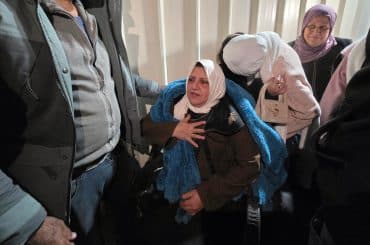
On July 31, over 70 women from Umm Al-Khair, some as young as thirteen and others well into their seventies, began a hunger strike. Their demand is simple and just: the return of the body of Awdah al-Hathaleen.
Israeli authorities continue to withhold Awdah’s body, agreeing to release his remains under conditions that are not only disrespectful and an insult to our grief, but to our customs and our human dignity. Their hunger strike will not end until Awdah is returned to us, to be buried in his homeland and surrounded by those who love him.
This community has been patient. We’ve held our ground with dignity. But our patience is not infinite. Even though Awdah has said that it is necessary, it’s still running out.
The men of Umm al-Khair have announced: if Awdah’s body is not returned within 24 hours, we will join the hunger strike. We stand with our women. We stand for our sons. We will not allow this injustice to continue in silence.

I’m unsure about this tactic, valid though its purpose is. Zionist Israel regards all Palestinians as less than human, so a few more dying of hunger are for it neither here not there, and clearly Western governments don’t give a damn either.