


It was 7:00 a.m. on Friday, July 18. My father tried to wake me up so I could go out and fill up some drinking water from the trucks that pass by the encampment every now and then. I carried two bottles and left. There was a long line for the water, as the truck only came about every three days.
Suddenly, while I was waiting for my turn, I felt myself losing my balance. I could no longer stand. We hadn’t eaten anything since the previous night, and there was neither flour nor rice in our tent. Yesterday, we had less than a kilo of pasta, which we ate without ever feeling full. Still, we were better off than many of the people around us.
A neighbor in the camp noticed that I was about to fall and helped me sit in a corner by the road. When it was my turn and I filled up my water, my friend helped me carry the two bottles. At that moment, I wanted to tell my parents what had happened, but I held back. I thought, “If I tell them, they’ll worry.” I decided to rest a little and go out in the afternoon to buy what we needed.
But I couldn’t go out at that time. I felt extremely dizzy, and the heat was stifling — we lived in tents with no shade under a scorching sun.
That day, we didn’t eat anything for breakfast. I waited until the weather calmed down a bit, then went to the market to buy something. I hadn’t expected to see it so empty. I couldn’t find even a kilo of flour or any other food item. I felt intense anger and a deep sadness. How would I return to my family empty-handed and with nothing?
I saw a vegetable vendor selling figs and grapes, so I bought less than a kilo of grapes for over $30 — I couldn’t return empty-handed. We are a family of six, I told myself, we’ll share it and endure the hunger. Maybe tomorrow we’ll find something.
I returned to the tent carrying the grapes, barely able to walk. The street was empty of goods, and the people around me had tired eyes and faltering steps, searching for anything to feed their children.
When I returned to the tent, Mahmoud, my friend in Nuseirat, sent me a WhatsApp message asking,”Hassan, how much salt should I put in a glass of water?”
Yes, that’s what we’ve come to: We drink water and salt to prevent ourselves from fainting, from losing weight, from getting dizzy.
From north to south, this is the situation in Gaza today. You can’t find a kilo of flour, and most people go without eating for three days at a time.
“Can a piece of paper change everything?” No one expected that a simple question would mark the beginning of a catastrophe — but on May 6, 2024, it did, when millions of displaced people and I were in Rafah.
That morning, leaflets fell on the ground urging people to evacuate simply because of a piece of paper, changing the lives of a million people. That was the beginning of the end.
Today, the occupation continued its advance into the central region, Deir al-Balah, and ordered the evacuation of large areas there. People didn’t know where to go amid extremely harsh humanitarian conditions, severe shortages of food and medicine, and widespread hunger.
In a heartbreaking video, a Gazan woman is seen sitting on the ground in a tent encampment for the displaced, suffering from extreme hunger and exhaustion. She has not eaten anything for five days.
This woman is not an isolated case, but rather a symbol of the suffering of an entire community under a stifling siege for more than four months.
As I was writing the end of this article, with my stomach empty, my little orphaned cousin came in and asked me a question I didn’t know how to answer.
“Do you have anything I can eat?”
I didn’t know how to tell him that I was hungry, too. I couldn’t tell a little child that we didn’t even have a loaf of bread to feed him.
I simply bought him juice, which he quickly drank and then said, “It’s so good.”
At that moment, I knew that what I gave him wouldn’t satisfy his hunger, but perhaps it would tide him over to the next inadequate meal.
UNICEF reports:
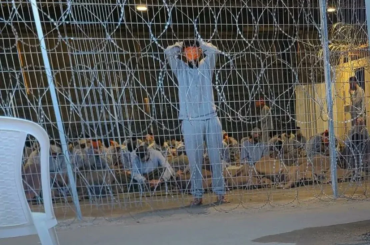
As of July 2025, more than 320,000 children — Gaza’s entire under-5 population — are at risk of acute malnutrition, with thousands suffering from severe acute malnutrition, the deadliest form of undernutrition. Essential nutrition services have collapsed, with infants lacking access to safe water, breastmilk substitutes and therapeutic feeding….In June, 6,500 children were admitted for treatment for malnutrition, the highest number since the conflict began. July is tracking even higher — 5,000 children were admitted in just the first two weeks. With fewer than 15 percent of essential nutrition treatment services currently functional, the risk of malnutrition-related deaths among infants and young children is higher than ever before...Before the war, approximately 500 supply trucks entered Gaza daily. Between May 19 and July 2, after almost 11 weeks of a complete aid blockade, Israel permitted an average of 30 UN trucks per day to offload aid at designated crossings. Despite a partial reopening of crossings, humanitarian aid presently entering Gaza is only a tiny fraction of what a population of over 2 million people needs….
https://www.unicefusa.org/stories/children-are-dying-famine-conditions-deepen-gaza