

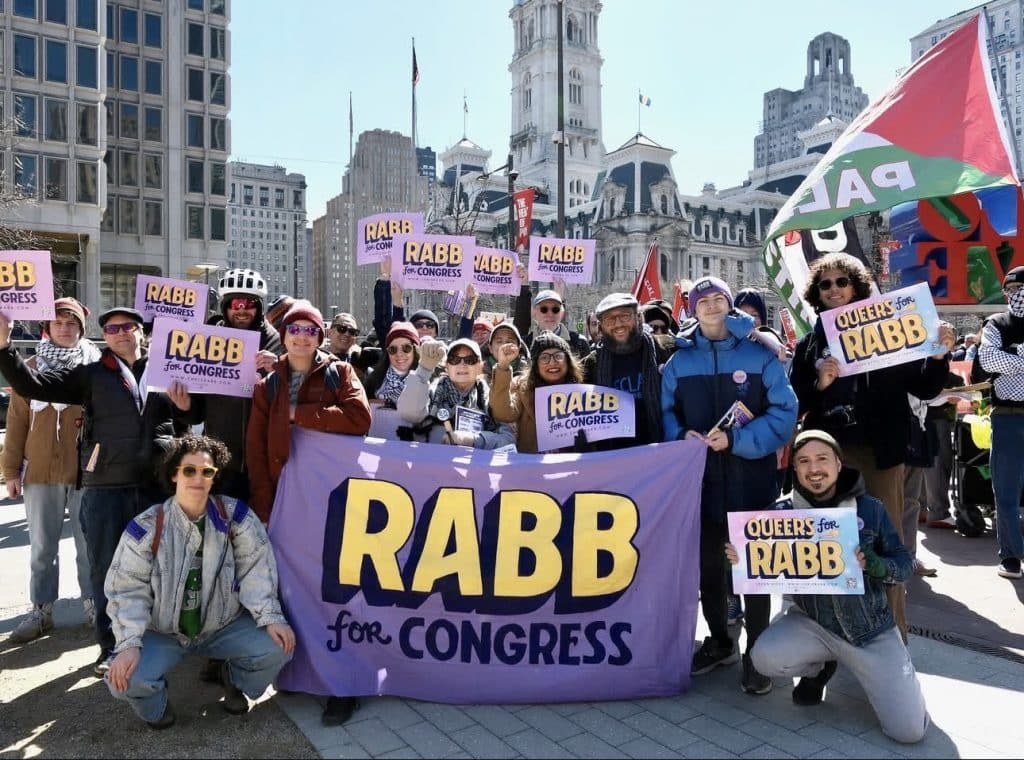
Pennsylvania’s third congressional district (PA-3) has become a hotspot for activity in a primary race defined largely by Palestine and questions about what truly constitutes progressive domestic and foreign policy. With only a few weeks left in a heavily contested primary, three candidates are poised to possibly win a race that they view as the primary hurdle before an expected low-energy general election. These candidates include Pennsylvania State Senator Sharif Street, pediatric surgeon Dr. Ala Stanford, and Pennsylvania State House Representative Chris Rabb. For many voters in the district and organizers across the city, it could be a test for the viability of progressive politics that bring together bold domestic proposals and firm internationalist positions that many have not seen from Philadelphia congressional leaders in their lifetimes.
The district has historically been led by Rep. Dwight Evans, an outspoken supporter of Israel who has taken J-Street-sponsored trips to occupied Palestine and consistently defended Israel’s right to self-defense, alongside approving military aid to its military. Evans was considered by many to be immovable on Palestine, so when news of his retirement announcement hit, conversations across progressive and socialist organizations in the city began about whether there might be a viable left-wing replacement. The problem, it seemed, was not the district, which is largely comprised of an extremely diverse, working-class base. Rather, it seemed they just lacked the candidate to get the ball rolling. That problem was solved when Chris Rabb, a progressive State House representative and former Temple University professor, announced his candidacy.
It was not long after his announcement that conversations between his team and the city’s various socialist and progressive organizations began. Philadelphia’s Democratic Socialists of America (DSA) chapter in particular held extensive meetings with his team and Rabb himself. He showed up to myriad events, notably including Palestine-centered housewarming discussions with strong participation by the organization’s International Solidarity Committee. Organizers were quick to ask him a question that had been on many minds within the organization: “What is your stance on Palestine?”
For them, his answer would determine whether or not they would support him. He did not let them down. In private housewarming events with local organizers, he noted his history of organizing against apartheid in South Africa and the connections he made between that struggle, the Palestinian liberation struggle, and the larger struggles Black Americans were facing in a nation that had been built on their enslavement and continued exploitation. In public comments, he has further clarified these feelings, stating:
“I believe in a free Palestine. I believe in freedom. Why wouldn’t anybody support that? I’ve grown up in a very racist society as an African American. I grew up in Chicago and saw things firsthand on a very personal level. Whether it’s mistreatment by law enforcement or by school officials, none of this is new to me. (Discrimination against Palestinians) is just a greater intensity and on a larger scale.”
Those events turned into intensive meetings and conversations that resulted in a foreign policy platform that is remarkably well-rounded and strikingly internationalist. His positions go beyond the expected progressive red lines around opposing AIPAC and other Zionist lobbyist groups, and calling Israeli actions in Gaza a genocide. For Rabb and many of his supporters, these commitments fall short of the bare minimum. He went a step further, releasing a series of Palestine-related positions that include free assembly and self-determination for Palestine, an immediate and permanent ceasefire that includes the release of all people held without due process (including Palestinians currently within Israeli colonial dungeons), unrestricted humanitarian aid in Gaza, and the implementation of an embargo on weapons destined for Israel. Critically, he has also stated support for the internationally recognized right of return for Palestinians refugees, which would allow millions to return to their ancestral lands after being displaced by decades of Israeli ethnic cleansing campaigns in both the 1948 and 1967 territories.
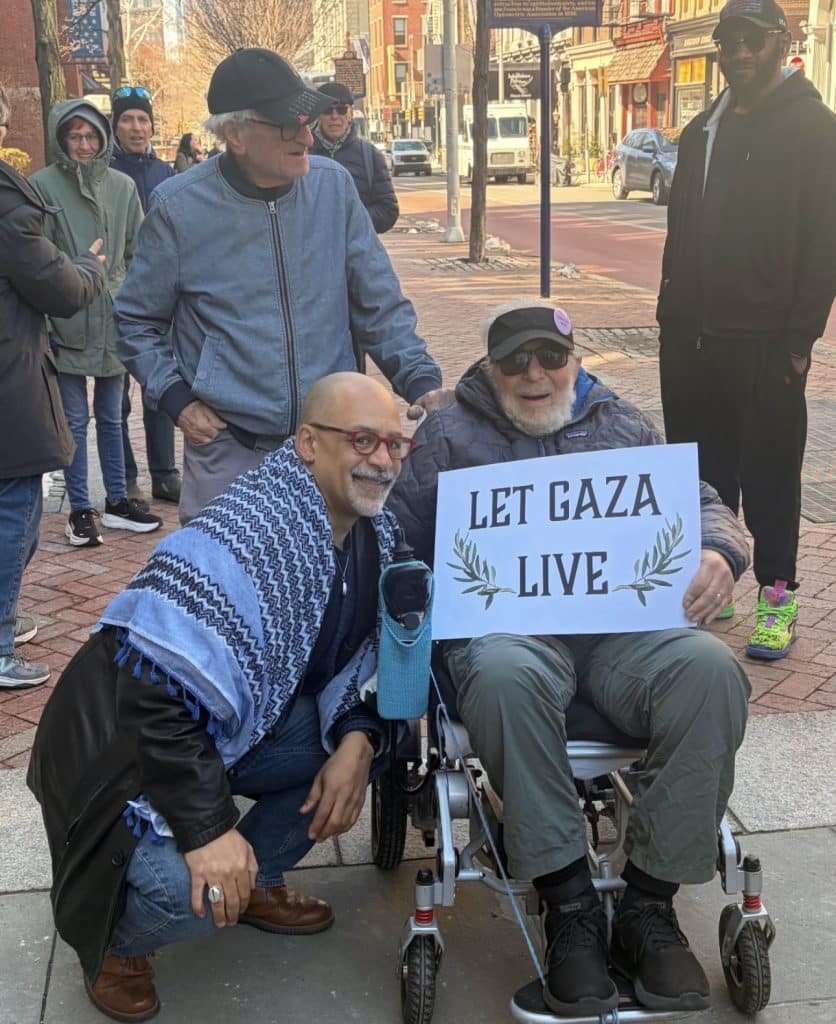
These positions, should he win the upcoming primary, would make him one of the most progressive representatives in the House on Palestine, no doubt why other staunchly pro-Palestine congresspeople, such as Pittsburgh Congress member Summer Lee, have endorsed him alongside a slew of progressive legislators. Their announcements have come after progressive and socialist organizations have come together and hit the ground in the district, knocking on every door they can reach.
For them, failure to elevate Rabb nearly guarantees a continuation of a pro-Israel status quo in the district. Street, the son of former Philadelphia mayor John Street and who has the backing of much of the city’s Democratic Party establishment, traveled to occupied Palestine on a trip sponsored by the American Jewish Committee in 2017 and has so far refused to even consider conditioning aid to Israel. Stanford, for her part, has stated that she believes Palestinians “deserve to have safety and freedom”, but these comments have been overshadowed by her comparing calling Israeli actions in Gaza a genocide to using anti-Black racial slurs. Stanford has also received significant financial support from 314 Action Fund, a super PAC that has been accused of being used by AIPAC in the past to funnel money into candidates they support under the table. Among the front-runners in PA-3, it seems only Rabb is offering a break from the district’s staunchly pro-Israel political leadership.
Given that, the outcome of the race is seen by many in the city as a temperature check of the movement’s state in the electoral sphere. It is also a way for many of them to begin spreading existing work into the district. Organizers with Philadelphia DSA noted that they were excited to see the Rabb campaign respond positively to their “No Appetite for Apartheid” campaign, which seeks to work with store owners in the city to deshelf Israeli agricultural products and other pro-Israel targets on their boycott list. Organizers who have been canvassing across the city for over a year now, talking to businesses citywide, are now spending their time in PA-3, shifting to electoral work as they use the campaign as a way of breaking the ice with business owners who they hope will sign onto their boycott once the race is over. Chris Rabb, for his part, has voiced support for the campaign in conversations with its organizers. Many hope that, beyond specific efforts, the outreach in the district will ultimately seed their organizations in the broader community. Some canvassers have been handing out literature highlighting their own organizations alongside Rabb materials, giving those in the district a way to plug into a political project well after the primary ends.
Some are also seeing this as a win regardless of the outcome, seeing as a campaign that is pushing what ten years ago may have seemed politically toxic positions is currently a frontrunner in a district long held by a Zionist politician. The shift in what has been deemed “viable” in this race regarding foreign policy has been notable, with positions once thought nearly impossible to get a congressional candidate in the city to cosign now constituting the bare minimum for many organizers and community members. That combination is critical–beyond the organized left in Philadelphia, many canvassers are noting that everyday community members are responding enthusiastically to opposition to AIPAC, support for Palestinians, the abolition of ICE, and other policies long held by the city’s socialist movement space.
At the moment, however, all anyone can seemingly talk about on the ground is when they can get to the next canvas in PA-3. Organizers have been standing on street corners handing out literature and talking to whoever will listen, knocking door after door, and building energy for Rabb across the district. Much of the feedback organizers with organizations like DSA have noted from voters on the ground has been extremely positive, especially regarding Rabb’s positions on Palestine and his firm support for abolishing ICE. The energy is palpable as organizers across the city know that, should he win, it will be another example of the shift that has been occurring throughout the American political system, particularly within the Democratic Party, whose voter base has become increasingly and overwhelmingly critical of Israel.
The race will come down to the wire, but Philadelphia’s left ecosystem is hoping for the best. Polling indicates that Rabb is maintaining momentum and is within spitting distance of the lead, but the only thing that matters for most organizers in the city helping with the campaign is how many people they can mobilize on Election Day next month. If they play it right, they might just send a pro-Palestine advocate to DC.

“ race defined largely by Palestine and questions about what truly constitutes progressive domestic and foreign policy…. he noted his history of organizing against apartheid in South Africa and the connections he made between that struggle, the Palestinian liberation struggle, and the larger struggles Black Americans were facing…”
__________________________________________________
Evidence for political advantage when equality is the issue.