Over the last six months, Latin America has ushered in a new wave of right-wing presidents.
Bolivia’s Rodrigo Paz Pereira, elected in October 2025; Honduras’ Nasry Asfura and Chile’s José Antonio Kast in November; and Costa Rica’s Laura Fernández Delgado in February 2026 – all new heads of state ideologically aligned with U.S. President Donald Trump, who have either loosened restrictions or actively renewed cooperation with Israel since entering office. The re-election of Ecuador’s iron-fisted President Daniel Noboa in February 2025 has also triggered increased engagement with Israel across various sectors of the country.
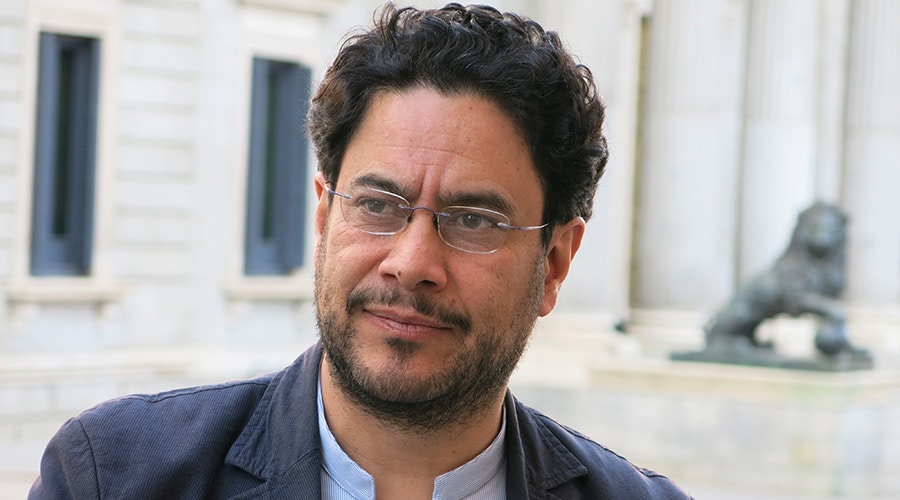
Next up, the table is set for another consequential race in Colombia. Outgoing President Gustavo Petro has been one of Israel’s staunchest international critics since October 2023. Although his protégé, Iván Cepeda, holds a similar position, opposition candidates do not. On the far right, Abelardo de la Espriella has proposed moving the Colombian embassy to Jerusalem, while the conservative Paloma Valencia serves as caucus chair for the Israel Allies Foundation in the Colombian Senate.
The presidential elections on May 31 will determine whether the country joins the region’s growing right-wing axis, cementing a departure from “pink-wave” politics that have driven recent foreign policy in the region in favor of the Palestinian cause – or if the tidal shift towards pro-Israel politics in Latin America is not as unstoppable as it appears.
“What we are seeing is not just the manifestation of global alliances, but also shared positions on core issues such as human rights, sovereignty of nations, and international law,” said Ubai Aboudi, head of the Bisan Center for Research and Development in the occupied West Bank city of Ramallah. “Historically, the right wing in Latin America has been in alliance with the U.S. and the Israel lobby. This manifests in coalitions that promote militarization and a sense of nationalism centered on ethno-nationalism and racism.”
Trump’s Americas
“There’s a real right-wing onslaught led by Miami neocons who are pumping influence into these far-right campaigns in Latin America with some tangible results,” Guillaume Long, former minister of foreign affairs in Ecuador, explained to Mondoweiss. This includes the likes of Argentinian-American lobbyist Damian Merlo, described by Mother Jones as “the Miami lobbyist who helped [El Salvador’s Nayib] Bukele seduce MAGA,” and former Fort Lauderdale resident Brad Parscale, who assisted Asfura’s presidential campaign in Honduras.
“This means the entrenchment of a significant far-right faction in the [Western] hemisphere who are loyal to Trump and deeply committed to Israel,” added Long, who is also a diplomatic advisor to The Hague Group, a global bloc of nations committed to the defense of international law in Palestine.
That faction was on full display at Trump’s inaugural “Shield of the Americas” summit on March 7. Of the 12 Latin American leaders in attendance, some faces were old, like Argentina’s Javier Milei and Bukele, while others, including Asfura and Kast, were new.
“We’re calling this military partnership America’s counter-cartel coalition,” Trump told his Latino counterparts. “Just as we formed a coalition to eradicate ISIS, we now need a coalition to eradicate the cartels.”
This coalition is good news for Israel.
“We are seeing a renewed military cooperation on behalf of Israel in the western hemisphere,” Long explained to Mondoweiss. This ranges from the use of surveillance software like Pegasus in countries like Mexico and El Salvador to a long history of military training and equipment sales. Be it for border security or the so-called war on drugs, Israeli arms companies have marketed themselves as pioneers in “battle-tested” exports for every conceivable threat.
And Latin America’s right-wing leaders are listening, for now. “It remains to be seen how resilient that current is in the long term, and whether it is rooted enough to transcend the Trump moment,” added Long. “Certainly, ideologically, it can rely on large constituencies of neo-Protestant Christian Zionist churches, although in some countries, these churches seem to have already reached their apex and their potential for further growth has come into question.”
Israeli surveillance and security
In the meantime, as the death toll rises in Gaza, it’s business as usual for Ecuador’s Noboa.
In October, Ecuador’s Minister of National Defense, Gian Carlo Loffredo, met with Israeli Ambassador Tzach Sarid to discuss security cooperation in intelligence, specialized training, and “advisory services on border control and management capable of eliminating existing threats.” By January 2026, Israeli officials based in Quito had met with Noboa’s head of security and senior army officials to “exchange experiences and strengthen dialogue on security matters.” A month later, the Israeli government announced that it had sent a delegation to develop “specialized security and defense training” for Ecuador’s Casa Militar Presidencial, an elite military unit designed to protect and serve the president and other high-ranking government officials. Around the same time, Ecuador withdrew from the UN Committee on the Exercise of the Inalienable Rights of the Palestinian People (CEIRPP).
In nearby Chile, home to some 500,000 people of Palestinian descent, the tide is also turning. The newly elected Kast authorized Israel Aerospace Industries (IAI), an Israeli state-owned company complicit in the genocide in Gaza, to participate in Chile’s International Air and Space Fair (FIDAE) in April, despite previous restrictions.
For Nelson Hadad, a Chilean-Palestinian lawyer and former ambassador to Iraq, Jordan, and Egypt, this is a huge step backward. “It’s not possible, from an ethical, moral, political, or legal point of view, to maintain relations in the field of military exchange with a country that is accused of the most abominable crime – the crime of genocide,” he told Mondoweiss.
For Hadad, Kast’s election – which was hailed by Israeli Minister of Foreign Affairs Gideon Sa’ar as marking “a new chapter of cooperation” – is “part of a political shift that Latin America has experienced, a kind of ideological realignment of the region’s governments.”
“Of course, right-wing governments are closer to Israel than to Palestine,” Hadad continued. They are also more inclined to follow the U.S.’s lead: “In a way, they are fulfilling the messages [and demands] of the US embassies in these countries,” Hadad told Mondoweiss.
Genocidal diplomacy
Warming relationships between Israel and Latin America go beyond arms or ammunition.
With representatives in 64 governments worldwide, including 14 in Latin America and the Caribbean, the Israel Allies Foundation (IAF) practices “faith-based diplomacy” by connecting pro-Israel church leaders with politicians in the U.S. and beyond.
The Israel Allies Foundation is also a grantee for the new American Friends of Isaac Accords (AFOIA), established by Argentina’s Milei in Argentina in an effort to “advance economic, cultural, and diplomatic cooperation between Israel and Latin American countries.” The Isaac Accords, described as “a natural continuation of the Abraham Accords,” were officially signed in Jerusalem on April 19, 2026.
In Colombia, Petro’s platform as a keffiyeh-wearing former guerrillero has placed him at odds with the nation’s right. Now, alongside fiscal deficit, debates about minimum wage, domestic political corruption, and an increase in armed violence, genocide is also on the ballot.
Considered a “great ally of Israel,” Paloma Valencia, one of the candidates in Colombia’s presidential election and chair of the Senate IAF caucus, has condemned Petro’s response to the genocide in Gaza, including his decision to end Colombia’s free trade agreement with Israel: “Our trade balance with Israel was positive, and that country was key to our national security,” she wrote on January 20. “This government handled international relations with irresponsibility and fanaticism.”
Meanwhile, Costa Rica and Israel announced in December plans to sign a new Free Trade Agreement (FTA) focused on agriculture, digital technology, and the elimination of 90% of tariffs. Costa Rican Minister of Foreign Trade Manuel Tovar hailed the move as cementing “Costa Rica’s path to consolidate itself as an innovation hub” in Latin America, declaring: “Viva Costa Rica! Am Yisrael Chai!”
Brazil, the largest South American nation, has openly condemned Israel’s genocide and recalled its ambassador, but so far has failed to sever ties entirely. Now, even this position of ineffectual criticism is under threat with Flávio Bolsonaro, the son of imprisoned former president Jair Bolsonaro, proposing to move Brazil’s embassy to Jerusalem within six months of taking office if elected president in October. Recent polls place the evangelical conservative, who has positioned himself as the heir of his father’s dynasty, neck-and-neck with the current head of state, Luiz Lula da Silva.
Honduras and Bolivia have also drastically ramped up diplomatic relations with Israel since December 2025, ending almost 16 years of severed ties. Both nations withdrew from the Hague Group on March 4, 2026.
In Honduras, this harkens a return to pro-Israel foreign policy popularized by former president and convicted drug trafficker Juan Orlando Hernández, who Trump pardoned in December 2025. According to leaked recordings recently published by Diario Red and Hondurasgate, the “pardon money” came from “a group of rabbis and people who supported Israel.” In another voice note, allegedly addressed to the president of Congress and chairman of Honduras’ Israel Allies Caucus, Tomas Zambrano, Hernández confirmed direct financial ties between Honduras and Israel: “I sent you the people from Israel, they sent you money.”
Global South sovereignty
Increased support for Israel at the higher echelons of political power is not reflected in public sentiment. From Santiago, where activists have been protesting Israel’s participation in FIDAE, to Sao Paulo, where they have demanded the release of Brazilian activist Thiago Avila from Israeli detention, solidarity with Palestine continues. Meanwhile, a Pew Research Center poll showed in June 2025 that respondents held largely more negative than positive views of Israel in Mexico, Brazil, and Argentina.
“We see it from the people of Latin America, but we also see it in increased waves from Africa: from the new generation of decolonization leaders that are pushing for the sovereignty of their countries,” Aboudi told Mondoweiss. “They are also calling for the liberation of Palestine.”
After all, “the Global South was traditionally hostile to Israel and certainly Israel’s occupation of the Palestinian territories,” said Long. In Latin America, both Cuba and Colombia have been forthright advocates of anti-imperialist policy, from deploring Israel’s occupation of Palestine to denouncing the US blockade of Cuba itself. Belize has also suspended diplomatic relations with Israel.
So, despite the turning tides, this imperialist shift is not absolute. Because “the struggle for freedom, for democratization, for social justice is a global struggle,” said Aboudi. “It’s not confined to Palestine.”
Ana Maria Monjardino
Ana Maria Monjardino is a freelance journalist from London, in Mexico City.