

The click of handcuffs. The barking of police dogs. The slam of detention cell doors. These are the sounds of academic freedom being criminalized in Denmark
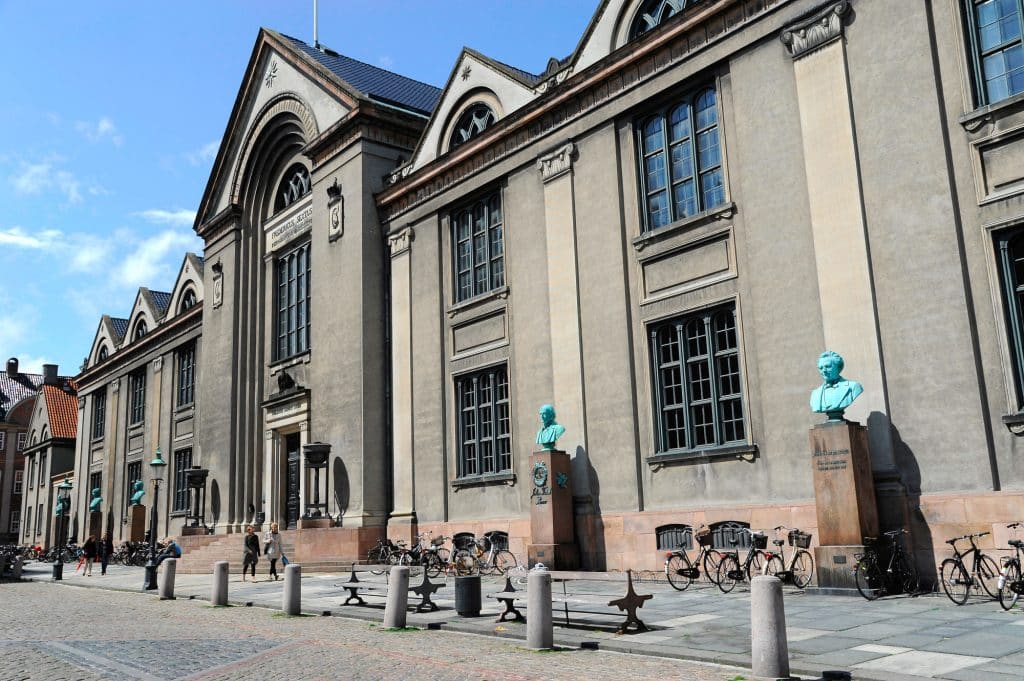
On September 4, 2024, I stood with four fellow University of Copenhagen students and Greta Thunberg inside our own university administration building, protesting for an academic boycott of Israel. Within minutes, university staff called heavily armed police on us. The rest of the students had been forcefully taken outside to be registered by the police. The surreal reality of being arrested on our own campus for demanding ethical university conduct still doesn’t feel real to me. Because it shouldn’t have happened at all.
Now, on June 24-25, 2026, all six of us will face criminal prosecution under Danish Penal Code Section 264.1.1 for illegal trespassing. At our court hearing, we are expected to admit guilt and pay a fine. If we don’t, it will be expanded into a full court case, where we could face a possible prison sentence of up to six years if found guilty. The charges against two students have been expanded to include unrelated offenses, demonstrating clear political targeting of people standing up for Palestine. This is about criminalizing principled dissent during genocide, not about trespassing.
I was separated from the others in a police car by two police officers. At the police station, I was put in a solitary detention cell with no information on what the process was or how long I had to be there. Exhausted from my first arrest, I slept through my detention hours. After approximately four hours, I was released and went home to prepare for an interview with Al Jazeera. The escalation, police violence, and repression we experienced are nothing compared to what Palestinians, particularly those in Israeli prisons, endure daily.
Our September 4 protest wasn’t unsupported nor isolated. Shortly after our arrests, 600 university staff members from UCPH and other Danish institutions published a petition calling for an academic boycott of Israel, demanding that we not face internal prosecution, and asserting that police have no place at student protests. This overwhelming institutional support demonstrates that our demands reflect widespread faculty concern about human rights violations.
Since 2021, Students Against the Occupation (SMB) has engaged in conversations, negotiations, encampments, and mobilized the university staff, calling on UCPH to cut ties in Israel’s ongoing genocide in Palestine. During the Rafah Garden student encampment in May-June 2024, students negotiated divestment from several UN-blacklisted companies. UCPH announced the divestments after abruptly ending negotiations. But when we took action in September for the academic boycott of Israel, the response was swift repression.
The aftermath of the September 4 protest reveals a pattern of escalated institutional repression despite occupations and blockades being accepted protest practices at UCPH. The administration worked expeditiously with Copenhagen police to identify arrested students and to examine footage from Danish media. They demanded a list of names from the police to initiate disciplinary hearings. They even targeted the SMB media representatives standing on the street, who were not part of the protest. It was about systematically crushing dissent.
I was called into a disciplinary hearing based solely on being identified over social media, with no evidence that I broke the code of conduct by engaging in threatening behavior toward staff. The administration preemptively issued a warning, creating a climate of fear in which many hesitated to protest on university grounds, fearing they would lose their degrees. The arrest and disciplinary hearing only motivated me further to engage with activism and continue documenting the UCPH’s complicity and ongoing repression.
A week after our arrests, I met with Danish Minister of Foreign Affairs Lars Løkke Rasmussen, along with three other students (one arrested with us on September 4), to discuss an academic boycott and weapons embargo to Israel. His response was telling: It is a task of each university to implement an academic boycott, as cutting academic ties with Israel is not against the foreign policy of Denmark. This was not the case in 2022 when the Ministry of Foreign Affairs mandated that all Danish universities sever academic ties with Russia and Belarus. This Palestine exceptionalism exposes the moral bankruptcy of institutional complicity during genocide and UCPH’s ongoing hypocrisy.
Our university’s complicity extends beyond academia. The newly built MAERSK Tower at the Faculty Health and Medical Sciences, co-funded by A.P. Møller Fond with 885 million DKK, bears the name of the world’s largest shipping company, currently transporting weapons to Israel. MAERSK ships HEMTT vehicles, missile casings, and F-35 fighter jet parts, to name a few, used in obliterating Palestinians in Gaza as well as transporting goods to illegal settlements on the West Bank. When universities integrate and collaborate with companies fueling genocide, they become active participants in upholding oppression, neocolonialism, and imperialism.
Recently, the UCPH student newspaper, Uniavisen, uncovered a draft “scope paper” stating that “UCPH must be proactive and engage in the defense and security agenda.” Documents show that the defense and security agenda already has a significant extent at the university. At present, the faculties are showing concerns regarding defense research. My faculty, the Humanities Faculty, mentions potential opposition to the conduct of commissioned research by the weapon industry, defense authorities, or research supporting war. This further proves that UCPH is not a neutral institution. According to the plan, UCPH’s board will approve the document and start the work of an implementation plan on June 18, 2026, which ensures the university’s shift toward military and defense research.
The university administration still has the option to retract the police report and prevent criminalization. Kristian C. Lauta, the UCPH vice-chancellor, states in a recent Uniavisen interview that they are not able to. Lauta and the rest of the administration refuse, making us the first UCPH students to face legal prosecution for political protest simply for standing for ethical university praxis and human rights.
As we prepare for our trial, we stand not just as defendants, but as witnesses to the moral corruption of institutional power. The world will be watching whether Danish academia prioritizes justice or protects complicity. The choice belongs to the university administration, the legal system, and ultimately to all who believe that academic freedom must include the freedom to challenge oppression, neocolonialism, and imperialism.
The click of handcuffs shouldn’t be the sound of academic freedom. Let that be the last sound we hear.
Aleksandra Milanović
Aleksandra Milanović is a Danish-Serbian media producer, multidisciplinary artist, and activist based in Copenhagen.

“The click of handcuffs”, guns, drones, solitary rooms’ door locks, keyboards in hands of paid analysts and intellectuals etc etc are all, these days, meant to control how citizens think. May the clicks of your handcuffs produce results for you and your fellow citizens and the world. They must.