


Israel has finally reached an agreement to end its war on Lebanon after ambassadors from both countries signed a “framework” agreement in Washington, D.C., last week that laid out conditions for Israel’s phased withdrawal from southern Lebanon. There’s just one problem: the party that signed the deal from the Lebanese side isn’t the same party doing the fighting, and the terms of the withdrawal are conditioned on the disarmament of the very party that wasn’t a part of the negotiations to begin with.
As a result, it’s hardly surprising that a section of the Lebanese political establishment regards the U.S.-brokered trilateral agreement with skepticism. The agreement ostensibly charts a pathway to ending Israel’s war, but conditioned on Hezbollah’s disarmament — and without it being a part of the agreement. Instead, the agreement calls on the Lebanese army to disarm the group, a feat which the Israeli army itself has been unable to achieve.
So the question becomes: why would Israel insist on terms that make the entire agreement impossible to implement? The answer becomes clearer when considering Israel’s treatment of Gaza’s so-called “ceasefire.”
Israel has conditioned its withdrawal from Gaza on the total disarmament of Hamas and every other faction in Gaza. Such a condition, even if Hamas were willing to implement it, is practically impossible given the ubiquitous presence of arms in Gaza and the presence of Israeli-armed gangs. But as has been pointed out, the impracticality of these terms is a trap meant to ensure Israel’s continued occupation of most of the Strip.
When we examine the contents of the recent agreement between Israel and Lebanon, it’s hard not to reach the same conclusion.
What’s in the agreement?
The agreement stipulates the end of the state of war between Israel and Lebanon and the formation of a task force to begin the drafting of a comprehensive peace accord. But more immediately, the agreement introduces a particular framework for how Israel would withdraw from occupied Lebanese territory.
Israel’s withdrawal, which would ostensibly be accompanied by the redeployment of the Lebanese army in all of Lebanon’s territory, starting with two “pilot zones,” is all hinging on the Lebanese army disarming “non-government groups” — mainly Hezbollah — and dismantling their military infrastructure. In exchange, the agreement previews a package of U.S. economic aid to Lebanon aimed at reconstruction and boosting the country’s economy, and the creation of a special “security coordination team” between Israel and Lebanon, supervised by the U.S. This is the part of the agreement that is being publicly celebrated. But there is more.
According to Israel’s Channel 12, the agreement includes a secret security annex, as later confirmed to the media by sources close to the Lebanese government, that would give Israel “freedom of military action” within the area still occupied by Israel. According to the leaked information, the annex also ties Israel’s withdrawal from Lebanese territory to the success of the disarmament process, rather than according to a fixed timetable.
The terms of the agreement — both the public part and the leaked annex — explain the polarized reaction from Lebanese political forces.
A recipe for internal bloodshed
Lebanese President Joseph Aoun has hailed the U.S.-brokered framework as a “major diplomatic achievement” and a first step toward restoring Lebanon’s full sovereignty. The head of the right-wing Phalange party, Sami Gemayel, a prominent opponent of Hezbollah, called the agreement “an achievement” that “guarantees the monopoly of arms by the state.”
But other parts of the Lebanese political landscape, including allies with Hezbollah, blasted the agreement as unworkable. The speaker of the Lebanese parliament, Nabih Berri, described the agreement as “dictations” by the U.S., while a leading member of the Lebanese Communist Party, Hanna Ghareeb, rejected it as “a step towards normalization” of relations with Israel. Walid Jumblatt, the Druze leader and former head of the Progressive Socialist Party, slammed the agreement as “trilateral in form but unilateral in substance,” adding that it ignored the 1949 armistice agreement with Israel, which he argued weakens Lebanon’s position and legitimacy. Most importantly, the party directly concerned by the agreement, Hezbollah, categorically rejected it.
Hezbollah’s secretary-general, Naim Qassem, said that the agreement is a “concession over Lebanon’s sovereignty,” stressing that conditioning Israel’s withdrawal from Lebanon on the disarmament of Hezbollah “crosses all red lines” and “legitimizes the occupation of Lebanese lands for many long years to come.” Qassem declared that Hezbollah did not recognize the agreement and considered it void, calling on the Lebanese state to back down.
Lebanese critics of the agreement have also warned that the stipulation calling on the Lebanese army to disarm Hezbollah directly is a recipe for internal conflict and would result in intra-Lebanese bloodshed.
Even Israeli critics have pointed out the fact that Hezbollah, which has remained intact as a fighting force in the face of Israel’s military pressure, would be put in a position to consolidate itself regardless of what Israel does: if Israel withdraws from Lebanon, Hezbollah will claim victory and use it as an argument to keep its arms, and if Israel does not withdraw, Hezbollah will claim that it needs to keep its arms to push Israel out.
In other words, since the agreement sidelines Hezbollah and makes the Lebanese state the main actor, implementing the agreement appears impossible without devolving into something resembling a civil war. The Lebanese state might give Israel all the security guarantees that it demands on paper, but neither Israel nor the Lebanese state has been able to wrest any such concessions from Hezbollah.
So while the rhetorical concessions made to Israel are politically significant (given that they are made by the Lebanese state), they have no apparent way of being implemented on the ground.
This discrepancy, then, might indicate that the entire agreement was designed to fail. This becomes easier to understand once we look at where Israel has tried such agreements elsewhere. And one doesn’t need to look very far.
The Gaza déjà vu
When the ceasefire agreement in Gaza was reached last October, it stipulated three phases for Israel’s withdrawal from the Strip, which was supposed to be accompanied by an increase in the entry of humanitarian aid and the start of reconstruction. Only the first phase was partially implemented, with Israel withdrawing its forces to the so-called “Yellow Line” that divided Gaza roughly in half. Israel has since conditioned its move to the second phase on the full disarmament of Hamas and other resistance groups in Gaza — an almost identical arrangement to the Lebanon agreement. And just like in Lebanon, the Gaza ceasefire terms, as originally conceived in Trump’s 20-point plan, remained deliberately vague on what disarmament would look like, making it easy for Israel to claim at any time in the future that the conditions for disarmament haven’t been met.
During recent months, Israel has shifted toward pushing for a maximalist vision of disarmament, which first surfaced last March during direct talks between the head of Trump’s “Board of Peace,” Nikolay Mladenov, and Palestinian factions in Gaza. In subsequent talks, Mladenov issued an ultimatum to Hamas and other Palestinian factions that Gaza must be fully disarmed as a precondition for Israeli withdrawal and the beginning of reconstruction, down to the last rifle and pistol.
Hamas leaders have since characterized Mladenov’s conditions as an almost verbatim repetition of Israel’s maximalist terms, regarding Mladenov as a biased and compromised actor.
Such a demand is impossible to meet due to the ubiquity of light personal weapons in Gaza, which are privately owned by families and clans, while several factions other than Hamas are also in possession of light weapons. Moreover, Gaza’s Israeli-backed militias are heavily armed and have vowed to destroy Hamas, meaning that any voluntary disarmament would leave the group vulnerable to its rivals and result in chaos and a security vacuum. For Israel, chaos and internal Palestinian strife would be a welcome consequence that allows it to maintain the occupation of Gaza indefinitely.
Even if Hamas were to attempt to comply with these terms, Israel could easily claim the inevitable continuation of light weapons possession in Gaza as evidence that Hamas has not fulfilled its end of the bargain.
Meanwhile, Israeli forces continue to demolish Palestinian homes and other structures in the part of Gaza that they directly control, which now comprises over 65% of the Strip, destroying any chance of Palestinians returning.
It’s almost as if, in both Lebanon and Gaza, the impossibility of implementing the agreements is the point: Israel uses the lack of disarmament as the pretext to continue occupying Lebanese and Palestinian territory, and it justifies its constant state of war with the need to disarm Hezbollah and Hamas.
For Netanyahu, who is months away from elections and whose chances of winning remain uncertain in the polls, continued war is a political necessity.
Qassam Muaddi
Qassam Muaddi is the Palestine Staff Writer for Mondoweiss. Follow him on Twitter/X at @QassaMMuaddi.

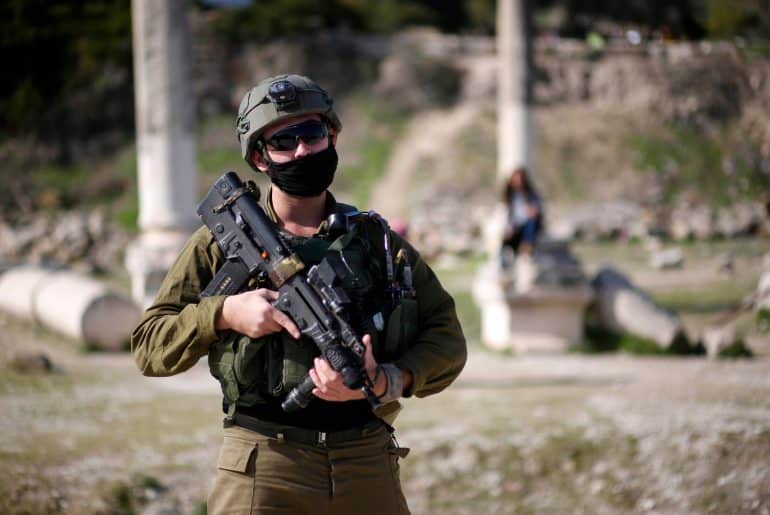
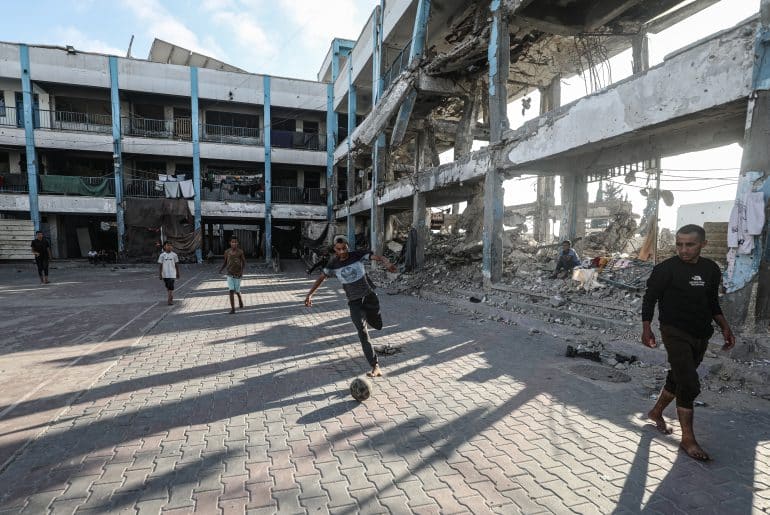
” Israel uses the lack of disarmament as the pretext to continue occupying Lebanese and Palestinian territory, and it justifies its constant state of war with the need to disarm Hezbollah and Hamas. “
Again: the classic critique of Israeli ‘foreign policy’ is that it refuses to negotiate; when there appears to be political progress towards a just solution to the conflict there is less violence coming from the Palestinians, when there isn’t a political horizon there is more violence. Maybe negotiating with Hezbollah is worth trying?
Israel’s Forever Wars...The country’s strategy is no longer focused on deterrence and diplomacy, it’s about dominance and degradation….since October 7, 2023, Israeli leaders have embraced a strategic logic that departs sharply from the way deterrence, domination, and diplomacy have long blended in Israeli statecraft….Deterrence and diplomacy have been eclipsed by something harsher: a preference for domination, degradation, and the prevention of the adversaries’ recovery. That shift is now driving a broad set of military actions that are reshaping the region….the strategy points toward a region in which war has no obvious terminus, because war is no longer being used to produce a stable political arrangement. It is becoming, instead, the arrangement itself.
https://carnegieendowment.org/middle-east/diwan/2026/03/dominance-degradation-and-debilitation
“A growing number of Israeli experts, however, emphasize that forever war is not the solution.”
Top Israeli Security Experts Reject Netanyahu’s Forever War Doctrine – J Street
Knowing the enemy is key to success in any conflict.
Note Israel claims to have been open to peace over time…. cultivating reasons to not get there while casting blame.
A challenge is whether Palestine and supporters will be able to persuade public opinion they are looking for co-existing peacefully, in one state or two, thereby taking politically what is rightfully theirs.