“There is no debate as to why Donald Trump and the Republican Party suffered a historic and humiliating defeat at the polls on Tuesday: it all comes down to the Iran war and the cost-of-living crisis it has brought about,” wrote the Quincy Institute’s Trita Parsi after Tuesday’s election.
Now that Trump has lost his majority in Congress, will Democrats be able to reel in his foreign policy?
Mondoweiss U.S. correspondent Michael Arria spoke with Mitchell Plitnick, president of ReThinking Foreign Policy and author of Cutting Through newsletter, about what the election could mean for Trump’s foreign policy, how the Israeli elections could impact the United States, and how JD Vance is looking to position his inevitable 2028 presidential run.
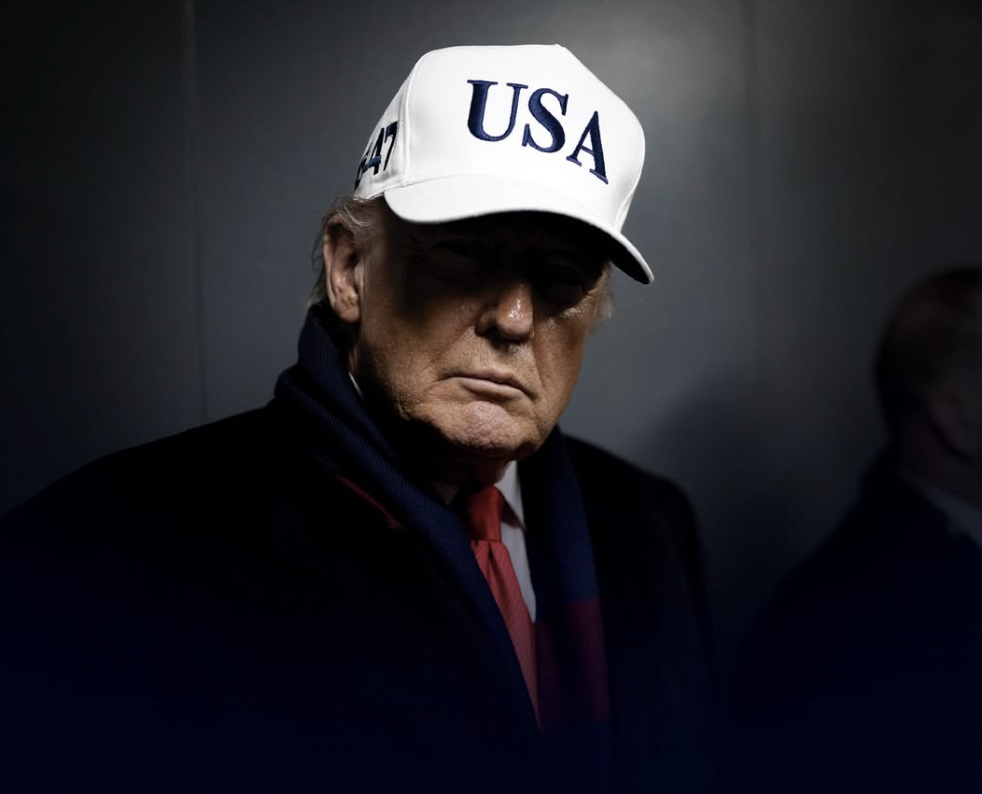
Trump obviously changes his tune, day to day, week to week, minute to minute. We’ve seen him talk about wanting to renew negotiations with Iran, and we’ve seen him make statements threatening further attacks on the country. We’ve also seen reports, relying on quotes from officials, that the administration is planning to step up its bombing of Iran now that the election is over.
What do you make of Trump’s statements and these reports? As someone who follows this closely, what do you think comes next in terms of the war?
Speaking as somebody who follows everything- all of Trump’s coverage in mainstream media, alternative media, Truth Social- I have no more idea what the hell he’s really thinking than you do or anybody else does. He contradicts himself all the time. We also know that he intentionally misleads people, especially when it comes to Iran. Twice, we’ve already seen him engage in diplomacy to try to catch Iran off guard in preparation for an attack.
He’s facing a lot of pressure, and I think he’s unfortunately still very susceptible to Israeli manipulation because the Israeli side. It’s not just that they know how to manipulate him, a lot of people do, he’s an idiot.
Still, Netanyahu has a certain hook because Iran has humiliated Trump. There’s just no question about it. Iran has defeated him. Iran has frustrated all of his plans. Iran has made him look like a fool. He can paint it however he wants, but he knows this. When he’s sitting there stewing about it, he knows this. And Netanyahu knows he knows this.
We are right now, I would say, in the most dangerous period because of the Israeli election. Netanyahu only has until November 10, so five more days, before the new Knesset is seated. The opposition leader has already said that he would fight Netanyahu if he attacks Iran and Iran hasn’t attacked Israel first.
Now, whether he would really go to the mattresses on that, who knows, but there’s a pretty clear line being drawn by the Israeli opposition leader, so Netanyahu is going to be desperate to try and get this war restarted in the next five days. We know he’s already tried a couple of things over the past month, flying Israeli jets close to, or some reports even say into, Iranian airspace. The Iranians did not take the bait. Still, he will be pushing Trump very, very hard.
At the same time, Republicans, both the outgoing ones and the ones who have survived this electoral bloodbath, are going to be insistent that he find a way out of this war. There’s going to be dual pressure on him.
If you ask me which way I think it’s going, I am a pessimist. I get pessimistic when I hear Trump say he wants to engage diplomatically with Iran. Again, we’ve heard it twice before, and the result was an American and an Israeli attack. So that’s where I’m guessing that he will go, especially because things are going to get harder for him when the new Congress comes in in January. So Netanyahu has five days. Trump has two months.
They say Americans don’t vote on foreign policy, but there have been cases where that’s not true. One of the reasons Obama beat Clinton in the 2008 primary was the Iraq War. Some of Trump’s 2016 appeal stemmed from him railing against the Iraq War. Then, in 2024, he talked about ending the wars, even though it turned out to be nonsense. On the flip side, the genocide in Gaza definitely hurt Kamala Harris.
Now I’m looking at these NBC exit poll numbers. 74% of voters said the Iran war was a “crucial or major factor” in their voting. Exit polling also found that 62 % of voters believe that using military force against Iran was the wrong decision. There’s obviously also so many polls showing that the American public has flipped on Israel.
How heavily do you think foreign policy factored into Tuesday’s results?
I think we’ve all labored under a bit of a misconception when we say that Americans don’t vote on foreign policy. They don’t, but they do vote on how foreign policy affects them. So, then it becomes a domestic policy.
We saw this lesson very clearly in 2024. Gaza was, of course, the issue, and the genocide was the issue. But I think what really hurt Harris was what her insistence on standing for the genocide communicated to her voters. In other words, I’m saying Gaza was the issue they were talking about, but I think what really cost her exponentially more votes are the result of the perception that she wasn’t listening. That she didn’t care that so many of her constituents wanted us to stop supporting the genocide in Gaza. That, I think, spread far beyond just the Palestine Solidarity Movement, and just the people who were talking about Gaza.
If we had attacked Iran and it didn’t go well, the U.S. wasn’t really achieving its military objectives, but the war wasn’t making gas prices jump..I’m not sure how much that would have dragged to the polls.
When we’re talking about whether Americans vote on foreign policy, I still think they don’t, but I think what Americans have come to realize that foreign policy affects domestic policy, it affects them here at home. For so long people might have had an opinion on foreign policy, but they weren’t voting on it because it didn’t affect them directly. Now they’re seeing that it does.
They’re seeing it affect them in several ways. Palestine solidarity activists have successfully made the case that support for Israel has had severe impacts on the United States..[it’s had] a boomerang effect on us here at home. I think people are making those connections more. The playing field has changed.
That said, many people did say that the war in Iran was a major factor. I just saw a number from a very large national exit poll. It was third, but number one was actually corruption. Number two was cost of living. Which we can, of course, connect to the Iran war. Then number three was Iran. That is a big deal. And it was exactly the number you said: 75% said it was a major issue.
I think things have changed a bit. People, and it’s true for Democrats and Republicans, are realizing it does affect us here.
I want to talk more about the Israeli election. What potential impact does that have on the U.S. in terms of U.S. actions in the region going forward.
I think many people believe that the outcome doesn’t entirely matter, as Israel is a deeply racist society that will continue to act the same way regardless of who is elected. However, we’ve seen many Democrats in the U.S. frame Israel actions, over the last three years, as an issue with Netanyahu and not Israel more broadly, so I do wonder if there will, at least, be a rhetorical shift he’s ousted.
You wrote a piece at the site about this recently. Can you talk about the potential impact of those elections?
I definitely disagree with the view that the Israeli election doesn’t matter outside of Israel.
First of all, let’s be clear: the election’s not even close to being over; we don’t know who won. Netanyahu’s Likud party got the most seats; the opposition bloc, as a group, got closer to a majority. Still, their inherent racism could very well prevent them from joining with the parties that represent Palestinian citizens of Israel, which could prevent them from getting a majority. There are several different ways this can go, with Netanyahu staying in power. There could be more elections. Netanyahu could convince the opposition leaders, Naftali Bennett in particular, to form a unity government of some kind, so that would then mean that the super far-right, the Smotrichs and the Ben-Gvir’s, are out of the government, but Netanyahu would still be leading. So there are a lot of ways this can still go, and each one makes things different.
That being said, I think there’s a lot of danger in the opposition, actually that could take away from the progress that has been made in the movement for Palestinian rights. There’s no question. A top priority for Gadi Eisenkot, Naftali Bennett, and Yair Lapid will be rebuilding relationships, particularly with the Democrats in the United States.
There are plenty of avenues for them to do that. There are many, many Democrats, as we just saw in Michigan, who are eager to re-engage with Israel and to rebuild that “special relationship” that has become so tattered. It’s still there, but it’s become so tattered in the wake of the genocide. So, I think it makes a big difference.
What you referenced about [people believing] this is “all being about Netanyahu” is very much alive. A lot of the people are saying they want to reevaluate our relationship with Israel. They want to reduce or eliminate aid to Israel. Some of those people can be still swayed back because, if you look at the polling, there is still widespread and pretty strong support for the continued existence of Israel as a Jewish state, but I think most people who just look at this rationally recognize that as long as Israel is a Jewish state there cannot be any resolution to the denial of Palestinian rights. Those just those two things that don’t go together, is the argument anti-Zionists make and I think it’s the right one.
Polling shows there is sympathy for the suffering of the people of Gaza, but when we talk about Palestinian politics as a whole, and when Palestinians are speaking for themselves and talking about what their policies are, what their real grievances are against Israel, there’s still a lot of pushback, even among people who, again, are shifting on Israel. That is not a settled issue at all. There’s still a lot more work to do.
On one hand, I think it helps to have this far-right Israeli government because it helps to make that case, but that’s easy for me to say because I’m not living there and dealing with the bombs and bullets flying over my children’s heads every day.
The flip side of this is, Eisenkot would recognize that to repair the relationship with the United States, he’ll have to back off at least a bit on the genocide in Gaza and the ethnic cleansing in the West Bank. He’ll have to restrain the settlers, a little bit, who are currently operating with full assistance from the Israeli government and the Israeli military. He knows he would have to do that. That’s what repairing the relationship with the United States would have to mean. I’m not saying he would go very far in any of those things. He would go just as far as he needs to and make the progress that he needs to make with the United States.
I can’t answer this, of course, Palestinians will have to answer this, but the question is: is it worth getting Netanyahu out and having any diminishment in the violence that would accompany, Netanyahu, Ben-Gvir, or Smotrich, leaving? That’s a question for Palestinians. That’s a judgment call that they have to make. It’s a tough call, I would say.
What does Democratic control of the House and Senate mean for Trump’s war on Iran? Will we see War Powers resolutions, will be there an attempt to reel him in? Does the fight over Democratic leadership impact this, if it’s Schumer and Jeffries in charge? We have multiple progressives going into Congress, what do the battles between the progressives and the centrists within the party look like and do those fights potentially impact what Trump can do overseas over the next two years?
Well, it could potentially impact it a lot. The fact that the Democrats won such strong majorities in the House and the Senate, it conceivably gives them an awful lot of power over what Trump can spend and that will include what he can spend on the war.
The first test will be how congress responds to the National Defense Authorization Act. I’m sure most people listening are of aware Section 219. If you’re not, check out my Substack, I have a whole breakdown on how Israel is trying to reset the special relationship to insulate it against public opinion so they can keep getting taxpayer aid, without having to fight taxpayers for it.
Section 219 would basically legislate a private-public partnership between the Israeli government, corporations, and the United States government and it would be very, very difficult to undo politically.
The House already passed it the NDAA, but the Senate is holding out, mostly because of its size because it’s a $1.5 trillion ask.
Section 219 is an issue. It is part of the reason it is being held up, and we need to keep that issue alive in the wake of the midterms. I think focus has gone away from that. It needs to come back, and it needs to come back fast, because that will probably come back to the floor in the next month, I would say.
That will tell us a lot because these Democrats, I think, if they are willing to fight, you’re going to have a progressive wave come in in January and you’ll have a real opening and have places and space to push for a real reset in the U.S.-Israel relationship…I think, on foreign policy there will be a real clash between the old guard and the new wave of Democrats, which is exactly what we need to see.
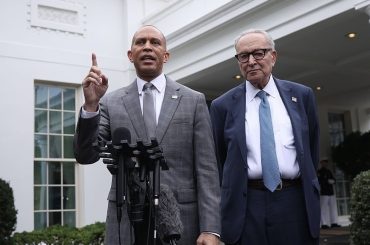
Jeffries is going to be Speaker of the House, that’s pretty much a given. Chuck Schumer may face a challenge, but it looks pretty likely that he will be able to withstand it and remain Majority Leader, so we know where we stand around that. But the question is, how much do they have to answer to a progressive caucus that wants to change policy and how much will other centrists fall in line with that?
I think those questions are very open, given where this election has gone and what it has communicated about Israel’s standing in the Democratic Party. I think even people who have been pro-Israel might, in the next Congress, [start to] peel a little..The bigger question is, will Congress cut off funds for the war in Iran. I think they can, I think they should…this is something, where even most centrists should be behind that fight.
Another question is, how much does AIPAC, and similar pro-Israel lobby groups affect that conversation? It doesn’t look to me like a whole lot. If you go back 10 or 11 years to the JCPOA [the Iran Deal]. AIPAC lost that fight and that was in a very, very different political climate than what we’re living in now. I don’t think Iran, the Iran war in particular, is a fight that AIPAC can win. The reason that AIPAC lost in 2015 was that the President was a Democrat and he stood against them and managed to pass the JCPOA. I think now we have a Democratic Congress that’s going to be energized on the Iran war.
If they don’t take advantage of this, I think we’re in really bad shape because this is almost a tee shot. This is just being handed right to them.
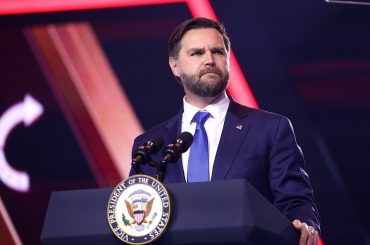
Finally, I want to ask you about 2028. You probably saw Vice President JD Vance had a tweet about the election. He cited a pollster who identified four reasons for the results: the Iran War, cost of living, “putting America First”, and a desire for the U.S. relationship with Israel to change.
We’ve seen reports of infighting within the Trump administration and officials potentially being scapegoated for the losses, but it seems clear Vance wants to run for President and he’s trying to carve out a lane.
What did you make of those comments? I’m particularly interested in how you interpret the Israel part.
Vance is somebody who all along been an isolationist, but it’s just been impossible for him actually to take that stand as Vice President to Donald Trump. Trump does not [allow] any debate or discussion. He has to toe Trump’s line, but I think he has also done what he could in this period to try to keep that isolationist identity alive. With an eye, I would guess, towards 2028.
I don’t particularly think he has a great shot at 2028. The man just doesn’t have the charisma or the political sense to take on a task that is basically going to be rebuilding and rebranding the Republican Party after this wipeout. In fact, I think whoever the Republican nominee will be someone nobody’s thinking about yet, much like in 2016.
In terms of how Vance is reading the room, I think he’s not wrong. I think he’s definitely saying that he knows the Iran war is very unpopular with Trump’s own base and with most Republicans. He knows that the relationship with Israel, even among many who support a robust Israel.
That is why Trump decided to, when he made his statement just before the election about how aid was going to be cut off, which is very misleading.
He did that because he knows that most Republicans want a cutoff for exactly the reason he said: Israel doesn’t need it. Israel is a functioning economy. It can support its own military and it does not need American aid to do that. It needs American aid to be the aggressor and hegemon it is. If Israel was really just interested in self-defense, Israel could manage that on its own. They absolutely think their economy can handle that. I don’t think there’s any question of it. In fact, many Israeli right-wingers have called for the end of aid to Israel for many years because they don’t want the United States to have leverage over Israel.
So, Vance is reading the room right there. I think he’s also correctly reading that there is animus towards Israel for several different reasons. Some good, some less good, like just a general antisemitism and racism that you have in the Republican Party. It exists to some extent, I guess, among Democrats, but to a much lesser extent and in much different forms. He’s reading that as well.
I think this particular message is going to resonate with certain voters, but how it translates for Vance or for any Republican nominee into actual policy, I think is much iffier. Republicans can’t fund campaigns and fund political life on small donations the way Democrats do. It’s just a different kind of network. The Republicans need their major donors. Republican major donors are almost down the line pro-Israel, strongly pro-Israel, fanatically pro-Israel. The Democrats have donors like that as well, but they also have other donors that are interested in other things and don’t necessarily prioritize that. Everyone who prioritizes foreign policy on the Republican side these days..are all very strongly pro-Israel.
You also need to speak to the evangelical base. That’s not going away. They’re still a huge part of Republicans winning a primary in Red states. They still want to see—full, robust support of Israel. Now you can convince them that cutting off aid in a different way, as Lindsey Graham was suggesting and as the Trump-Netanyahu alliance is pursuing right now, and they’ll be fine with that as long as the support is still going there.
So, many Republican voters will want to hear what Vance is saying, but we will most likely see a sharp disconnect between Republican rhetoric and Republican policy. Democrats did that for years as well, but they have finally gotten called on it, and they have realized that they can’t get away with it anymore. Republicans still can.