Author

Jonathan Cook

Browsing

In John Lyons’s new memoir, Balcony Over Jerusalem, ex-New York Times Jerusalem bureau chief Jodi Rudoren tells Lyons that Israel’s treatment of Palestinians looks “a lot like apartheid.” The book describes the aggressive attacks Lyons and others suffered at the hands of the Israel lobby, and the Rudoren interview raises the obvious question: why are we learning about Rudoren’s surprising views about Israel and apartheid in an interview with Lyons rather than prominently in the pages of the New York Times, the world’s most influential newspaper? The answer indicates that the lobby’s strategy has been paying handsome dividends.

Jonathan Cook writes: “The passage, and now the enforcement, of laws prohibiting entry for BDS advocates are part of the effort to silence voices from outside Israel/Palestine. But Israel is fighting a losing battle, due to the persistence of Palestinian journalists, the slow opening of cracks in the mainstream media, and the new opportunities for freelance journalists like myself through electronic media such as Mondoweiss. The existence of Mondoweiss and other online outlets means that I can report honestly what I learn from witnesses and documents—information that ‘established’ media have been too cowardly to publish.”

A $2.3 million Israeli lawsuit against the family of Fadi Qanbar, who crashed a truck into soldiers in Jerusalem in January, killing four, demands that his widow reimburse the state for the compensation it awarded the soldiers’ families. If she cannot raise the astronomic sum, the debt will pass to her four children, the oldest of whom is currently only seven. Israel is reported to be preparing many similar cases.

Jonathan Cook finds contemporary parallels to interventionist wars in the hit film ‘Wonder Woman’: “this much-praised Gal Gadot vehicle–seemingly about a peace-loving superhero, Wonder Woman, from the DC Comics stable–is actually carefully purposed propaganda designed to force-feed aggressive western military intervention, dressed up as humanitarianism, to unsuspecting audiences.”

Israeli and US officials are in the process of jointly pre-empting Donald Trump’s supposed “ultimate deal” to end the Israeli-Palestinian conflict. They hope to demote the Palestinian issue to a footnote in international diplomacy. The conspiracy – a real one – was much in evidence last week during a visit to the region by Nikki Haley, Washington’s envoy to the United Nations. Her escort was Danny Danon, her Israeli counterpart and a fervent opponent of Palestinian statehood.

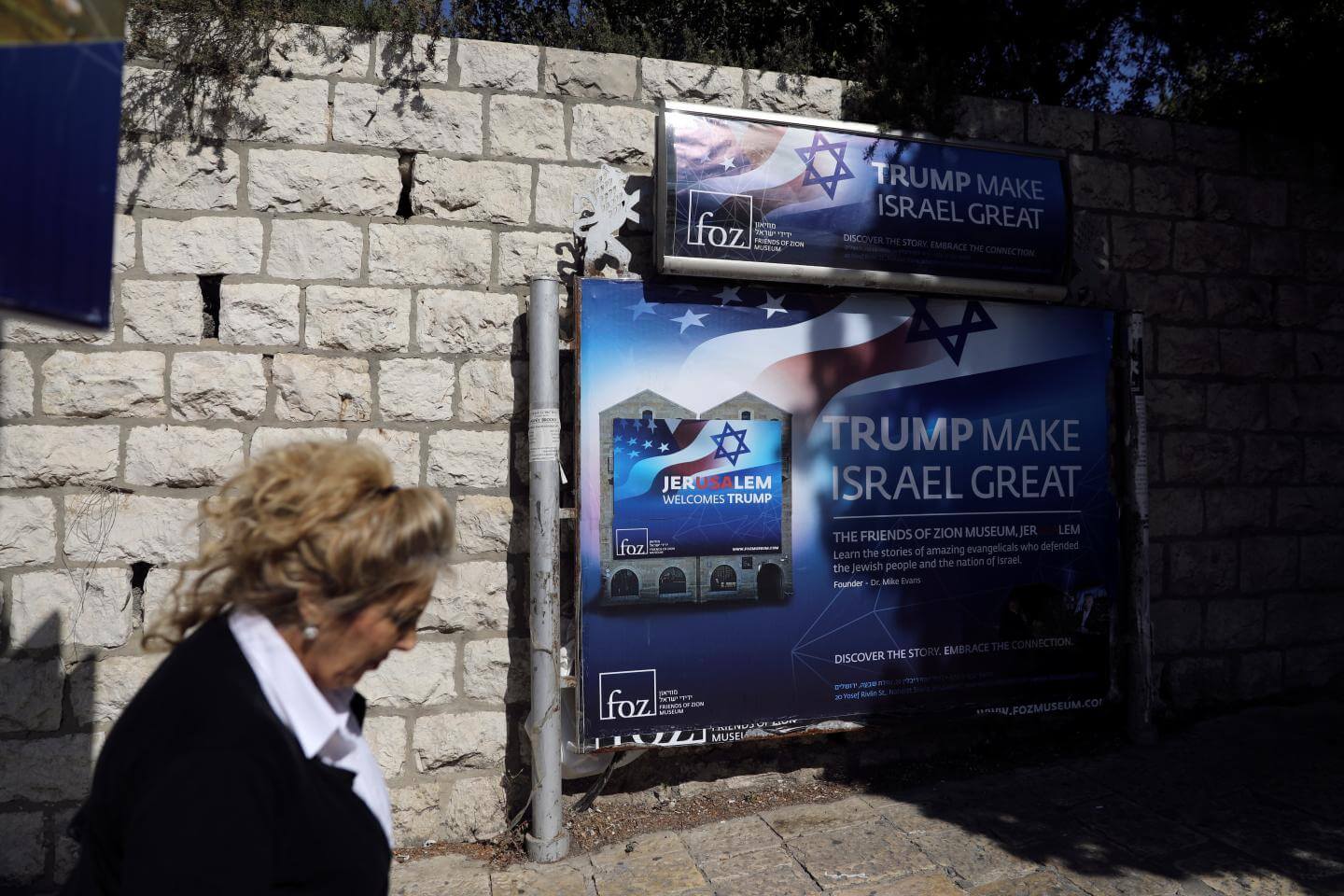
U.S. President Donald Trump faces a deadline this Thursday about whether to renew a presidential waiver to delay recognizing occupied Jerusalem as Israel’s capital and relocating the U.S. embassy there from Tel Aviv. Jonathan Cook writes, “Whether Trump signs the waiver or not on Thursday, all indications are that the US president – faced with domestic pressures and an intransigent Israeli government – is going nowhere with his ‘ultimate deal'”.

A display of Israeli-style community policing before an audience of hundreds of young schoolchildren was captured on video last week. Were the 10-year-olds offered road safety tips or advice on what to do if they got lost? No. In Israel, they do things differently. The video shows four officers staging a mock anti-terror operation in a park close to Tel Aviv. The team roar in on motorbikes, firing their rifles at the “terrorist”. As he lies badly wounded, the officers empty their magazines into him from close range. In Israel it is known as “confirming the kill”. Everywhere else it is called an extrajudicial execution or murder. The children can be heard clapping. The police were unrepentant about their staged execution, calling it “a positive, empowering” demonstration for the youngsters. The event was hardly exceptional.

Mahmoud Abbas

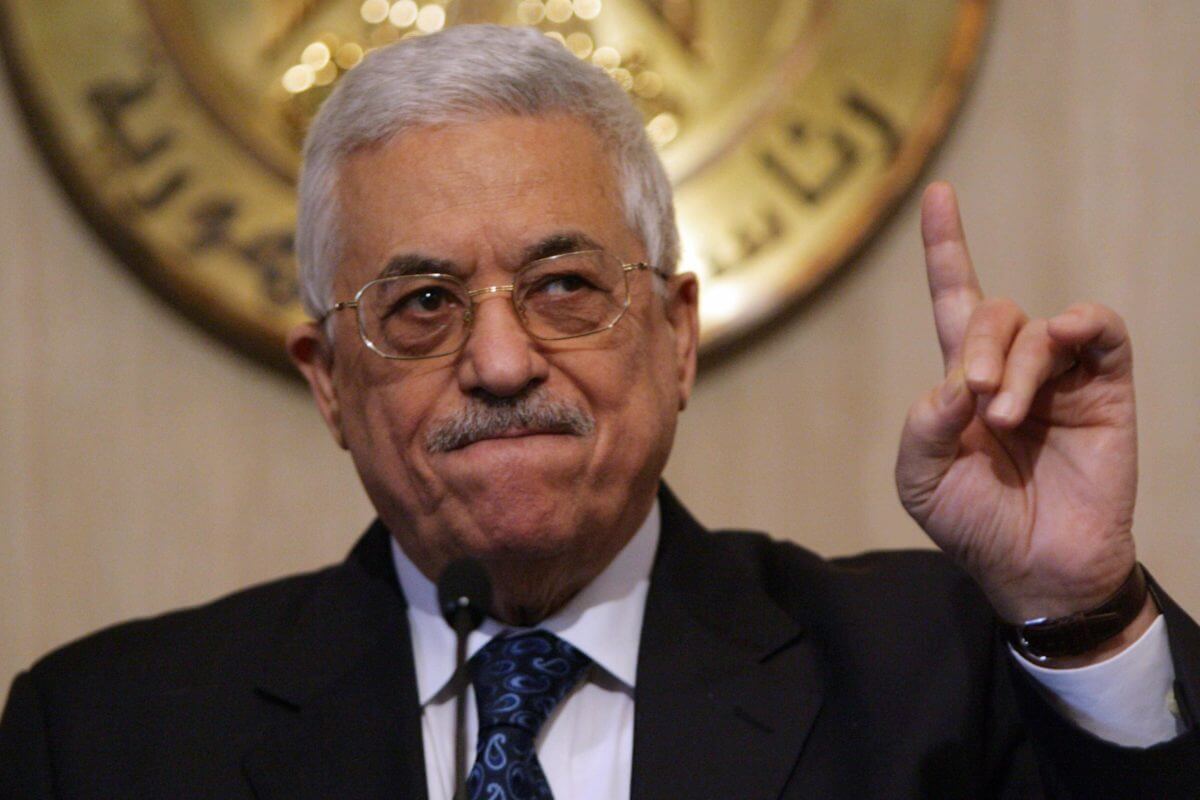
The Palestinian president Mahmoud Abbas is due to meet Donald Trump in the White House on Wednesday. Back home, there is anger in the West Bank on the streets and within the ranks of Abbas’s Fatah movement triggered by the two-week-old hunger strike by Palestinian prisoners. Jonathan Cook writes, “The visit to Washington and the hunger strike have brought into sharp relief the biggest fault line in the Palestinian national movement.”

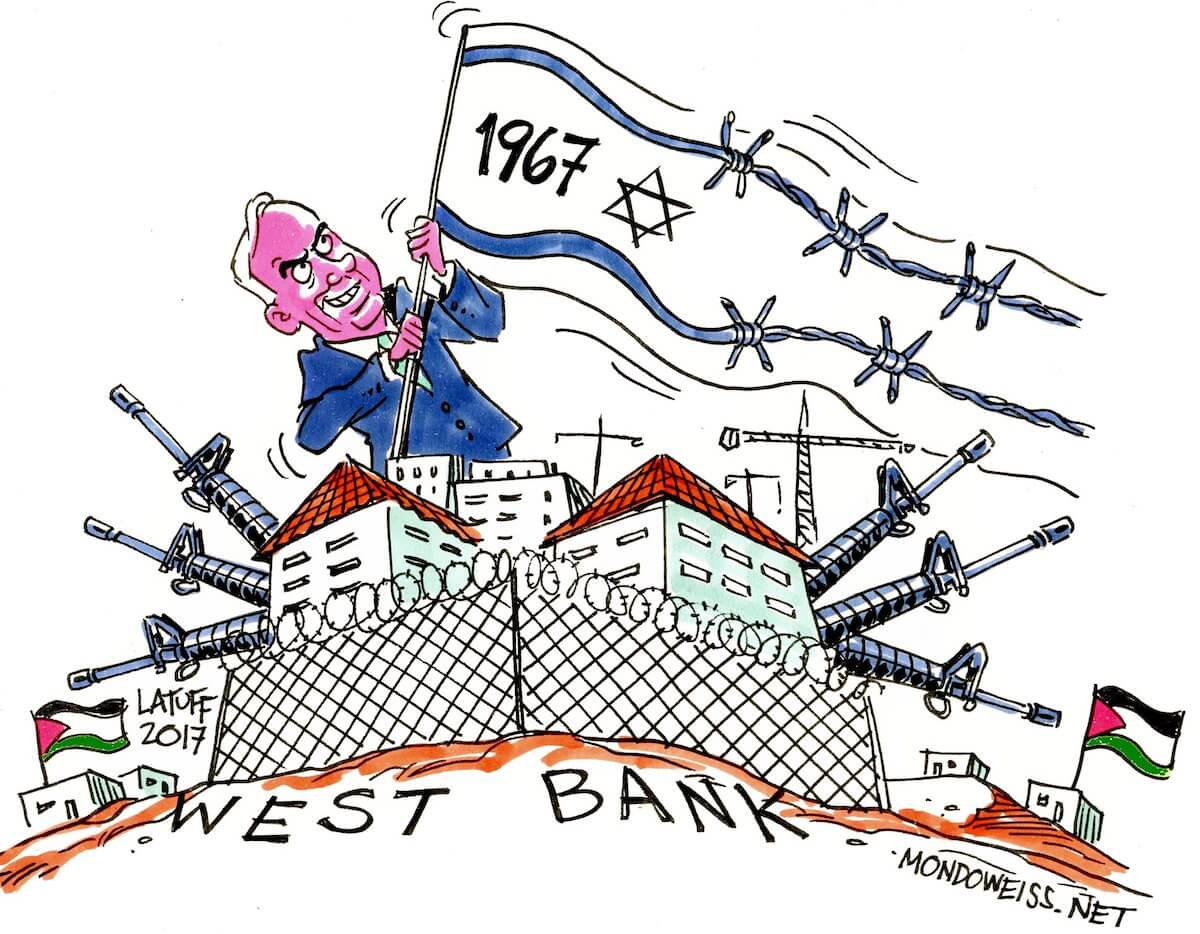
Israel is to hold lavish celebrations over the coming weeks to mark the 50th anniversary of what it calls the “liberation of Judea, Samaria and the Golan Heights” – or what the rest of us describe as the birth of the occupation. Israel’s imminent celebrations should lay to rest any confusion that the occupation is still considered temporary.