The siege of north Gaza and Jabalia refugee camp enters its third week as Israel has cut off aid to some 200,000 people. On Saturday, Israeli forces bombed Beit Lahia, killing at least 80 Palestinians, in one of the largest massacres in months.


The siege of north Gaza and Jabalia refugee camp enters its third week as Israel has cut off aid to some 200,000 people. On Saturday, Israeli forces bombed Beit Lahia, killing at least 80 Palestinians, in one of the largest massacres in months.
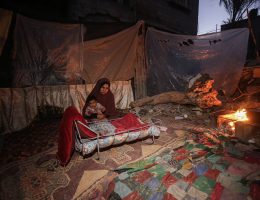
The ethnic cleansing of northern Gaza as part of the so-called “Generals’ Plan” isn’t new, but the only thing standing in its way is the will of 200,000 Palestinians to stay in the north and refuse displacement.
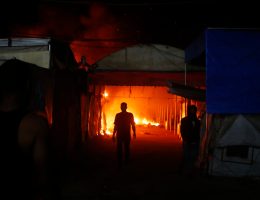
Israel bombed displacement shelters across Gaza and aid distribution points in Jabalia, while Hezbollah intensified its fire on Haifa and Tel Aviv amid Israel’s continued bombardment of southern Lebanese towns.

Following a year of rising settler attacks on the people of Beita and the death of Turkish-American activist Ayşenur Ezgi Eygi, the West Bank village is keeping civil resistance alive in the face of the threat of Israeli colonial land grabs.

Iran announced that its barrage of ballistic missiles was in retaliation for the assassination of Ismail Haniyeh in Tehran and Hasan Nasrallah in Beirut.
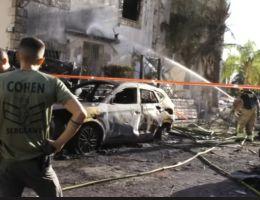
Hezbollah launched a barrage of at least 115 rockets against Israeli targets in retaliation for Israel’s pager and electronics explosion attacks across Lebanon and following the assassination of top Hezbollah commander Ibrahim Aqil in Beirut.

The UN has said that Israel is now using “war-like tactics” against Palestinians in the northern West Bank. Meanwhile, Netanyahu has reiterated his insistence on maintaining an Israeli military presence along the Philadelphi Corridor.

As the Israeli assault on the northern West Bank enters its sixth day, Palestinians launched two attacks on Israelis in Hebron to the south. Meanwhile, the death of six Israeli captives in Gaza caused widespread anti-Netanyahu protests in Tel Aviv.

The Israeli army’s large-scale assault on the northern West Bank has entered its second day. During a battle in Nur Shams refugee camp, the Israeli army killed wanted resistance fighter Muhammad Jaber “Abu Shuja’,” leader of the Tulkarem Brigade.
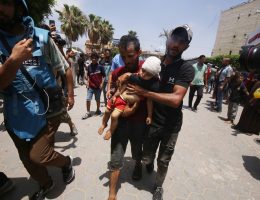
At least 210 Palestinians were killed and 400 others were injured in the central Gaza Strip on Sunday after Israeli forces carried out a “rescue operation” to retrieve four captives. Reports of U.S. involvement in the operation have sparked backlash.