Author

Nada Elia

Browsing

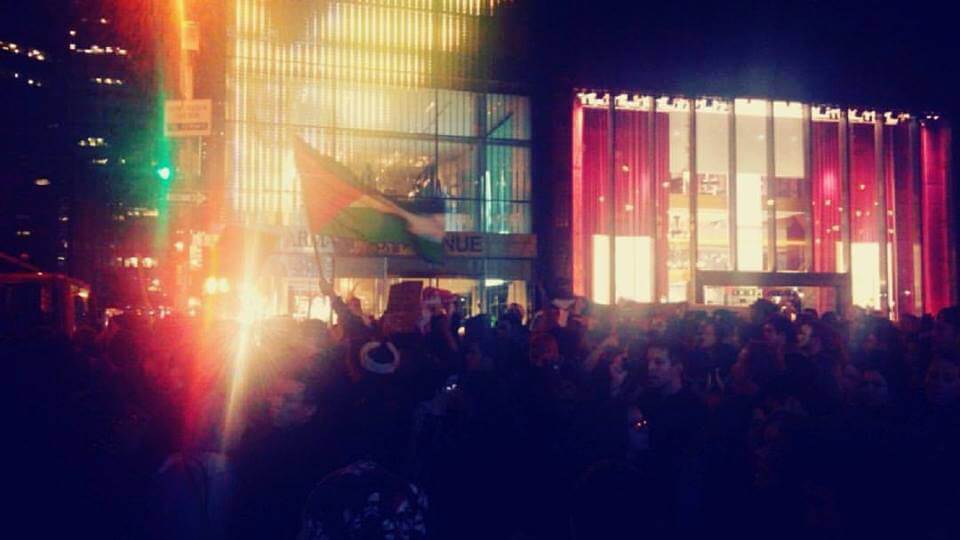
The contrast between the behind-the-scenes maneuvering of the Zionists, and the rambunctious visibility of dissent and creative protest of Palestine activism, reveals the gradual weakening of the Zionist grip on the mainstream narrative, which once held Israel to be the victim—a discursive change due in large part to BDS. It is this change that is worrying the Zionist lobby so much that they are resorting more than ever to aggressive censorship and blacklisting.

We have long been told that boycotts against the state of Israel are divisive and illegal. But there’s been a boom of boycott activity in the wake of Donald Trump’s victory. Nada Elia writes, “Boycotts are legal, they are protected by our First Amendment right to free speech and freedom of expression, and they can be targeted at department stores with liberal policies, as well as at companies that profit from the violation of human rights and the desecration of indigenous lands, from Standing Rock to Palestine. We cannot allow Zionists, be they Democrats or Republicans, to abrogate our constitutional rights, so as to further shield Israel from accountability.”

Nada Elia on the challenge ahead for activists: “This is not the ‘apocalypse,’ as some are describing Trump’s ascent to power. Even with escalating attacks on our human and civil rights, this is not the seismic change that will knock us off our feet. It’s the same evil we have been fighting against, racism, environmental devastation, profit before people, except that this time, the mask is off.”

Nada Elia reflects on the Standing Rock Sioux Nation’s defiant resistance to the Dakota Access Pipeline and its intersections with other struggles for justice: “Standing Rock “isn’t” about Palestine. Standing Rock “isn’t” about Black Lives. Standing Rock “isn’t” about climate change. Standing Rock is about all of this, and all of us together. But ultimately, Standing Rock matters because it is about the Sioux Nation, and the indigenous people of this land.”

Nada Elia responds to recent statements from Jewish Voice for Peace and Marc Ellis on Yom Kippur which appeal to Jewish values: “Yes, there is an urgent need for accountability and transformation. But maintaining claims to exclusivity is a hindrance, not a contribution to a solution that hinges on co-resistance to racism.”

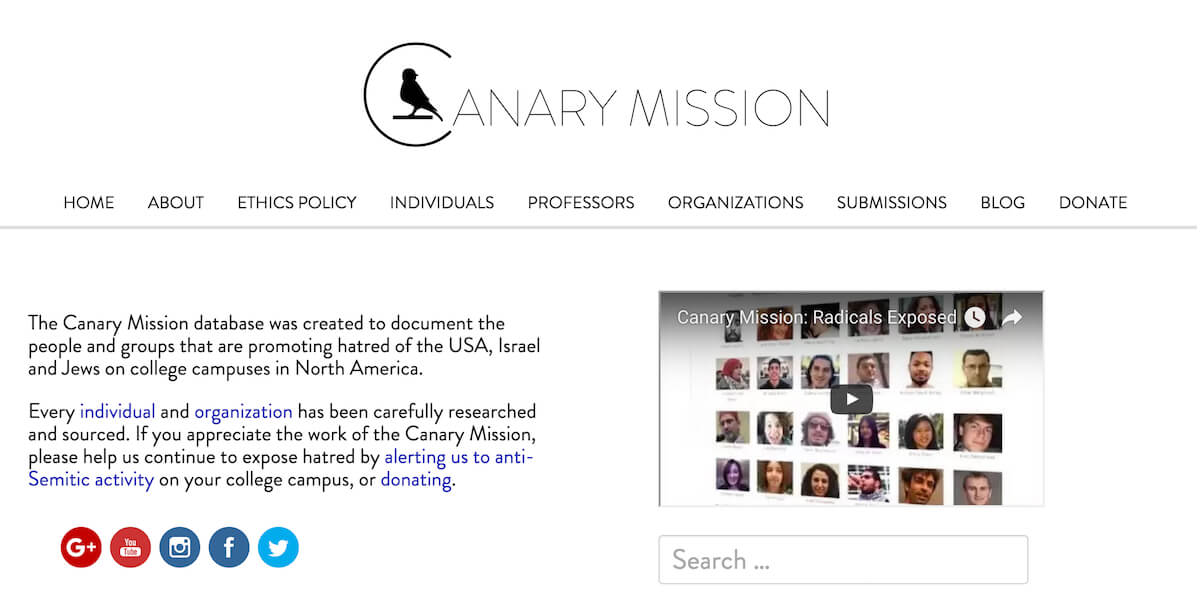
Over the past few years, as support for Palestinian rights has grown across the United States, student members of SJP chapters nationally have been facing intense online harassment for speaking up for Palestinian rights. One particular organization, the Canary Mission, has led multiple concerted attacks against students and faculty, tweeting about them as “Jew haters” and “terrorists” to potential employers. Over 1000 professors, representing a variety of viewpoints on Israel/Palestine, signed a statement insisting that the Canary Mission has no place on university campuses, and should not be taken seriously by university departments when evaluating prospective students for admission.

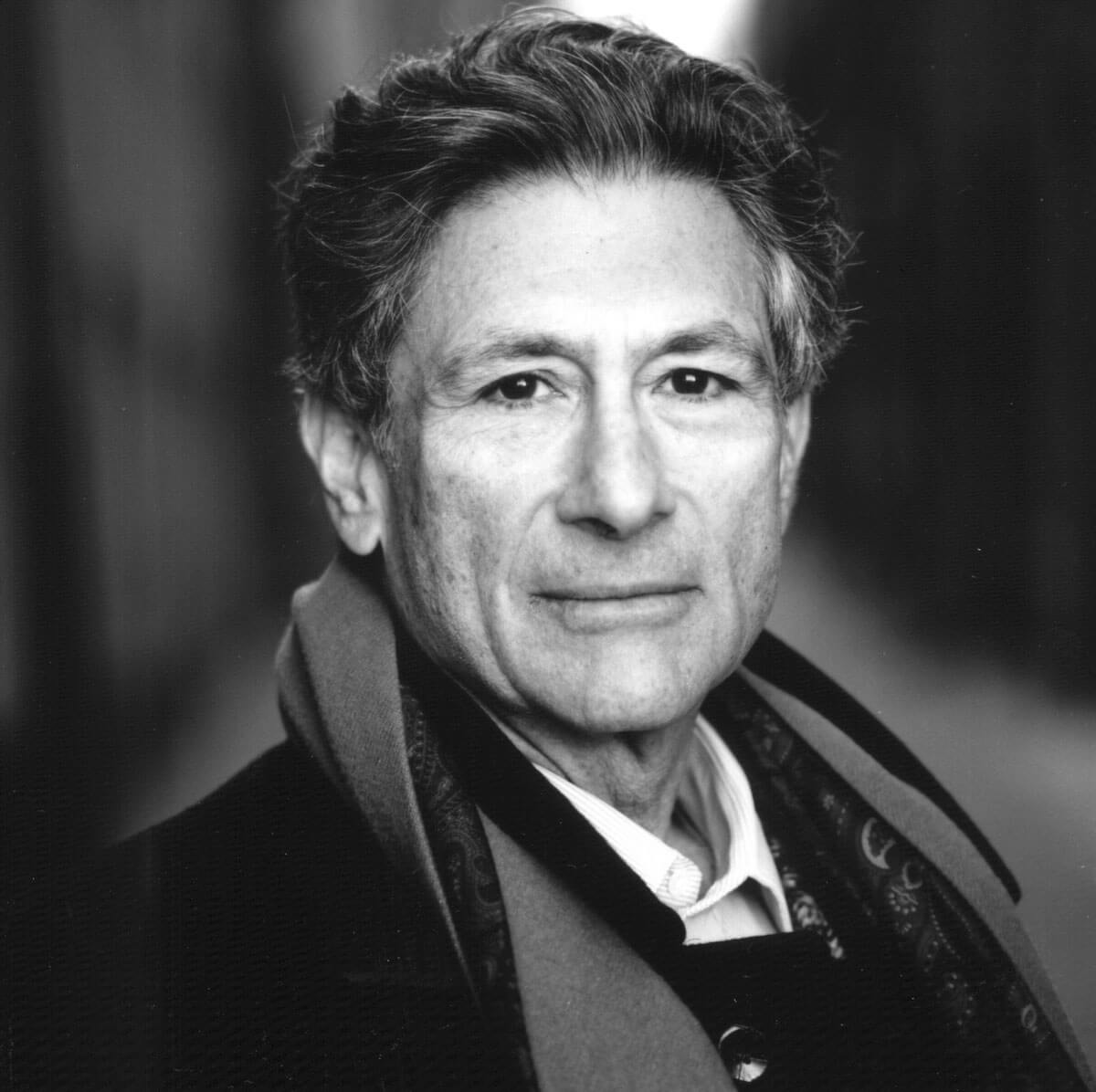
Edward Said

September 25, 2016 marked the thirteenth anniversary of the passing of Professor Edward Said, one of the most influential intellectuals of the twentieth century, and a political icon for anyone invested in the Question of Palestine. And as happens with many historical icons, Said’s legacy is causing a tug-of-war between “liberal Zionists” on the one hand, and the thousands of anti-Zionist critics and BDS activists his radical scholarship and political engagement have spawned.

A campaign against education continues. Professor Rabab Abdulhadi of San Francisco State University says: “The McCarthyist attack by Campus Watch/Middle East Forum, led by Daniel Pipes and David Horowitz, named as leading Islamophobes by the Southern Poverty Law Center, is no more than a witch hunt campaign aimed at silencing me and our commitment to justice-centered knowledge production.”

Celtic FC fans hold up Palestinian flags during a match against Israel's Hapoel Beer Sheva in 2016 (Photo: Reuters)

Nada Elia says that for those who strive to rise above nationalism, activism for justice in Palestine is rooted in a belief in justice and equal rights for everyone, everywhere. Yet, many of these same activists celebrated with millions around the world when Celtic FC fans flew the Palestinian flag at a game in Glasgow against Israel’s Hapoel Be’er Sheva. She explains that even though activists were waving the Palestinian flag, those events were not about nationalism: “The Palestinian flag has come to symbolize defiance to censorship, a rejection of the Zionist narrative that would have people believe Israel is “defending itself” rather than brutally maintaining its occupation and apartheid policies, and grassroots opposition to state violence, to colonialism, to brutal military oppression.”

“I have no problem with Jewish people or any other religion or different beliefs. But for personal reasons, you can’t ask me to shake the hand of anyone from this state, especially in front of the whole world.” These words, spoken by an individual who has just engaged in a gesture of support for the Palestinian people, are a standard response to the accusation of anti-Semitism which is routinely hurled at pro-justice activists. Yet as Egyptian judoka Islam El-Shehaby uttered them last week in Brazil, they signified a new milestone: the sports boycott had arrived at the 2016 Olympic Games.