Tens of thousands of Palestinians in the Qalandia refugee camp and Kufr Aqab are cut off from Jerusalem by the apartheid wall and separated from other Palestinian towns. Now, a new Israeli settlement plan threatens to displace them completely.
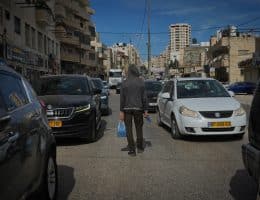

Tens of thousands of Palestinians in the Qalandia refugee camp and Kufr Aqab are cut off from Jerusalem by the apartheid wall and separated from other Palestinian towns. Now, a new Israeli settlement plan threatens to displace them completely.

Annemarie Jacir’s ‘Palestine 36’ gets a lot right in telling the story of the 1936 Palestinian revolution against the British. But a better accounting of the class dynamics in the uprising could have helped explain why it was crushed.

The Israeli government recently took radical steps to change the legal status quo in the West Bank. Here’s what these changes mean and how they set the stage for annexation.
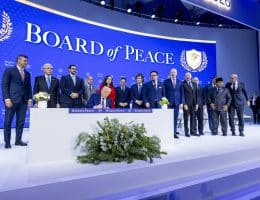
The U.S. plan for Gaza envisions a Gaza for investors, not Palestinians.

“Palestine 36” isn’t a movie about the Palestinian revolution against British colonial rule. It is about the present crossroads that Palestine is facing.

The town of Silwan has been at the heart of the Israeli settler takeover of Jerusalem’s remaining Palestinian neighborhoods. A recent Israeli court decision approved the forced expulsion of 40 families – the final blow in a decades-long legal battle.

The U.S.-sanctioned “Board of Peace” is imposing a colonial mandate in Gaza. It is the latest example of the “shock doctrine,” with the U.S. and Israel attempting to transform Palestinian society in Gaza after destroying it through genocide.

In 2025, Israeli settlers, backed by the army, displaced rural Palestinian communities in the West Bank at unprecedented rates. It is part of Israel’s escalating strategy to take control of as much of the territory as possible.

For Palestinians in Gaza, Phase 2 of the ceasefire offers little hope that it will fundamentally change the status quo Israel has established over the past three months, which many refer to as “a new form of genocide.”

Aid organizations say Israel’s recent ban of 37 groups has dealt a severe blow to humanitarian work across Palestine. In Gaza, it means “cutting off a lifeline for over two million people,” says Rahma Worldwide’s Dr. Shadi Zazzah.