Hamas said that it would release Israeli-American soldier Edan Alexander and the bodies of four deceased Israeli captives. The announcement has backed Israel into a corner in the ongoing ceasefire negotiations.
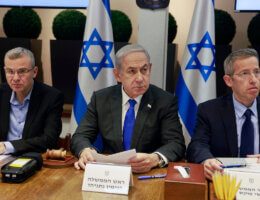

Hamas said that it would release Israeli-American soldier Edan Alexander and the bodies of four deceased Israeli captives. The announcement has backed Israel into a corner in the ongoing ceasefire negotiations.

As part of the ceasefire deal between Israel and Hamas, Amir Abu Raddaha was freed from Israeli prison after 23 years. He spoke to Mondoweiss about his time behind bars, and the horrific conditions of Palestinian prisoners since October 7.

The Arab states are assuming responsibility for the Palestine question not just because their plans for the region’s future are at stake, but because the very stability of Arab regimes is on the line. But is the Arab plan good for Palestinians?

Israel has suspended the entry of humanitarian aid into Gaza and resumed targeting Palestinian civilians, bringing the ceasefire with Hamas the closest it has even been to collapse.

In the midst of fragile ceasefires in Gaza and Lebanon, Israel is escalating its military aggressions in the region, begging the question: is Israel experiencing a moment of unprecedented force, or is it afraid of betraying unprecedented weakness?
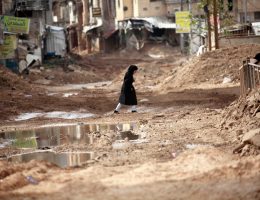
The Israeli army expanded its “Iron Wall” offensive in the northern West Bank, sending tanks into Jenin for the first time in two decades and announcing that displaced residents from Jenin and Tulkarem would not be allowed to return to their homes.

Following a handover ceremony in Gaza for Israeli captives, during which one Israeli soldier kissed the heads of two Hamas fighters, an outraged Netanyahu suspended the release of hundreds of Palestinian prisoners.
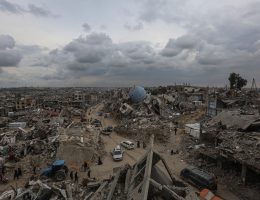
Israel wants to drag out the first phase of the Gaza ceasefire and eventually return to war, while Hamas wants to begin reconstruction as part of a second phase. This current impasse is bringing the fragile ceasefire to a dangerous crossroads.

Israel has killed 55 Palestinians after one month of its ongoing “Iron Wall” offensive in the West Bank. Killings, mass displacement, and uncertainty are the new normal.

Following tensions that threatened to unravel a tenuous ceasefire, Hamas released three Israeli prisoners after receiving guarantees from mediators that Israel would adhere to the humanitarian stipulations of the ceasefire agreement.