Rashida Tlaib speaking out against Iron Dome funding reveals opposing Israel’s occupation is no longer taboo among elected American politicians.
Israel’s Diaspora Minister Nachman Shai tells the American Jewish Committee: “if we see more of the radical left or the progressive liberal Jews continuing to support BDS and Black Lives Matter, as similar to the Palestinians, and they relate to Israel as a genocide state or an apartheid state, we may lose America.”
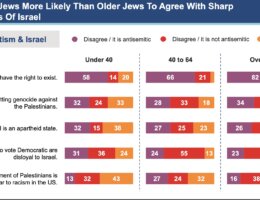
A quarter of Jewish voters polled by the Jewish Electorate Institute said they believed Israel is an apartheid state. This number rises to 38% for voters under 40.
The legendary human rights lawyer Michael Ratner’s life is exemplary for Americans seeking to undo an outmoded view of Israel. “I thought of [Israel] as the home of my people. I had my bedroom ceiling painted with the seven wonders of the world and a huge map of Israel. I had no idea how my view of Israel would change later in life,” Ratner relates in his posthumous memoir, Moving the Bar.
To anyone who says the situation in Palestine is complex just tell them to spend an afternoon in Hebron.
There are horrifying images from Jerusalem last night of a mob of racist Jews saying the city belongs to them and Arabs should burn. The young American Jewish group “IfNotNow” labeled the mob a “pogrom,” in another assertion of moral leadership over community elders who ignore the violence.
Phil Weiss interviews Susan Abulhawa about her new novel Against the Loveless World. “My exile and the destruction of my family and the destruction of everything, of our whole world, has defined my whole life in so many ways and in very personal ways,” says Abulhawa.
Yumna Patel, Michael Arria, and Phil Weiss discuss Palestinian views of the U.S. election from the West Bank, what the Palestine solidarity movement should expect under a second Trump term or a Biden presidency, and what to look for on election night and beyond.
In “The American Jewish Philanthropic Complex,” Lila Corwin Berman takes a deep — and brave — dive into the inner financial workings of the American Jewish community role in contributing to the entire American philanthropy industry.
Liz Rose meets two Jewish teens who feel no angst about coming out as anti-Zionist in articles in their Evanston high school newspaper. They have the support of their parents. But when Rose was becoming an anti-Zionist, her community was opposed. “Judaism and Zionism are totally synonymous!” my mother told her many times, when she tried to talk about the shift she was going through.