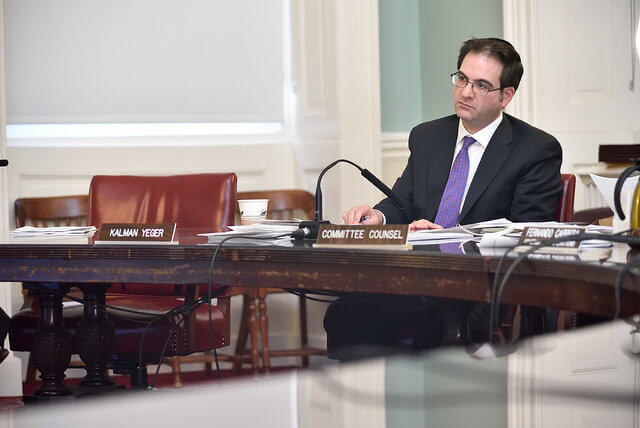
Anti-Palestinian racism is at last moving the needle in US politics. The demotion by leadership of NY City Councilman Kalman Yeger for his anti-Palestinian comments this week sends a message to the Democratic Party nationwide, that the profound political shifts that the left is generating on a host of issues, from sexual harassment to economic inequity, will include Palestine, too.
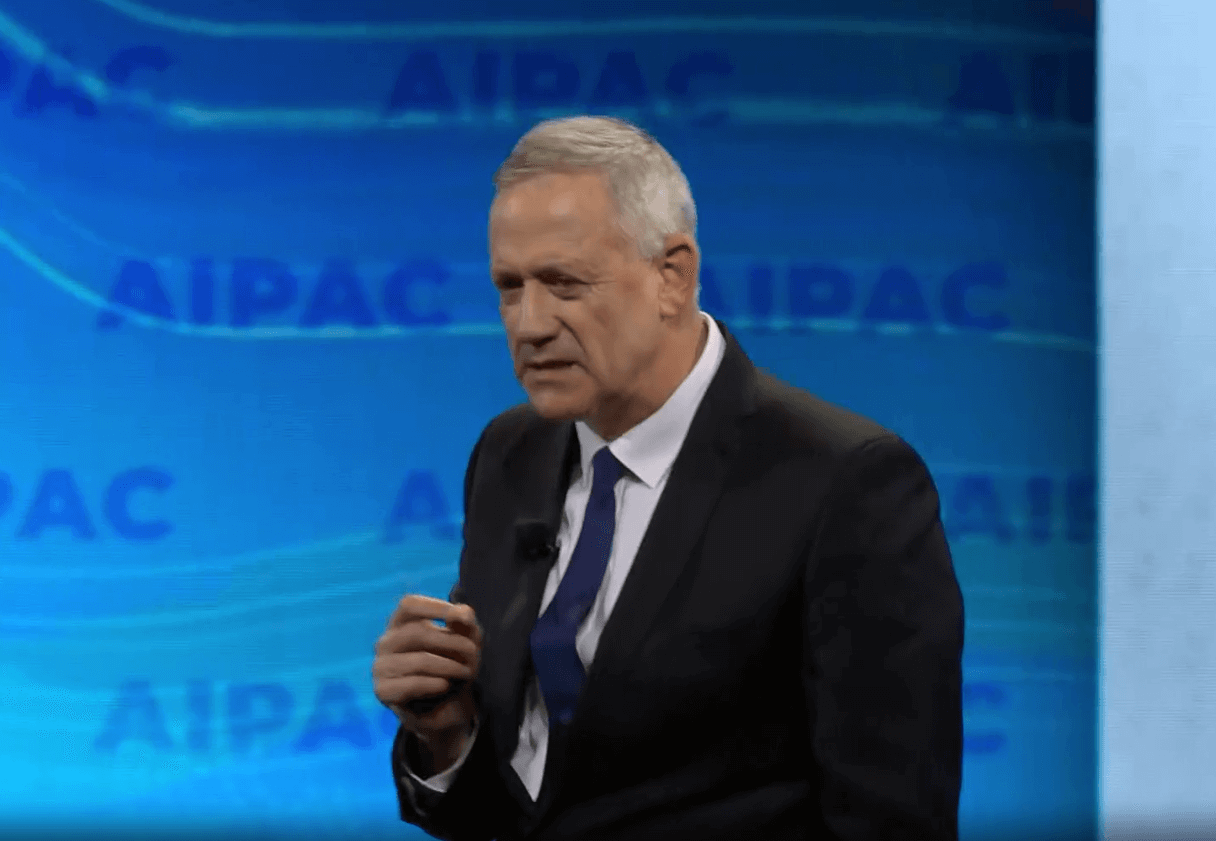
Israeli politician Benny Gantz raised the specter of dual loyalty of Jews in other nations when he said yesterday, “If there is one Jew in danger, anywhere in the world, then our mission is unfinished.”
The AIPAC policy conference in Washington began Sunday on a defensive note, with the Israel lobby organization’s chief executive saying that Israel’s friends face a terrible new challenge: taking on “the scurrilous charge of dual loyalty” and declaring “The intense hatred of Israel is now creeping from the margins to the center of our politics.”
A new Bernie Sanders ad highlights his criticism of Israel. Just as Sanders spoke out against South African apartheid ahead of others, says activist Shaun King, “today he speaks out against apartheid-like conditions in Palestine even though it’s not popular.” The progressive base wants that message.
Jonathan Greenblatt of the ADL will always cut Zionists a break on the standards he applies to others. Today he said of New Zealand mosque killings, “This act of violence really doesn’t have a precedent as far as we know, murdering people in a mosque.” He conveniently forgot the slaughter of 29 Muslims in Palestine by a Jewish settler in 1994.
For years liberal Zionists have been saying that the fundamental problem with the Jewish democracy is the bogeyman of Netanyahu. But the April election now offers a real prospect that Netanyahu will be knocked off — and the new centrist governing coalition will be just as obdurate against a Palestinian state. That could be a crisis for liberal Zionists.
Hannah Arendt wrote in 1944 that by proceeding with contempt for their Arab neighbors, the founders of the Jewish state were setting up a situation in which Israel would be utterly dependent on Jews in the United States to maintain the superpower’s support for the state, thereby exposing American Jews to the charge of “double loyalty.” When Ilhan Omar questions the allegiance of some Israel advocates, she brings up a legitimate criticism of Zionism.
Amid attacks from Democratic colleagues in the House, Rep. Ilhan Omar says that she finds it “problematic” that “I am anti-American if I am not pro-Israel.” And she knows many Americans agree with her. “I just happen to be willing to speak up.” The progressive base of the party is behind her, in a sign that the party is dividing on Israel.
Anti-semitism used to mean job discrimination in universities and leading industries and stigmatization of Jews as “kikes.” Today Jews are socially included, and the definition has shifted to mean any strong criticism of Israel. That’s because Israel supporters must do anything they can to prevent support for BDS from entering the political mainstream.
Ilhan Omar is accused of antisemitism in fostering a “hoary myth of dual loyalty” to Israel. But Jews from Joe Klein to Eric Alterman to Melissa Weintraub to MJ Rosenberg say that allegiance to Israel is actually an important factor in the support for Israel in the United States, to the point that some support Israel’s interests over America’s.