


There is an unmistakable shift in American politics regarding Palestine and Israel, a change that is inspired by the way in which many Americans, especially the youth, view the Palestinian struggle and the Israeli occupation. While this shift is yet to translate into tangibly diminishing Israel’s stronghold over the Congress, it promises to be of great consequence in the coming years.
Recent events at the House of Representatives clearly demonstrate this unprecedented reality. On September 21, Democratic lawmakers successfully rejected a caveat that proposes to give Israel $1 billion in military funding as part of a broader spending bill, after objections from several progressive Congress members. The money was specifically destined to fund the purchase of new batteries and interceptors for Israel’s Iron Dome missile defense system.
Two days later, the funding of the Iron Dome was reintroduced and, this time, it has successfully, and overwhelmingly, passed with a vote of 420 to 9, despite passionate pleas by Palestinian-American Representative, Rashida Tlaib.
In the second vote, only eight Democrats opposed the measure. The ninth opposing vote was cast by a member of the Republican party, Thomas Massie of Kentucky.
Though she was one of the voices that blocked the funding measure on September 21, Democratic Representative, Alexandria Ocasio Cortez, switched her vote at the very last minute to “present,” creating confusion and generating anger among her supporters.
As for Massie, his defiance of the Republican consensus generated him the title of “Antisemite of the Week” by a notorious pro-Israel organization called Stop Antisemitism.
Despite the outcome of the tussle, the fact that such an episode has even taken place in Congress was a historic event requiring much reflection. It means that speaking out against the Israeli occupation of Palestine is no longer taboo among elected American politicians.
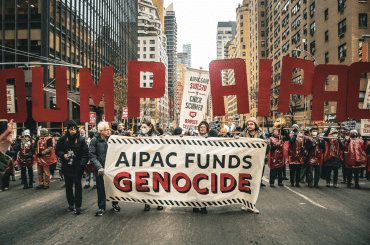
Once upon a time, speaking out against Israel in Congress generated a massive and well-organized backlash from the pro-Israeli lobby, especially the American Israel Public Affairs Committee, that, in the past, ended promising political careers, even those of veteran politicians. A combination of media smear tactics, support of rivals and outright threats often sealed the fate of the few dissenting Congress members.
While AIPAC and other organizations continue to follow the same old tactic, the overall strategy is hardly as effective as it once was. Members of the squad, young Representatives who often speak out against Israel and in support of Palestine, were introduced to the 2019 Congress. With a few exceptions, they remained largely consistent in their position in support of Palestinian rights and, despite intense efforts by the Israeli lobby, they were all reelected in 2020. The historic lesson here is that being critical of Israel in the Congress is no longer a guarantor of a decisive electoral defeat; on the contrary, in some instances, it is quite the opposite.
The fact that 420 members of the House voted to provide Israel with additional funds – to be added to the annual funds of $3.8 billion – reflects the same unfortunate reality of old, that, thanks to the relentless biased corporate media coverage, most American constituencies continue to support Israel.
However, the loosening grip of the lobby over the U.S. Congress offers unique opportunities for the pro-Palestinian constituencies to finally place pressure on their Representatives, demanding accountability and balance. These opportunities are not only created by new, youthful voices in America’s democratic institutions, but by the rapidly shifting public opinion, as well.
For decades, the vast majority of Americans supported Israel. The reasons behind this support varied, depending on the political framing as communicated by U.S. officials and media. Prior to the collapse of the Soviet Union, for example, Tel Aviv was viewed as a stalwart ally of Washington against Communism. In later years, new narratives advanced Israel’s positive image in the eyes of ordinary Americans. The U.S.’s so-called war on terror declared in the aftermath of September 11, 2001, for example, positioned Israel as an American ally against “Islamic extremism,” painting Palestinians as “terrorists,” thus giving the Israeli occupation of Palestine a moral facade.
However, new factors have destabilized this paradigm. One is the fact that support for Israel has become a divisive issue in the U.S.’s increasingly tumultuous and combative politics, where most Americans who are Democrats support pressuring Israel and most who are Republicans do not.
Moreover, as racial justice has grown to become one of the most defining and emotive subjects in American politics, many Americans began seeing the Palestinian struggle against the Israeli occupation from the prism of millions of Americans’ own fight for racial equality. The fact that the social media hashtag #PalestinianLivesMatter continues to trend daily alongside the hashtag #BlackLivesMatter speaks of a success story where communal solidarity and intersectionality have prevailed over selfish politics, where only money matters.
Millions of young Americans now see the struggle in Palestine as integral to the anti-racist fight in America; no amount of lobbying in Congress can possibly shift this unmistakable trend. There are plenty of numbers that attest to these claims. One of many examples is the University of Maryland’s public opinion poll in July, which showed that more than half of polled Americans disapproved of President Joe Biden’s handling of the Israeli war on Gaza in May 2021, believing that he could have done more to stop the Israeli aggression.
Of course, courageous politicians dared to speak out against Israel in the past. However, there is a marked difference between previous generations and the current ones. In American politics today, there are politicians who are elected because of their strong stance for Palestine and, by deviating from their election promises, they risk the ire of the growing pro-Palestine constituency throughout the country. This changing reality is finally making it possible to nurture and sustain a pro-Palestinian presence in U.S. Congress.
In other words, speaking out for Palestine in America is no longer a charitable and rare occurrence. As the future will surely reveal, it is the politically correct thing to do.

1 of 2
Thank you Ramzy, shokran. The great French playwright Jean Genet once said: I respect the Palestinian revolution because the more I learn about Palestine…the more I learn about France.
The real value of the progressive attempt to block Congress’ Iron Dome tribute payment lay in the fact that this challenge to the status quo, though technically only producing a delay, resulted in the American people learning more about America, courtesy of Palestine. Thanks to the courage of the progressive bloc the opaque and disturbing special interest politics that define organized American Zionism’s modus operandi on The Hill was made visible to the naked eye. A Zionist wag once said: Zionism is like a mushroom…it grows best in the dark. The progressive vote focused a blinding beacon of light on processes Speaker Pelosi and Majority Leader Schumer spend much time and energy obscuring.
It simply is not reasonable to think that on its first real effort to challenge Congress’ entrenched obsequiousness to Israel that the progressives would be able to overturn a vassalized political system that Zionism has spent decades building, refining, strengthening and expanding. During the Russian revolution Marxist insurgents chanted the slogan “Drive Red Wedges” which recognized the intrinsic power of individuals using the resources at hand to subvert the long-entrenched House of Romanov. The progressive vote in opposition to Iron Dome was the contemporary American equivalent of a red wedge. Is anyone at AIPAC paying attention?
(cont.)
2 of 2
The true pedagogical value of the Iron Dome vote and articles such as Ramzy’s is that they revealed Zionism’s inner workings. The vote, Congress’ immediate re-vote and approval as well as the media that surrounded it, granted permission for people to delve more deeply into the history of the US-Israel relationship, without fear of the smear of antisemitism. If members of Congress can openly reject Zionism in the marble halls of power surely ordinary citizens can do likewise, right? This cannot be a welcome development for folks at AIPAC or in Tel Aviv.
There is likely not much that Zionism does by way of lobbying Congress that is patently illegal. In all likelihood AIPAC has a stable of lawyers who review its every overt action and statement to guarantee that all the “asks” and applications of pressure are presented in the most diplomatic of terms so as not to create openings for embarrassment or legal challenges. This is not unique to Big Zion, it is just due diligence and all the Bigs – Big Tobacco, Big Oil, Big Pharma, Big Insurance, Big Bank – follow exactly the same template. While perhaps not technically illegal, much of what Zionism does, and for that matter all the Bigs do, is amoral and unseemly.
Abraham Lincoln, in answering a question about what he considered the most important element in the issuance of the Emancipation Proclamation said: Public opinion. It is everything.
Lincoln knew how to read the public mind. Does anyone in Congress have that skill anymore?
Q: For Chuck Schumer: Is it antisemitic according to IHRA to raise these issues or to fail to raise them?
View 48 posters on US Aid to Israel and Palestine:
https://www.palestineposterproject.org/special-collection/us-aidto-israelto-palestine
Maybe the ground is shifting sufficiently to note a trend, but the hopeful and factual are not backed up by facts. Bowman may have to explain his pro iron dome vote, but he won’t lose his seat as a result. And that result is implied by this post.
The divide between the courageous and the corrupt.
Reflecting upon the 420-9 vote and on the shift in American politics toward racial equality is important. Support for Israel’s security is not in doubt but when it comes to racial equality, the equation will change. Others cannot want equality for Palestinians more than they do. When Palestinian citizens or those under occupation who have come to terms with a one state reality, organize around equality, activists can persuade far more politicians to support that Palestinian vision.