Naftali Bennett’s Israel Memorial Day speech must be deciphered to understand the racist message it was truly sending.
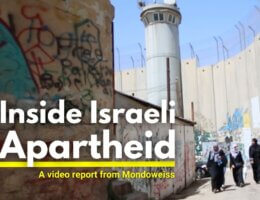
When Canadian human rights lawyer Michael Lynk ended his term as the UN Special Rapporteur on the situation of Human Rights in the Palestinian territories on May 1 he left a series of reports and statements laying out the realities of Israeli apartheid. Now in an extended interview with Mondoweiss, Lynk describes the process that led to his apartheid declarations, and what steps the international community can take to force Israel to abandon its “fever-dream of settler-colonialism.”
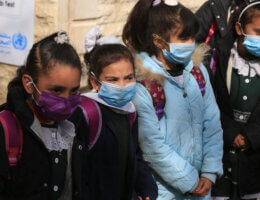
Data collection for Covid-19 rates in Palestine has continued to be challenging and contradictory; numbers out of East Jerusalem have been intermittently available “from local sources,” once again highlighting the differences in public health for East Jerusalemites versus the population in ’48 Israel. Occupied Palestinians, even those with residency permits, lack well-resourced, well-organized health and public health systems focused on their needs.
Acknowledging that support for Palestinian liberation means “you will be shunned from the newsroom, past accomplishments or legitimate arguments be damned,” Harvard Crimson editors “proudly” endorse the BDS campaign saying it is the best tool to liberate Palestinians from their “violent reality.” Harvard is a marker of establishment opinion; as recent Israeli apartheid reports have become a fad among human rights organizations, so too will BDS endorsements; and the Israel lobby is concerned.
Younger American and Israeli Jews have starkly different attitudes from each other in a new survey by the American Jewish Committee– 45 percent of US Jews say that it’s appropriate for them to influence Israeli policy while 70 percent of Israeli Jews say, Stay out of our business. Nearly half of the Americans don’t feel very connected to Israel and 22.5 percent believe that there should be one “bi-national” state in Israel and Palestine.
The number of experts who characterize Israeli rule over Palestinians as apartheid keeps growing. As for the latest to say, It’s apartheid– a new survey of Middle East scholars says 60 percent use that word for the Israeli regime in the occupied territories. While 65 percent of Palestinians in the West Bank and Gaza say it’s apartheid, per the latest poll.
Many older Jews still carry scars of the Nazi Holocaust that live on in the form of guilt, victimhood and fear of another genocide. They must protect Israel for they hear, “without Israel there would be no safe Jews.” These fears are exported within the context of Zionist racist ideology.
“You were washing the floors just like any other prisoner,” NPR reporter Daniel Estrin says to former Israeli PM Ehud Olmert in a long and respectful interview. But more than 4,000 Palestinian political prisoners are held on different terms by Israel, conditions cited by human rights reports charging apartheid– a charge that was unmentioned by the radio reporter.
Although dozens of Jewish Israelis participated in a protest against administrative detention in front of the General Security Services headquarters in Tel Aviv, and five of them blocked the road – an act which usually leads to being arrested – the only participant to be detained was Rami Salman, a Palestinian student who passed by the scene. “What happened was an excellent illustration of the reason why we held this demonstration. If you are a Palestinian, you have no security anywhere, not even in your home. It is Apartheid!”
Mass incarceration has defined Israel’s colonial project. Since 1967, over 850,000 Palestinians have been arrested and imprisoned by the Israeli regime. Currently there are 4,450 Palestinians held in Israeli prisons, including hundreds of administrative detainees being held without charge or trial. But just as mass incarceration remains a defining feature of the Israeli occupation, so too has prisoner resistance. Currently, an ongoing boycott of the Israeli judicial system by all 530 Palestinian administrative detainees has surpassed 100 days.