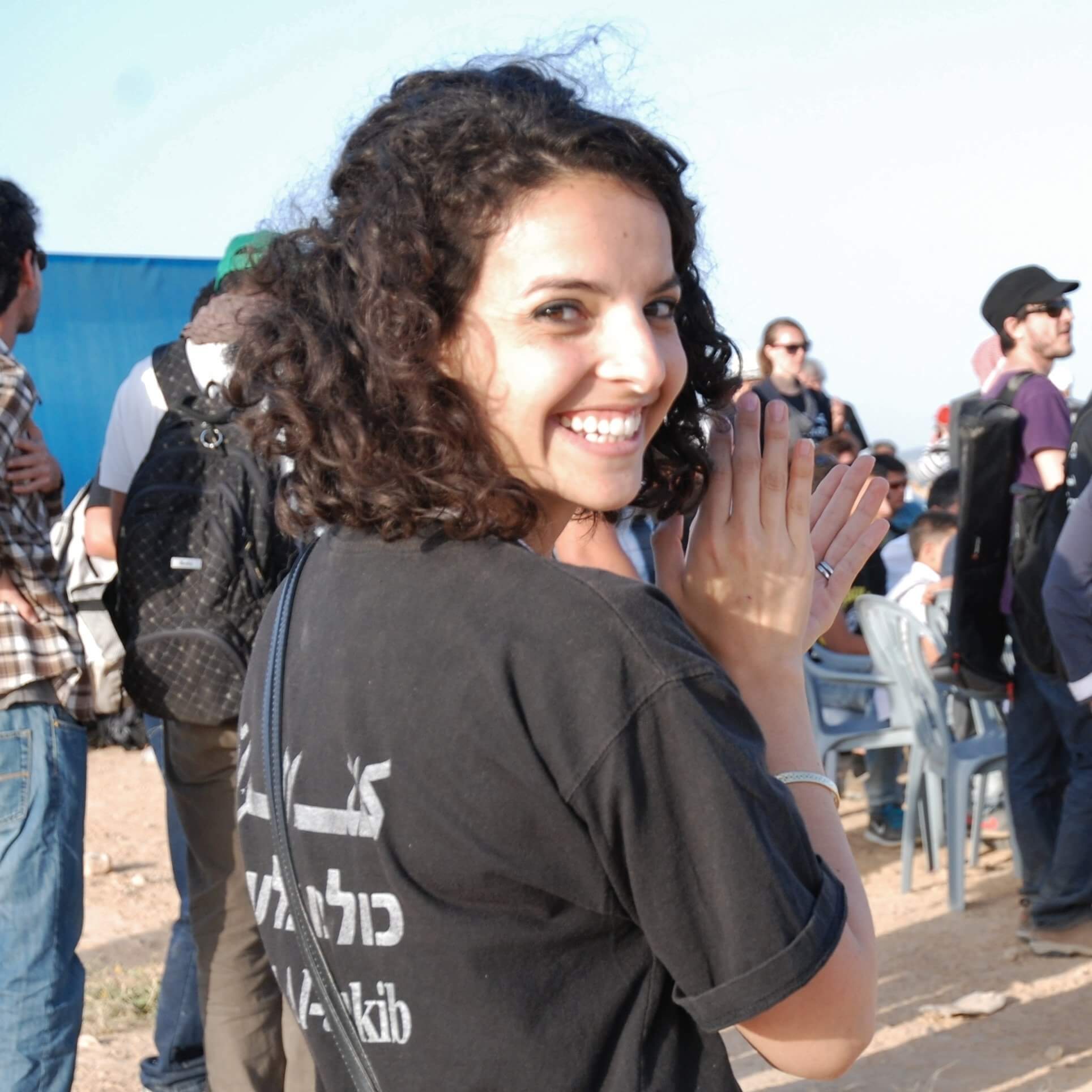
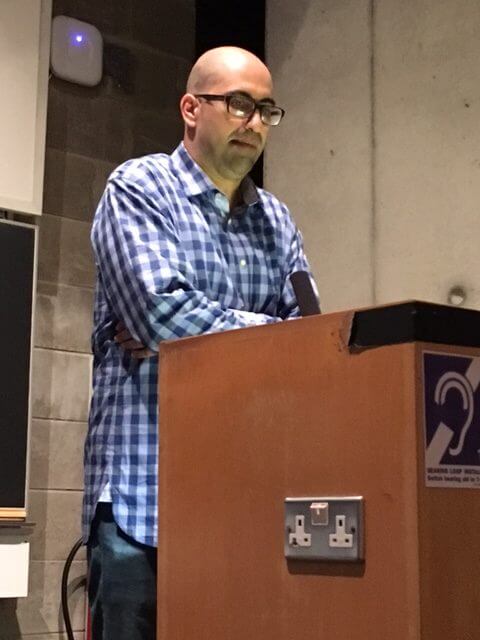
A conference on the academic boycott of Israel in Ireland hosts Steven Salaita as a keynote. Co-organizer Conor McCarthy writes, “The first keynote, Steven Salaita (independent scholar) gave a powerful presentation on “Freedom to boycott: BDS and the modern university.” Salaita, who lost a promised tenure track position at the University of Illinois at Urbana-Champaign (UIUC) withdrawn, allegedly because of his forceful and emotional tweets during the 2014 Gaza War, has become a cause célèbre and an icon in the struggle to protect academic freedom, and his keynote revealed the institutional and the human ramifications of his dissent. Despite winning his legal case against UIUC, precipitating the resignation of the university’s provost and revealing a concerted campaign to deny him a position that went well beyond his Twitter activity, Salaita has been unable to secure ongoing academic employment, in spite of a productive and exemplary level of scholarly activity, and must now resign himself to working and living as a freelance writer and lecturer. Referring to his own experience, Salaita began by reflecting on why there is a general assumption in favor of Israel’s colonial project, while arguments in favor of Palestinians’ rights often run into “benevolent contempt” and need to be (endlessly) proven as valid.”
Following a report released by Danwatch in January, Denmark’s third largest pension fund, Sampension, moved to exclude four publicly traded companies from their portfolio due to their investments in illegal Israeli settlement activities. Ana Sanchez, speaking on behalf of the Palestinian BDS National Committee, welcomed the move, telling Mondoweiss it represents, “the latest indicator of the mounting pressure on businesses that are deeply complicit in Israel’s violations of Palestinian rights to stop profiting from Israel’s military occupation and apartheid.”
Saturday, October 21, Mondoweiss Founder and Co-Editor Phil Weiss will be among several speakers addressing a conference in Minneapolis called “Parallel Liberation Struggles: Lessons in Resistance.” Themes of the conference, organized by a broad coalition of Twin Cities organizations, are the 100-year Palestinian resistance to Israel’s settler-colonial project and the similarities in violence used against Palestinians, African Americans, and Native Americans and their methods of resistance.
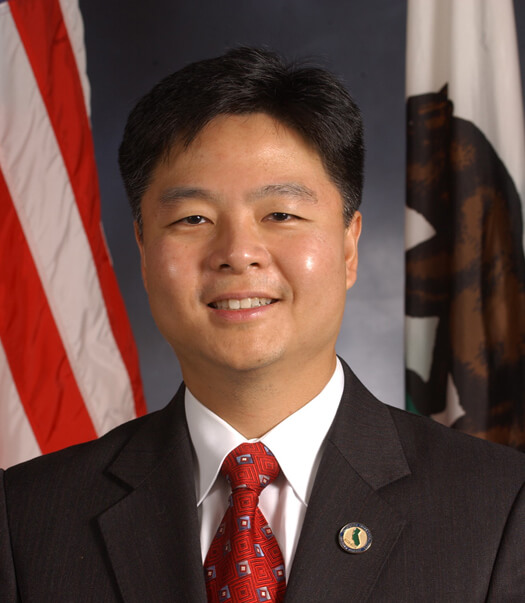
California congressman Ted Lieu has had the courage to criticize Trump for bombing Syria and Saudia Arabia for its atrocities in Yemen. But constituent Charlie Zimmerman was disappointed when, in April 2017, he signed on as a co-sponsor of H.R. 1697, the Israel Anti-Boycott bill. Its provisions clash with the strong support for human rights he otherwise espouses.
The UN is sending letters to 150 companies around the world warning them that they could be added to a database of complicit companies doing business in illegal Israeli settlements. U.S. companies that received letters include Caterpillar, Priceline.com, TripAdvisor, and Airbnb. Omar Barghouti, co-founder of the BDS movement, says, “this UN database of companies that are complicit in some of Israel’s human rights violations may augur the beginning of the end of Israel’s criminal impunity.”
Jesse Rubin reports from a standing-room-only event in Brooklyn on free speech and Palestine solidarity in support of Dareen Tatour, a Palestinian poet under house arrest whose case has come to symbolize the absurdity of Israel’s selectively guaranteed right to free speech.
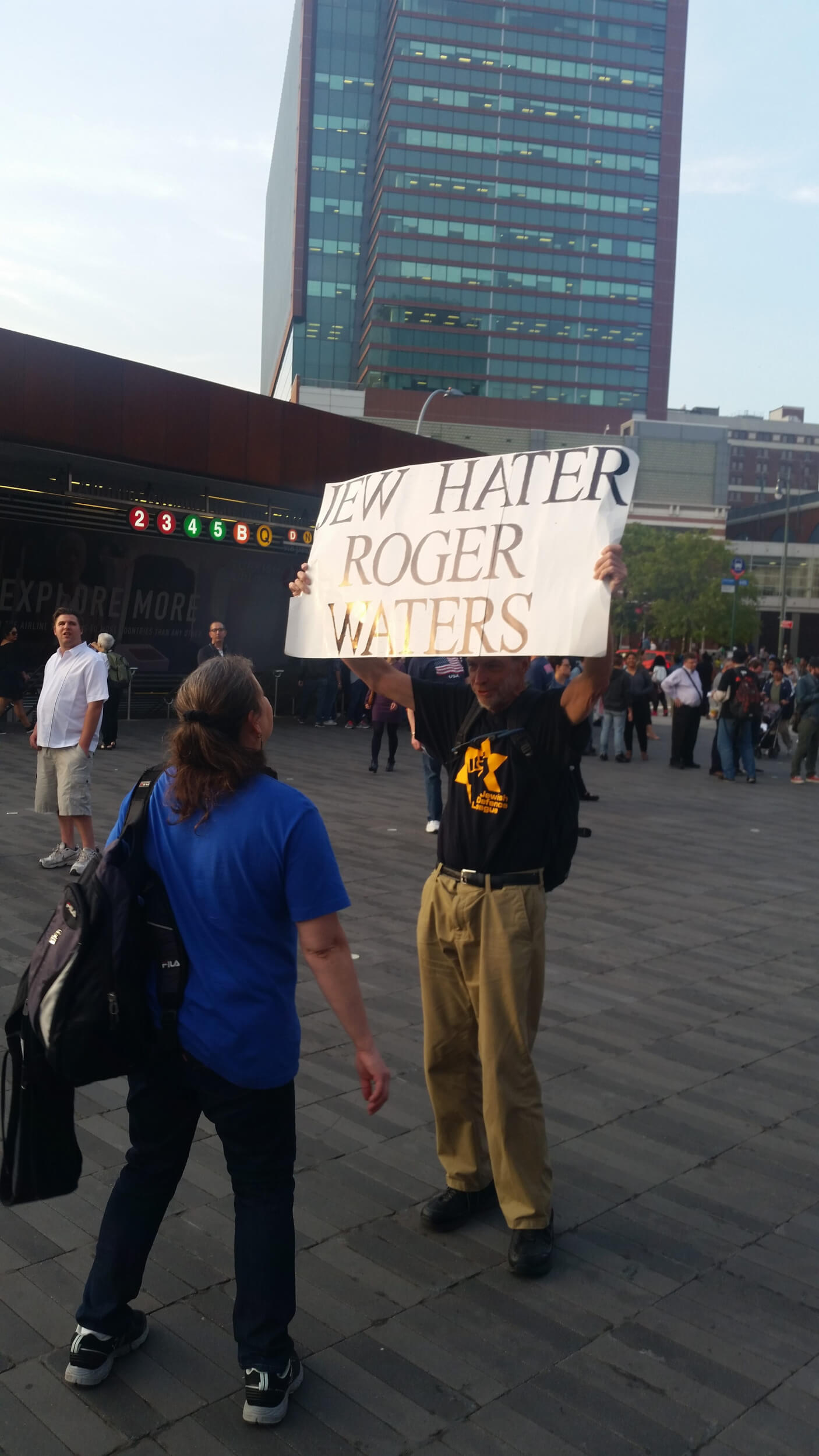
Roger Waters brought his national tour to New York this week. Tonight he is on Long Island, and regrettably the New York media have given a platform to Israel fanatics to smear the songwriter/bassist. Local TV stations have passed on outrageous statements, that Waters is an anti-Semite and that Boycott, Divestment and Sanctions (BDS) is bigoted.
An unidentified group has launched a shadowy website identifying New Yorkers believed to support the boycott, divestment and sanctions (BDS) movement for Palestinian rights—placing their photos, social media links and email addresses on a “blacklist” located at OutlawBDS.com. The list features ninety-seven individuals divided into the categories Campuses, Public & NPOs and Private Sector Activists. Project OutlawBDS claims it was established by a group who “consider themselves to be analytical in their approach to the BDS movement,” whose stated intention is to “provide support for New York State Senate Bill S2492,” the latest attempt to pass anti-BDS legislation in the state.
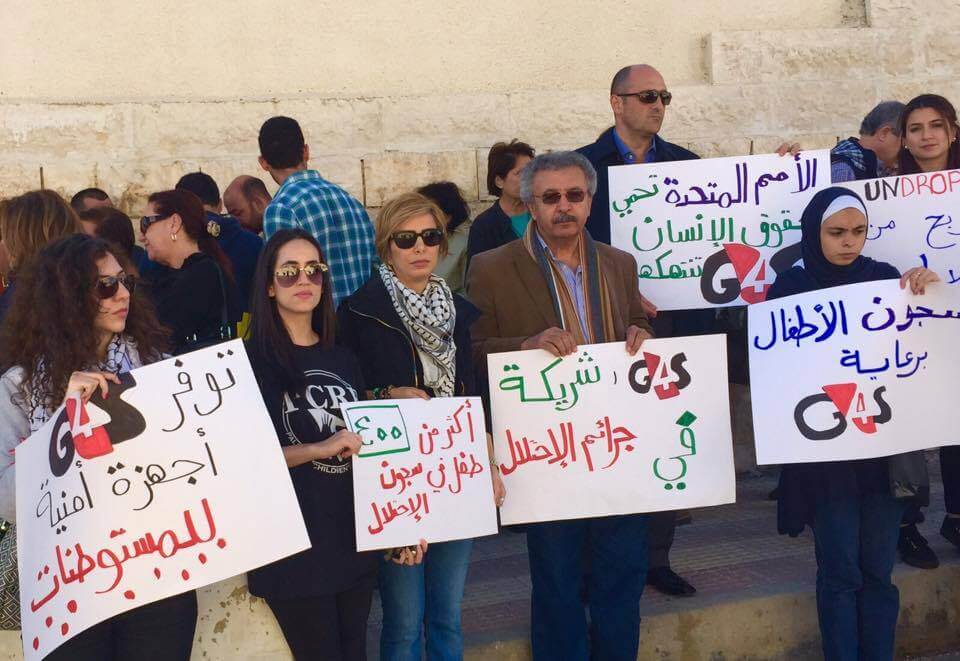
Jordan BDS thanks the private and public companies in Jordan that have discontinued their contracts with the security company G4S in response to a global boycott call against the company for its role in the Israeli occupation.
Kim Jensen writes: Why do critics of cultural boycotts insist on framing them as a form of censorship, rather than as an invitation to imagine and enact more principled forms of engagement? Are cultural and academic boycotts an effective strategy when some artists and allies may be marginalized in the process? These are the kinds of questions that are explored in a useful new collection of essays, “Assuming Boycott: Resistance, Agency, and Cultural Production,” which offers a rich and lively analysis of historical and present-day boycotts and the ethical, political, and practical issues they raise.