


There is a strange cyclical pattern to how crises surface, fade away, and reemerge in Gaza. After reporting on Gaza for nearly a decade, it’s become clear to me that the cycle isn’t arbitrary. It is part of a deliberate Israeli policy.
I write throughout the year, every week, and sometimes every day. There are no real days off in journalism. Even when we manage to take a break from work, the news and the stories do not stop.
And when a story lands on our desks but we aren’t able to report on it right away, as journalists, it does not mean we are detached from it. We keep it in the back of our minds. We start looking into it, gathering information, and following its developments because we know we will return to working on the same story soon. Because the story has no end date.
Over these years of reporting, I have noticed a striking pattern in how these crises unfold: they keep the Strip permanently on the edge of deprivation and need, making it impossible for its residents to manage their lives without depending on the occupying power.
This is not a coincidence. It is an Israeli policy that has been pursued to keep this small strip of land permanently under Israeli control. Over the years, I have watched this pattern repeat itself. Every year, the number of crises changes, but the pattern remains.
Several medical crises can, for example, emerge over the course of a single year. It begins with shortages of medicines. Then comes the danger created by those shortages: patients whose lives depend on medications that are no longer available. Then oxygen stations stop operating. Then come the critical medical cases that need to be transferred outside Gaza for treatment.
One crisis follows another. And when the medical crisis, which is rarely resolved so much as it is allowed to fade — because the underlying needs remain unmet — another crisis replaces it.
Drinking water becomes scarce, and people struggle to obtain enough for their daily needs. After the alarms are sounded and Israel eases access to water ever so slightly, the crisis begins to recede. Then a food crisis emerges. Then, as that crisis begins to fade, there is a waste crisis: garbage piling up, landfills overflowing, and sanitation systems becoming increasingly inadequate.
And so it continues, without end, one crisis after another.
The Israeli occupation has deliberately kept Gaza in this position of permanent need.
Even before the genocide, these crises would emerge at particular intervals. The siege would tighten, the list of prohibited items would grow.
But people adapt to every circumstance. That does not mean they accept or welcome what is happening to them, but they learn to survive with whatever remains. They adjust, endure, and remain.
History shows that occupations do not last forever. A people that remains rooted in its land, that loves it, and that is willing to endure such enormous sacrifices cannot be kept under occupation indefinitely.
Gaza has endured crisis after crisis for decades. And yet, it remains.

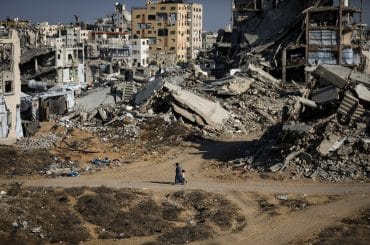
“Over these years of reporting, I have noticed a striking pattern in how these crises unfold: they keep the Strip permanently on the edge of deprivation and need, making it impossible for its residents to manage their lives without depending on the occupying power.“
That’s because the point is to make Palestinian life impossible. Amira Hass reports from Ha’aretz:
Across Gaza, the West Bank and Israel itself, the machinery for making Palestinian life impossible is already operating, laying the groundwork for mass expulsion…Too many Jews in Israel have been conditioned to believe that the problem is the very presence in this land of a Palestinian people with roots, historical and economic continuity, cultural capital and material assets, a rich agricultural heritage and a profound love of homeland….”Erasure” is the nightmare solution being written into reality every day. Knesset laws, politicians’ declarations, military orders, school textbooks and the holy real estate battalions operating in Gaza, the West Bank and the Negev all work, together and separately, to advance this “solution” diligently and without fear of international condemnation….Israeli policy is directed toward making life unbearable for Palestinians wherever they live, so that their emigration can be described as an act of free will.
Israel isn’t debating a Palestinian state. It’s preparing for expulsion
Consistent, criminal, chaos is what the Zionist created 70,80, years ago and they continue with their war crimes. We know MS Now’s Rachel Maddow etc, CNN’s Dana Bash, Jake Tapper, Cspan’s Washington Journal etc will not be covering all of the crimes illegal home and land thieves have been committing over last months, years, decades. Escalation of the human rights crimes (war crimes) was endless this summer.
Rachel Maddow will not be covering…she loves her paycheck more than human rights.
https://www.facebook.com/trtafrika/videos/dozens-of-illegal-israeli-settlers-attacked-palestinian-homes-in-qusra-on-august/1045180261822304/
“Drinking water becomes scarce, and people struggle to obtain enough for their daily needs. After the alarms are sounded and Israel eases access to water ever so slightly, the crisis begins to recede. Then a food crisis emerges. Then, as that crisis begins to fade, there is a waste crisis: garbage piling up, landfills overflowing, and sanitation systems becoming increasingly inadequate.
And so it continues, without end, one crisis after another.
The Israeli occupation has deliberately kept Gaza in this position of perma”
Israel’s choreographed chaos equals horrific well thought out/planned war crimes!
No end to torture of Gaza doctor Abu Safia in Israeli prison: What to know
https://www.aljazeera.com/news/2026/9/3/no-end-to-torture-of-gaza-doctor-abu-safiya-in-israeli-prison-what-to-know