We spoke to the founder of Palestinian Christian theology. He says Tucker Carlson can’t support Christians in the Holy Land if he doesn’t support Palestinian freedom.
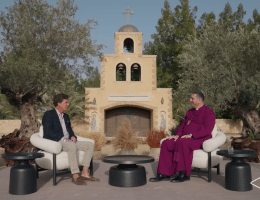

We spoke to the founder of Palestinian Christian theology. He says Tucker Carlson can’t support Christians in the Holy Land if he doesn’t support Palestinian freedom.

“The fact that churches have not sufficiently taken up this moral responsibility is a damning indictment. To brazenly prefer their comfort, interests, connections, and desire to avoid embarrassment is moral bankruptcy,” says Jonathan Kuttab.

Palestinian Christians in Gaza remember Pope Francis and his daily calls to the Catholic church in Gaza. “Gaza was among his last words,” one member of the parish told Mondoweiss. “His voice made us forget the sound of the planes and the bombs.”
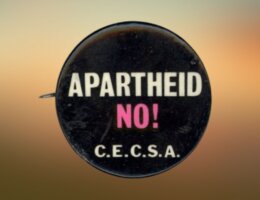
Now is the time for U.S. church leaders to raise their collective moral voice — as they did during the civil right movement, the Vietnam War, and South African apartheid — against Israel’s settler colonial apartheid.

Even as Israel slides further into religious fascism, and chants of “death to the Arabs” become commonplace, there are still those who say “I’ll wait and see.” It is time for them to speak up.
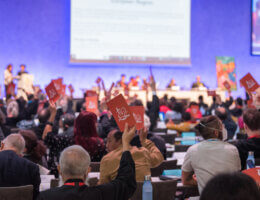
In a move that could have far-reaching impact, the World Council of Churches agreed to study the issue of Israeli apartheid despite a German church’s attempt to block the decision.
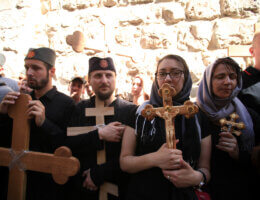
Mitri Raheb exposes the West’s invention of “the persecution of Christians” as a justification for hegemonic intervention and colonization.

“The continued occupation in Palestine/Israel is 21st century slavery.” With these words, Rev J. Herbert Nelson II, the Stated Clerk of the Presbyterian Church USA, demonstrated his courage in acknowledging the humanity of Palestinians.
Palestinian Christians are calling on community leadership to reflect on their failure to support the broader Palestinian uprising, and to “stand up for our own dignity and the dignity of those we share our lives and pain with.”
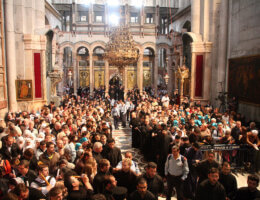
Archbishop Atallah Hanna’s Easter Sunday sermon: “We pray to God that the whole world will come together to fight the pandemic and then continue to be united in facing all the other pandemics in our universe—especially racism, hatred, injustice, occupation, oppression, and degradation of human dignity.”