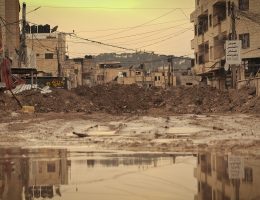
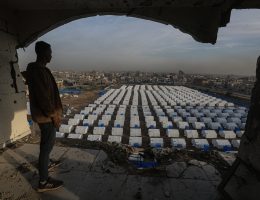
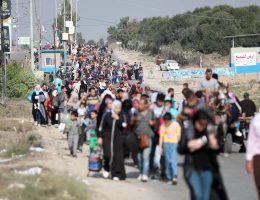
Residents of north Gaza say a repeat of the early stages of the genocide is taking place, when hundreds of thousands were displaced to the south and barred from returning. Gazans fear that the latest wave is paving the way for the final displacement.
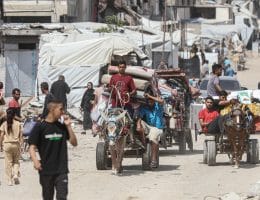
Israel is erasing Jenin refugee camp because of its role in Palestinian collective memory and resistance. It might destroy the camp, but it can never extinguish what it represents.
Palestinians in Gaza say that Israel is violating the ceasefire’s humanitarian agreements in order to force them to leave their homeland.
The forcible displacement of over 40,000 people in the northern West Bank is repeating scenes from Gaza and stoking fears of ethnic cleansing. “The most important thing is to stay in our home,” a resident of al-Far’a refugee camp tells Mondoweiss.
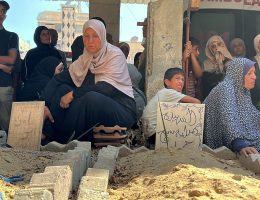
As Palestinians find some respite in the midst of a ceasefire in Gaza, many families have one important job to do before returning back to their homes: giving their loved ones, many who were buried in mass or temporary graves, a proper burial.
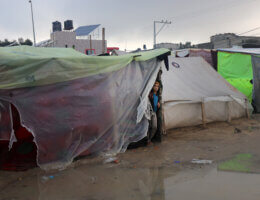
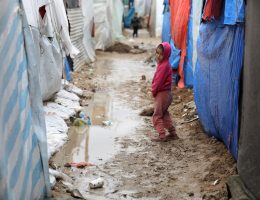
In Gaza, survival is a daily act of defiance. Finding moments of laughter and warmth in a tent battered by rain is nothing short of a miracle.
On December 26, Gaza’s health ministry confirmed the fourth case of an infant freezing to death in 72 hours. A day later, a 28-year-old doctor also died due to hypothermia. There was one common denominator in each death: they were living in tents.
As the world has focused on the Gaza genocide, a massive Israeli campaign of violence and displacement has taken place across the West Bank. Photojournalist David Lombeida tells the stories of families in the South Hebron Hills and Jordan Valley.
I have lived through my own Nakba and understand why thousands of Palestinians fled their homes in 1948. I made the most difficult decision of my life and left Gaza, not knowing that what I carried might be all I will ever possess of my homeland.