Shahd al-Afifi has a rare skin disease that requires a strict daily routine of constant moisturization, careful hygiene, and a humid, climate-controlled environment. The genocide in Gaza has made this impossible.
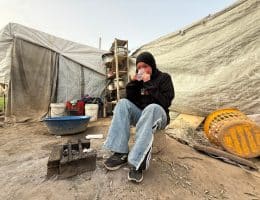

Shahd al-Afifi has a rare skin disease that requires a strict daily routine of constant moisturization, careful hygiene, and a humid, climate-controlled environment. The genocide in Gaza has made this impossible.
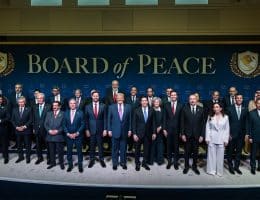
A sweeping investment and reconstruction plan to transform Gaza’s ruins into a playground for investors was unveiled at the first meeting of U.S. President Donald Trump’s “Board of Peace” in Washington, D.C., this week. Here’s what you need to know.
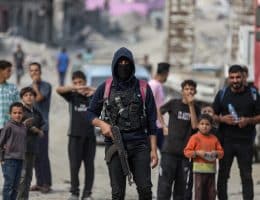
The Palestinian resistance faces a dilemma with Trump’s ‘Board of Peace’: reject it and risk annihilation, or engage and risk normalizing permanent occupation.
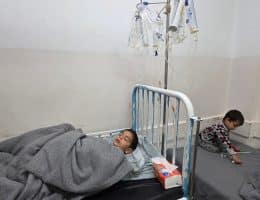
Bacterial meningitis is spreading among children in Gaza, including those who are vaccinated. Officials say conditions in Gaza’s displacement camps, widespread malnutrition, and Israeli bans on the entry of medicines are increasing the deadly risk.

The plans for Donald Trump’s “Board of Peace” show that the goal is not just to make Gaza a playground for the wealthy, but to put it under permanent American occupation.

The U.S.-sanctioned “Board of Peace” is imposing a colonial mandate in Gaza. It is the latest example of the “shock doctrine,” with the U.S. and Israel attempting to transform Palestinian society in Gaza after destroying it through genocide.

Meet the generation of young West Bank Palestinians who came of age witnessing the Gaza genocide — as Israel killed their friends.

Israeli farmers warn the country’s agricultural export industry is facing a looming “collapse” due to international opposition to the Gaza genocide. Recent reports show the impact of boycotting Israel, and why the Israeli ‘brand’ may never recover.

In 2025, Israeli settlers, backed by the army, displaced rural Palestinian communities in the West Bank at unprecedented rates. It is part of Israel’s escalating strategy to take control of as much of the territory as possible.

For Palestinians in Gaza, Phase 2 of the ceasefire offers little hope that it will fundamentally change the status quo Israel has established over the past three months, which many refer to as “a new form of genocide.”