As the son of a general who participated in the Nakba in 1948 and the Naksa in 1967, Miko Peled thought he knew Israeli history. But when he finally met Palestinians and heard their stories of Zionist atrocities he was shocked to learn the truth.
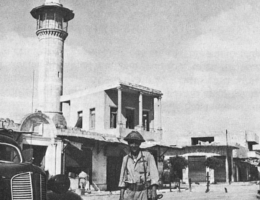

As the son of a general who participated in the Nakba in 1948 and the Naksa in 1967, Miko Peled thought he knew Israeli history. But when he finally met Palestinians and heard their stories of Zionist atrocities he was shocked to learn the truth.
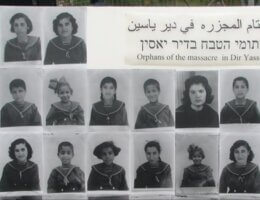
On this day 75 years ago, my grandmother and her family survived the Deir Yassin Massacre in 1948. I inherited my family’s memories, the scars that come with them, and the duty never to forget.

Adania Shibli’s spare and haunting novel charts two lines, the shift in consciousness between the Nakba era and contemporary times, but also the trajectory that remains constant: racist violence.

While the Netflix film has elicited hysteria from Israel apologists, the events of “Farha” are not only historically accurate, but actually mild in comparison to other Zionist atrocities in 1948.

When Palestinians use terminologies not of their own making to describe their experiences, all in the name of gaining legitimacy in the eyes of a white liberal (and sometimes Zionist) audience, they become divorced from their own reality. This includes centering the discourse of international law, the apartheid analogy, and retractions of official Palestinian statements after pressure from the Israel lobby.