As Israel held funerals yesterday for those killed in an attack in Tel Aviv earlier in the week, police limited Palestinian travel from the West Bank and Gaza during the Ramadan holiday.
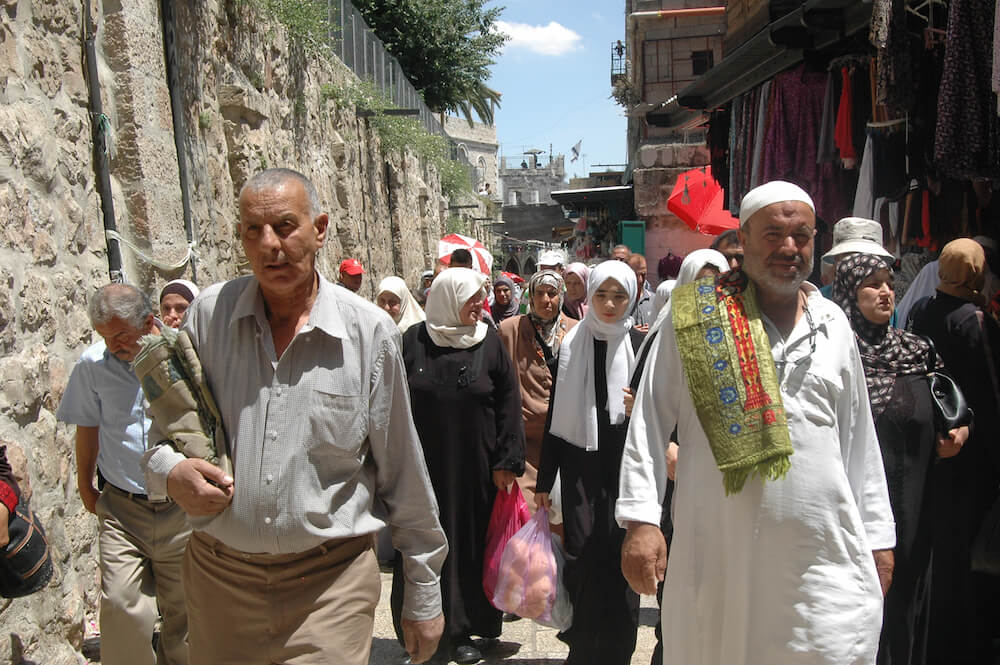

As Israel held funerals yesterday for those killed in an attack in Tel Aviv earlier in the week, police limited Palestinian travel from the West Bank and Gaza during the Ramadan holiday.
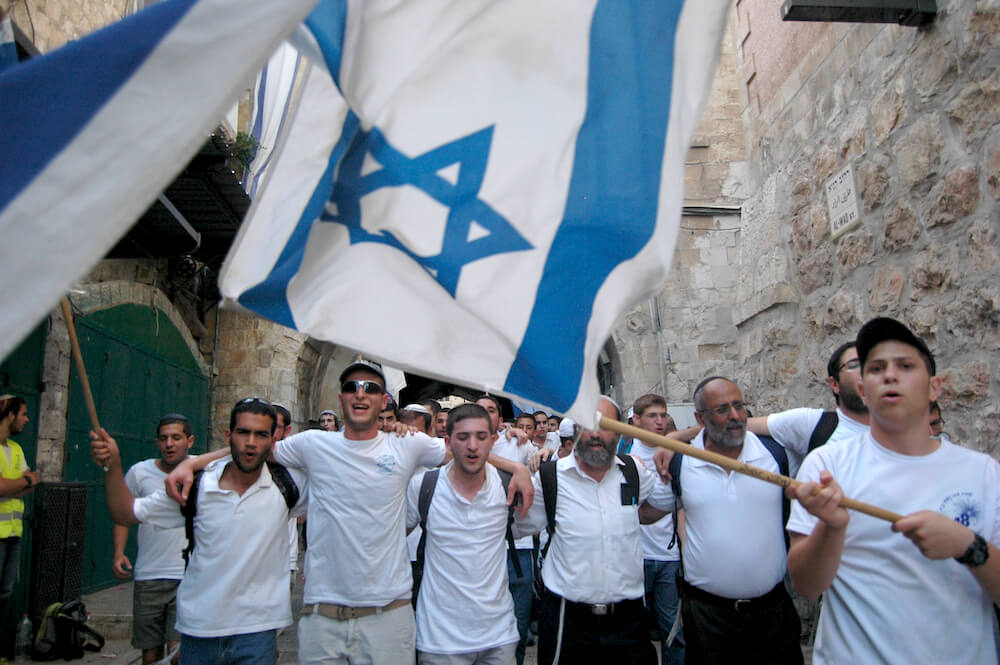
Blue and white banners filled Jerusalem yesterday to mark 49 years of Israeli rule in the city. Crowds of settler youth chanted the slogan “the Jewish nation lives” as they marched under the ramparts of Damascus Gate. Many wore stickers supporting rabbi Meir Kahane, a former Knesset member kicked out of the government after calling for violence against Arabs, while others pasted their clothes with decals backing a greater Israel, a Jewish-nationalist movement that seeks to annex the occupied Palestinian territory. Meanwhile, Palestinians were barred from sections of the city and postponed the start of their own festivities for the Muslim holy month of Ramadan to avoid conflicts with the settlers.
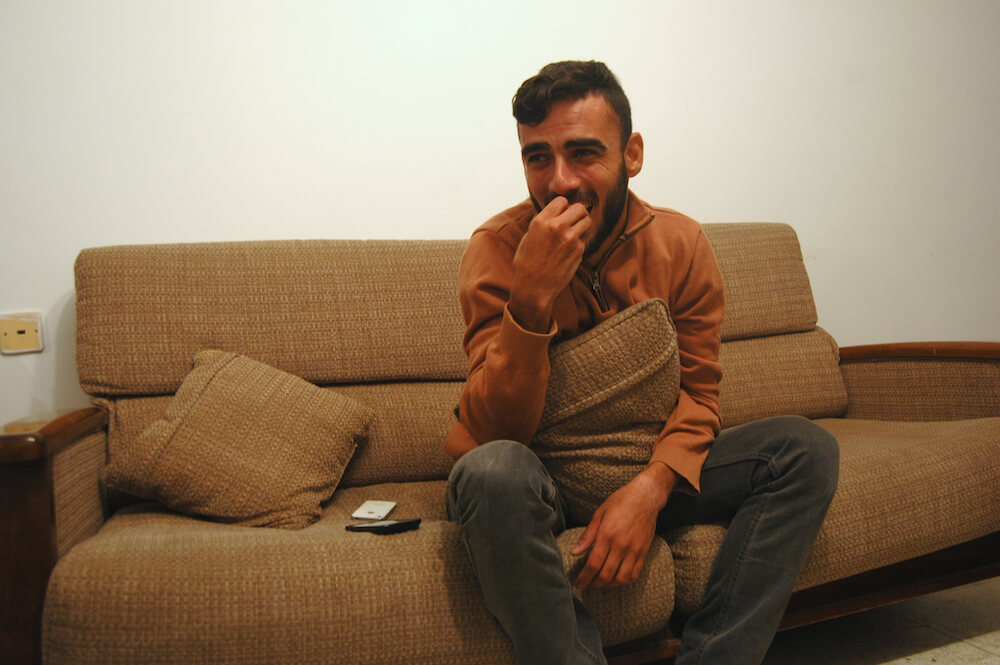
Mohammed Alhammami recalls stories he heard growing up of Jews, Muslims and Christians living alongside each other in historic Palestine as one people, not divided factions. But he wonders what about now? Can Jews and Palestinians (Christians and Muslims alike) really coexist in the Holy Land, after 68 years of Nakba?
When the plain-clothed men came for him, Kifah Quzmar, 27, did not need to be told why they were dragging him out of a popular Ramallah cafe on a sunny afternoon last week. “Call my brother,” he told bystanders before being tossed into the back of a tinted SUV parked outside. “The muhaberat are rotten,” Quzmar wrote on Facebook two weeks before he was detained, using the Arabic colloquial term for undercover Palestinian intelligence agents. In the West Bank, such words are a punishable offensive under a 1960 Jordanian law still on the books making illegal “insulting a public official.” The crime carries a maximum of a six-month prison sentence.

The largest Palestinian city, Jaffa, was emptied of Palestinians during the Nakba 68 years ago. It went from 120,000 Palestinians, many of them landowners, to 4,000. And many left in desperation by sea. A commemoration, by three refugees’ descendants.
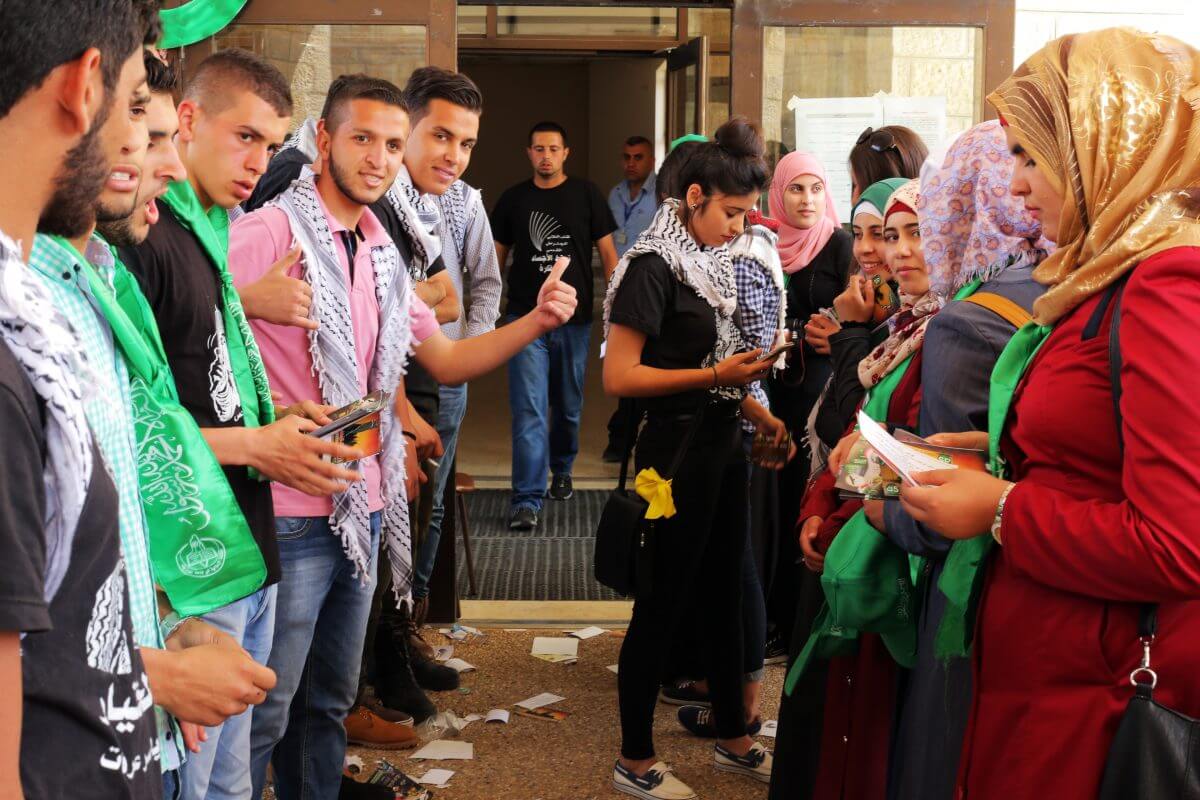
Hamas scored another victory on Wednesday at Birzeit University in the occupied West Bank, winning 25 seats in the university’s student elections. The university, considered the most liberal of all campuses in the West Bank, is seen as an indicator for the political climate across the West Bank.

Antony Lowenstein talks with Amany Khalifa and Fayrouz Sharqawi from the organization Grassroots Jerusalem to discuss fighting Israeli occupation, media misrepresentation of Palestinians and the dangers of foreign funding for NGOs.

The detention by Palestinian Authority security forces of three Palestinians who allegedly planned to carry out an attack inside Israel this week brought renewed public criticism of the PA amid a slew of political disputes. The PA finds itself pitted between a need to appease the Israeli authorities through security coordination and the mass upheaval such coordination brings among political rivals and the wider public.

A fire started by Israeli forces during a botched operation to dentate explosives in a West Bank commercial zone quickly spread and burned a Palestinian government office, at least nine stores and an open-air market, in the early morning hours Thursday.
Israeli forces have demolished every home in the Bedouin village of Khirbet Taha in the northern West Bank district of Nablus during three separate demolitions since the start of the year. The village’s only school was also destroyed, leaving children to study in a dilapidated 100-year-old mosque — the only structure left standing in the village.