Mondoweiss speaks to celebrated Palestinian scholar Sabri Jiryis about his life, Zionism, the genocide in Gaza, and the judgements of history.


Mondoweiss speaks to celebrated Palestinian scholar Sabri Jiryis about his life, Zionism, the genocide in Gaza, and the judgements of history.

As Israeli airstrikes throughout Lebanon continue, the Lebanese state is threatening to disarm Palestinian factions in the refugee camps. Residents fear this is a prelude to an all-out assault on the camps — and the Palestinian cause.
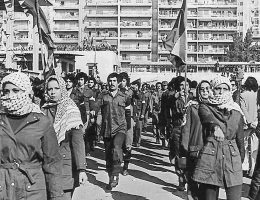
The same reality that compelled Palestinian refugees in Lebanon to take up arms in the 1970s persist to this day. The Palestinians of the camps now view the resistance movement in Gaza with renewed hope for liberation.

The Arab states are assuming responsibility for the Palestine question not just because their plans for the region’s future are at stake, but because the very stability of Arab regimes is on the line. But is the Arab plan good for Palestinians?

A reformed PLO that includes Hamas and other Palestinian factions will revive for many Palestinians the idea that the PLO still supports the right to resist. While this outcome remains a long shot, it is the only way forward with a positive future.
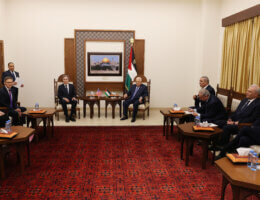
The PA has allowed itself to become a tool for delegitimizing armed Palestinian resistance, surpassing the bounds of security coordination with Israel. It is now a direct collaborator amid the ongoing Israeli genocide in Gaza.
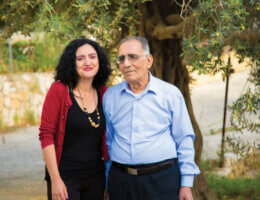
Fida Jiryis’s narrative of exile and return weaves together her reflections on Palestinian identity, the pain of loss, and the ongoing Nakba.

The existence of Hamas is used by Israel to justify the siege of Gaza and also the paralysis of peace talks. Hamas has become a convenient excuse for indefinite occupation. It may well be time to broach the taboo subject of talking to Hamas and seek a way of bringing them into the peace conversation. Certainly, there can be no peace without Hamas and its followers participating in some way or another.

This month marks the 39th anniversary of the Sabra and Shatilla massacre. Ellen Siegel, now 79 and a retired nurse in Washington, D.C., talks to Steve France about what happened to her in 1982, when she was working as a volunteer nurse at the hospital in the Shatila neighborhood of Beirut: “The soldiers’ rifles were pointed at us. Some of my fellow hospital staff started crying. I wondered, was anyone going to know that I died in this refugee camp?”
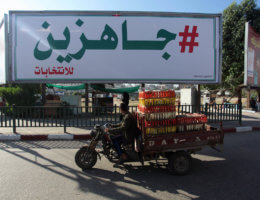
After more than a decade of political strife, rival Palestinian factions Fatah and Hamas have agreed to hold elections for the first time in Palestine in nearly 15 years.