Lawyer and researcher Salah Hammouri appeals to French president Emmanuel Macron from inside Israel’s prisons: “Mr. President, what is the reason behind your double standard in the treatment of people living under oppression?”
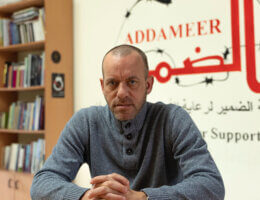

Lawyer and researcher Salah Hammouri appeals to French president Emmanuel Macron from inside Israel’s prisons: “Mr. President, what is the reason behind your double standard in the treatment of people living under oppression?”
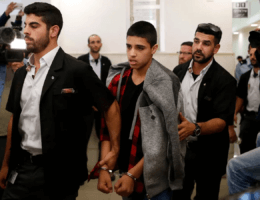
Manasra’s lawyers and family have stepped up their campaign to demand his freedom, after years of harsh interrogations and abuse coupled with prolonged stints in solitary confinement which led to a severe deterioration of his mental health.
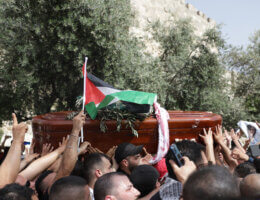
This is Palestine, the land of martyrs
That embraces the fearless woman, Shireen Abu Akleh

“You were washing the floors just like any other prisoner,” NPR reporter Daniel Estrin says to former Israeli PM Ehud Olmert in a long and respectful interview. But more than 4,000 Palestinian political prisoners are held on different terms by Israel, conditions cited by human rights reports charging apartheid– a charge that was unmentioned by the radio reporter.
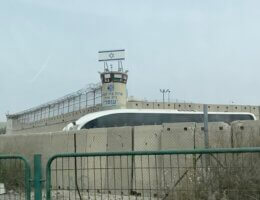
Mass incarceration has defined Israel’s colonial project. Since 1967, over 850,000 Palestinians have been arrested and imprisoned by the Israeli regime. Currently there are 4,450 Palestinians held in Israeli prisons, including hundreds of administrative detainees being held without charge or trial. But just as mass incarceration remains a defining feature of the Israeli occupation, so too has prisoner resistance. Currently, an ongoing boycott of the Israeli judicial system by all 530 Palestinian administrative detainees has surpassed 100 days.
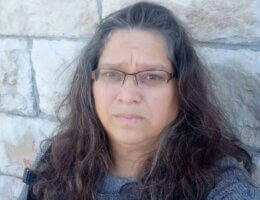
An Israeli court issued an arrest warrant for Israeli anti-apartheid activist Neta Golan, after she refused to appear in court in solidarity with a months-long boycott of Israeli courts by Palestinian administrative detainees. Since January 1st, 500 Palestinian administrative detainees, who are being held in Israeli prison without charge or trial, have engaged in a collective and comprehensive boycott of Israeli military courts.

Given the infectiousness of Omicron, we can expect a major spike in infection rates, if not rates of severe disease, in the occupied Palestinian territories. Though according to the WHO, 27 Palestinians died of coronavirus in the past week, a downward trend since the most recent rise at the end of December and much lower than earlier peaks.
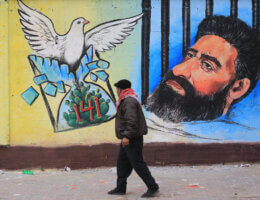
Hisham Abu Hawash’s hunger strike will go down in the history of Palestinian resistance as one of the longest and, arguably, most consequential.
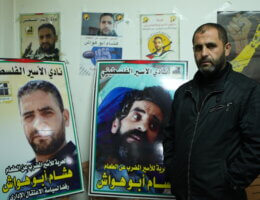
Palestinian prisoner Hisham Abu Hawash entered his 140th day on hunger strike on Monday, and according to his family is in such critical condition that he could “die at any moment.”
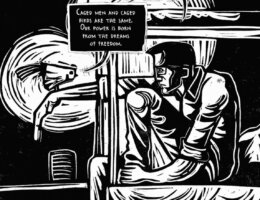
Mohammad Sabaaneh’s new book of linocuts uses the conceit of a bird conversing with a prisoner to get out the word on Palestinian conditions. “You bring the pencil, and I will bring the stories,” the bird tells the writer.