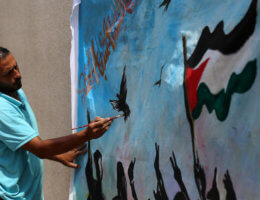
Mohammed el-Halabi is accused of diverting World Vision aid money in Gaza to Hamas, yet as his trial closes no evidence has emerged that any funds ever went missing. In his first interview since his arrest in 2016, el-Halabi tells Mondoweiss, “the claims that the Israeli prosecutor has issued against me are fabricated and aimed at stopping the humanitarian work I and others are doing for the people of Gaza.”
Israel’s Defense Minister Benny Gantz has declared he is adding the Samidoun Palestinian Prisoner Solidarity Network to Israel’s “terror list.” Canada may soon follow suit.
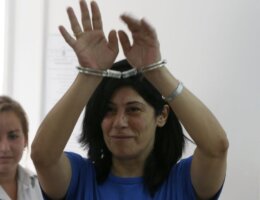
In a letter that was smuggled out of Israel’s Damon prison to be shared at the Palestine Writes festival, political prisoner Khalida Jarrar shares the essential role literature plays for Palestinian prisoners struggling the retain their humanity and remain connected to the outside world. “Our struggle for liberation inside prisons starts with protecting resistance literature,” Khalida writes.
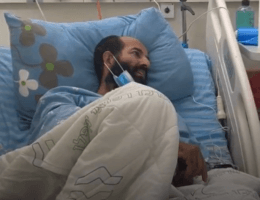
Tuesday, November 3rd, will be the 100th day of the hunger strike of Maher al-Akhras. That is, if he will still be alive. Israel’s High Court of Justice refuses to allow him to leave a Tel Aviv hospital for a hospital in East Jerusalem, and it cites a “get-together” with unnamed security “elements” that oppose the move. As if al-Akhras is a threat.
Whenever I conduct an interview with a Palestinian prisoner or their family, I am told, repeatedly, that “no one cares. But is this really the case?
Maher Al-Akhras, a Palestinian man of 49 who has been detained repeatedly by Israel, is today in Day 78 of a hunger strike that has brought him close to death. Arrested in July without charges and held at an Israeli hospital since September, the West Bank man has refused an offer to be released next month, demanding his release now in the name of all Palestinian detainees.
Daoud al-Khatib, 45, died in Ofer prison last month near the end of 18-year sentence, of heart attack. He had undergone open-heart surgery in 2017, but difficult living conditions in prison, combined with the grief of losing both his parents while behind bars, had an adverse effect on his health.
Following an outbreak of the coronavirus, the Israeli Supreme Court has ruled against a petition demanding that the Israeli Prison Service implement social distancing in the Gilboa prison. Adalah slammed the decision, “Palestinian prisoners have no right to social distancing protection against COVID-19.”
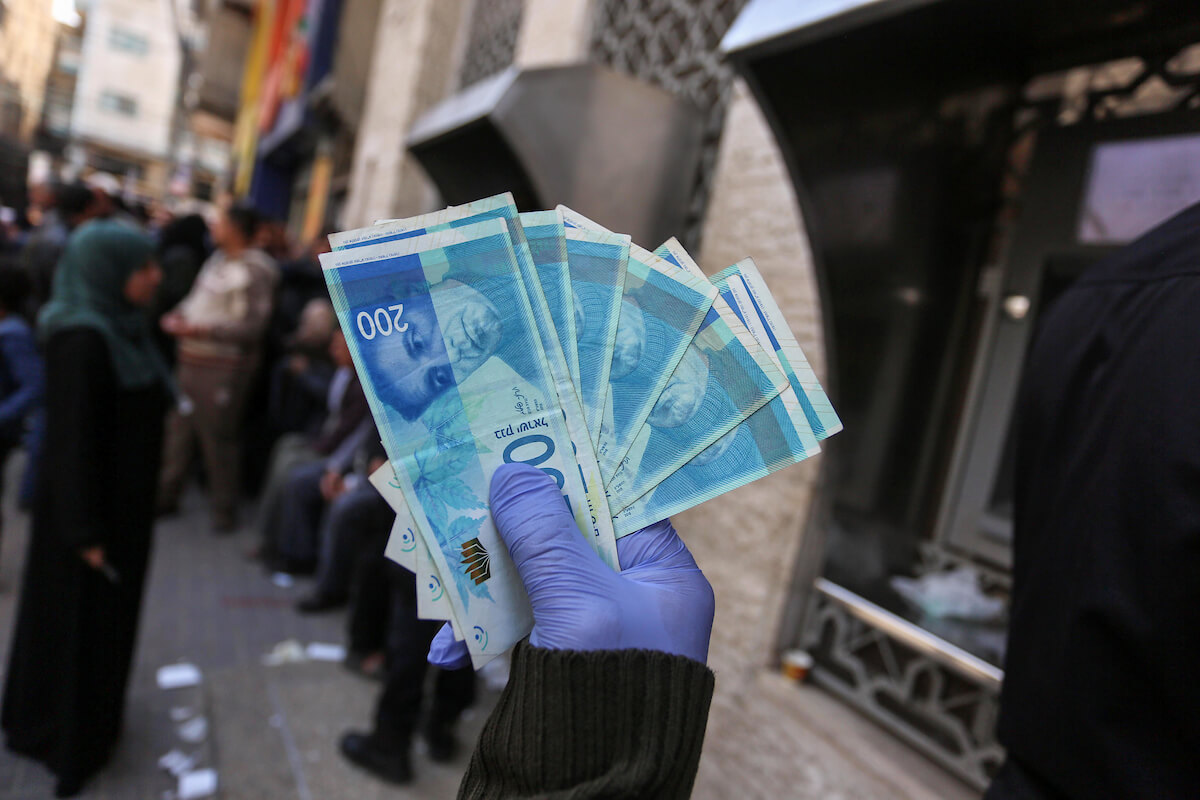
The latest Israeli military order allows forces to seize funds in Palestinian banks. The political motivation behind this “legal” hogwash is the Israeli desire to punish the Palestinian leadership for refusing to stop making welfare payments to those Palestinians who were, or continue to be, detained in Israeli prisons—political prisoners,—in addition to welfare payments made to families of martyrs. It is important to note that nearly one million Palestinians have gone through the Israeli prison system since the start of Israeli military occupation in 1967.
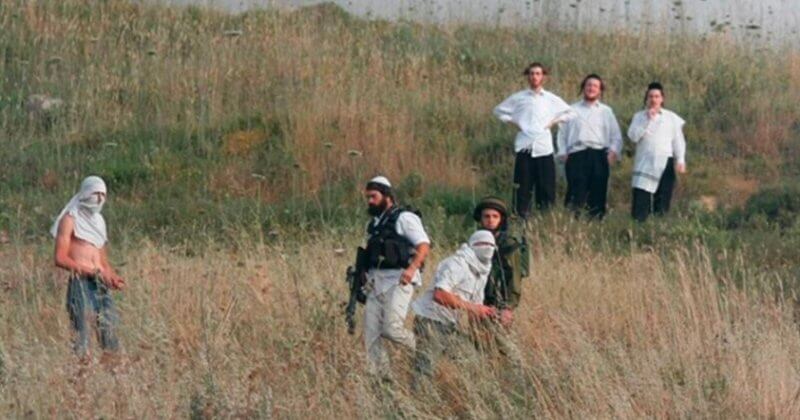
During the first three weeks of April, B’Tselem documented 23 settler attacks against Palestinians. In all of March, 23 incidents were documented, 11 of them after the severe restrictions on movement and social gatherings were imposed. In comparison, 11 attacks were recorded in January and 12 in February.