Rights groups, experts, and Khader Adnan’s legal team say that Israel caused his death through deliberate medical negligence and cruel and inhumane treatment. In other words, Israel wanted him dead.


Rights groups, experts, and Khader Adnan’s legal team say that Israel caused his death through deliberate medical negligence and cruel and inhumane treatment. In other words, Israel wanted him dead.
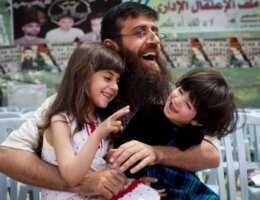
The world lost Khader Adnan after 86 days of hunger strike, and Palestine lost an icon. Yet, in the words of researcher Ashira Darwish, “Freedom means that he left the body that they destroyed.”

Walid Daqqah has become a prolific writer and astute commenter on the Palestinian condition from inside Israeli prisons. He once said that he would write until he is freed from prison, and “in the hopes of freeing the prison from within me.”

Since entering office, Israel’s new government has dramatically increased the repression of Palestinian prisoners, moves which reflect its hostile agenda toward Palestinians as a whole.

The Israeli Knesset is moving toward legalizing a policy that has long existed in practice: the death penalty for Palestinians who resist.
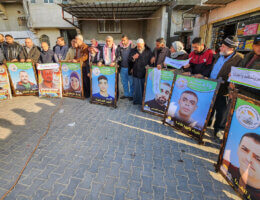
In the aftermath of the Gilboa Prison break, Palestinian prisoners have faced harsh punitive measures by the Israeli Prison Service. They are now fighting back as the Gilboa escapees stand trial.

Two martyrs were killed by the Israeli colonial system — Ahmad Abu Ali, a political prisoner who died of systematic medical negligence, and Sharif Rabaa, shot to death under the pretext of a stabbing.

Israel uses numerous tools to control and abuse Palestinian prisoners. One of the lesser-known instruments of repression is a seemingly innocuous means of transportation: a bus.

To endure interrogation, Palestinian political prisoners embody steadfastness. To endure prison life, steadfastness becomes a battle over time.

Palestinian political prisoner Nasser Abu Hmeid, 50, died in Israeli custody on Tuesday morning, following a bout with cancer and months of “medical negligence” on part of Israeli authorities, according to his family and Palestinian prisoners groups.