Tag

racism

Browsing
Amos Oz, 1939-2018 (Photo: Michiel Hendryckx/Wikimedia)

Haider Eid reflects on Amos Oz, the Israeli writer who died at age 79: “Through his glorification of the kibbutz regardless of the fact that it is built on a stolen land belonging to native Palestinians, he became an active participant in, and defender of, the aggressive colonialist politics of his country. In his work Palestinians are (mis)reprepresnted as marginalized and passive characters, they are never active agents.  Oz’s literary work was truly a fusion of literature and Israeli ideology.”

“As both a Jew and an African American, I recoil from the white supremacy and anti-Semitism on display this week. I have been gratified to hear Jewish leaders and organizations call for the destruction of racism, speaking eloquently about the shared history of oppression Jews and African Americans have faced. Yet, I confess to a certain discomfort in the many appeals to recognize the twin evils of anti-Semitism and anti-black racism in Charlottesville. I’ve thought about this a lot over the past week, and here’s  what I’ve realized: for Jews, Nazi symbols evoke a terrifying, traumatic past. For African Americans, they evoke a terrifying, traumatic, unending present,” writes Lesley Williams.

Adding to his already rabidly racist remarks, Iowa Congressman Steve King uses a comparison to Israel to make his demographic obsession seem more acceptable.

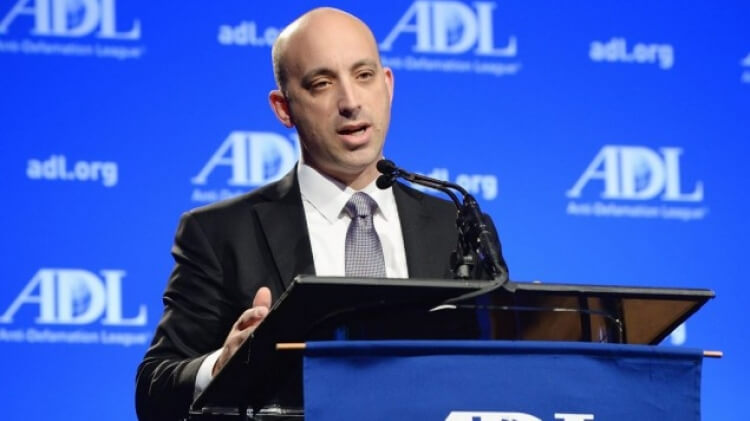
Jonathan Greenblatt, CEO and National Director of the Anti-Defamation League.

In an open letter to progressive Jews, Jewish activists says this moment calls for a strong, broad, united front against the Trump administration’s agenda but there are groups within the Jewish community that progressives should not stand beside: “Specifically, we refer to the February 12 rallies in support of refugees in which Jewish social justice groups cosponsored the action with, among others, the Anti-Defamation League (ADL) and the American Jewish Committee (AJC), two organizations that have toxic anti-Muslim and anti-Palestinian policies.”

Ha’aretz diplomatic correspondent and gourmand, Barak Ravid, recently tweeted a picture of “a likeable wine from the Livni vineyard in Kiryat Arba.” “Surprisingly good,” he concludes. The reason that the quality of the wine, produced in the darkest heart of the Israeli-occupied territory, is surprising, I would guess, is that Ravid believes that an admitted, convicted and unrepentant terrorist is unlikely to also become a successful vintner. But in Israel all is possible, at least for Jews.