An important new documentary tells the story of anti-BDS laws and the people who have stood up to them.
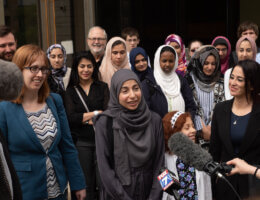

An important new documentary tells the story of anti-BDS laws and the people who have stood up to them.
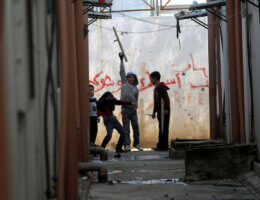
Nadya Hajj powerfully conveys how new technologies make, re-make, and occasionally unmake ties in the global Palestinian community.

Determined to Stay: Palestinian Youth Fight for Their Village is a valuable resource that centers Palestinian experiences for young adult readers.
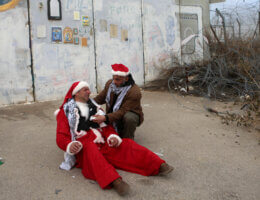
Brian J. Brown, a Methodist minister who was banned in his native South Africa in 1977 for anti-apartheid work, writes that apartheid in Israel/Palestine is in many ways more brutal than it was in his country, including checkpoints and barriers and expulsions. His new book says that recognition of that apartheid and total opposition to it is mandatory for any person or church that claims to follow Christian teachings.
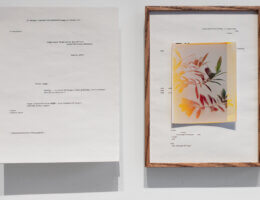
Photographer Morgan Ashcom’s portfolio “OPEN” captures the dynamism and dignity of Palestinian life while simultaneously highlighting the conditions of Israeli oppression.

Alison Glick’s novel, The Other End of the Sea, tells a gripping love story of two people caught in unbearable conditions.
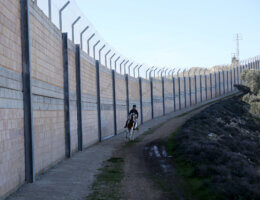
In his new book, “The State of Israel Vs. The Jews,” Sylvain Cypel paints a too-hopeful portrait of the anti-Netanyahu wing of American Jewish life as a virtuous broad tent united in their opposition to racism. What actually exists is a hodgepodge of intercommunal bickering, toothless fingerwagging, and hand-wringing– and this against an ever growing backdrop of Jewish only roads, deliberate bombings of civilian infrastructure and Associated Press offices, as Cypel himself meticulously documents. And in assigning importance to that Jewish argument, Cypel fails to treat Palestinians as autonomous political actors in the struggle.

The French writer Sylvain Cypel went to Israel as a young man to join the army and build the country. Now he is deeply dismayed by its rightwing nativism and indifference to international human rights law and has penned a lacerating book about the threat of Zionism to Palestinians and to Jewish tradition.
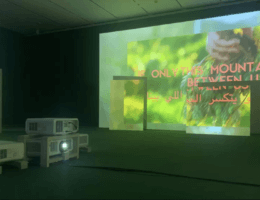
Basel Abbas and Ruanne Abou-Rahme’s “If only this mountain between us could be ground to dust” is the artists’ first exhibition in a major US museum, and the first Palestinian exhibition at the Art Institute of Chicago. “It is hard to put in words what we experienced while being there and how powerfully Palestinian voices were being amplified and empowered,” writes Malak Shalabi.
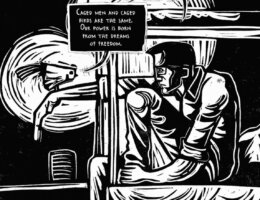
Mohammad Sabaaneh’s new book of linocuts uses the conceit of a bird conversing with a prisoner to get out the word on Palestinian conditions. “You bring the pencil, and I will bring the stories,” the bird tells the writer.