Jewish journalists like to project the power of the Israel lobby on to Christian evangelicals, when in fact the Democratic Party is beholden to the Jewish part of the lobby. The journalists shift the blame because they think a discussion of Jewish influence is anti-semitic, but by doing so they are denying plain facts.
The Democratic House leadership, which has appeared at AIPAC events, condemned MN Rep. Ilhan Omar for her anti-AIPAC tweets, calling them “anti-semitic.” The party leaders are clearly terrified that Israel is going to tear the party apart, as anti-Zionism takes hold in the progressive base.
Does AIPAC use money to influence Congress, as Ilhan Omar said. Of course it does! Stephanie Schriock of Emily’s List said that before congressional candidates even have a campaign manager or a policy director, they go to AIPAC to get a position paper on Israel “because this is how we raise money” from the “Jewish community.”
Bret Stephens’s long opinion piece in the New York Times equating anti-Zionism with anti-Semitism is a boon to the anti-Zionist movement. His claims that it is anti-Semitic to see “wickedness” in unending occupation and that all American Jews are Zionists are debating points he will only lose. The piece makes anti-Zionism a topic for every dinner table and turns BDS into a household word.
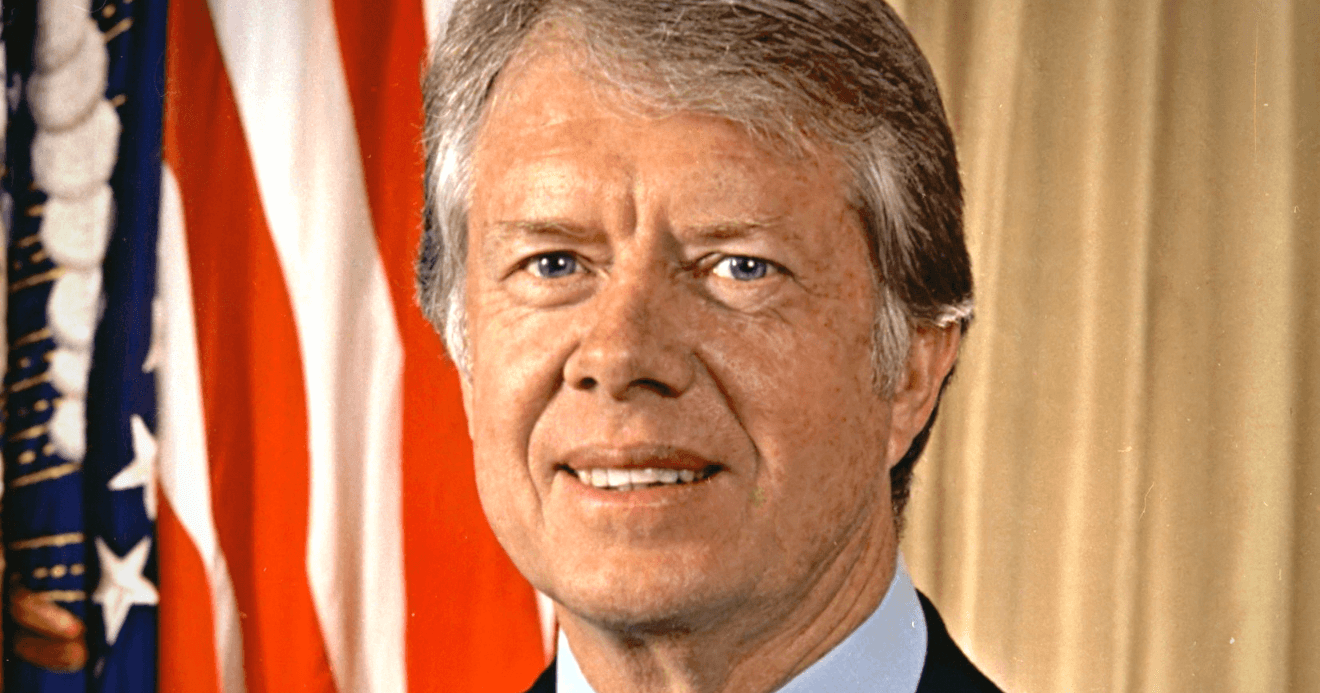
Jimmy Carter said he’d ‘commit suicide’ before he abandoned Israel, but American Jewish leaders did not trust him because of his parallel commitment to a “Palestinian homeland” and opposition to Israeli settlements, Stuart Eizenstat writes in a detailed memoir. Carter always underestimated the power of the Israel lobby. He came to believe that it helped cost him a second term, a lesson politicians have heeded ever since.
NYT columnist Michelle Goldberg says progressives are afraid to speak up on Israel. They feel “I can’t speak out without suffering professional consequences… That taboo is real… I feel like it’s very difficult to speak kind of rationally and forthrightly about real human rights abuses in the West Bank.”
Palestinian cartoonist Mohammad Sabaaneh, who is developing an international reputation, explains why he supports boycotting Israel: “As long as we are under this occupation, and this atrocity, and brutality, I will not do any joint event with any Israeli artist or citizen. Because he is a soldier. Whatever his work– artist, doctor, engineer, journalist—he served in the IDF, or will serve in the IDF, or serves in the IDF.”
The good news from the anti-BDS bill’s progress in the Senate yesterday, 76-22, is that progressive Democrats are standing up against AIPAC for the right to “peacefully” protest Israeli policies, and almost all the presidential hopeful Democrats voted against the legislation, even Kamala Harris and Cory Booker. And Chris Van Hollen said the bill will “strengthen” the boycott movement.
Three leaders of a new group aimed at preventing the Democratic Party from splitting over Israel–Jennifer Granholm, Peter Villegas, and Ann Lewis –are affiliated with the Israel lobby group AIPAC, which has been panicked by the possible splintering of political support for the Jewish state.
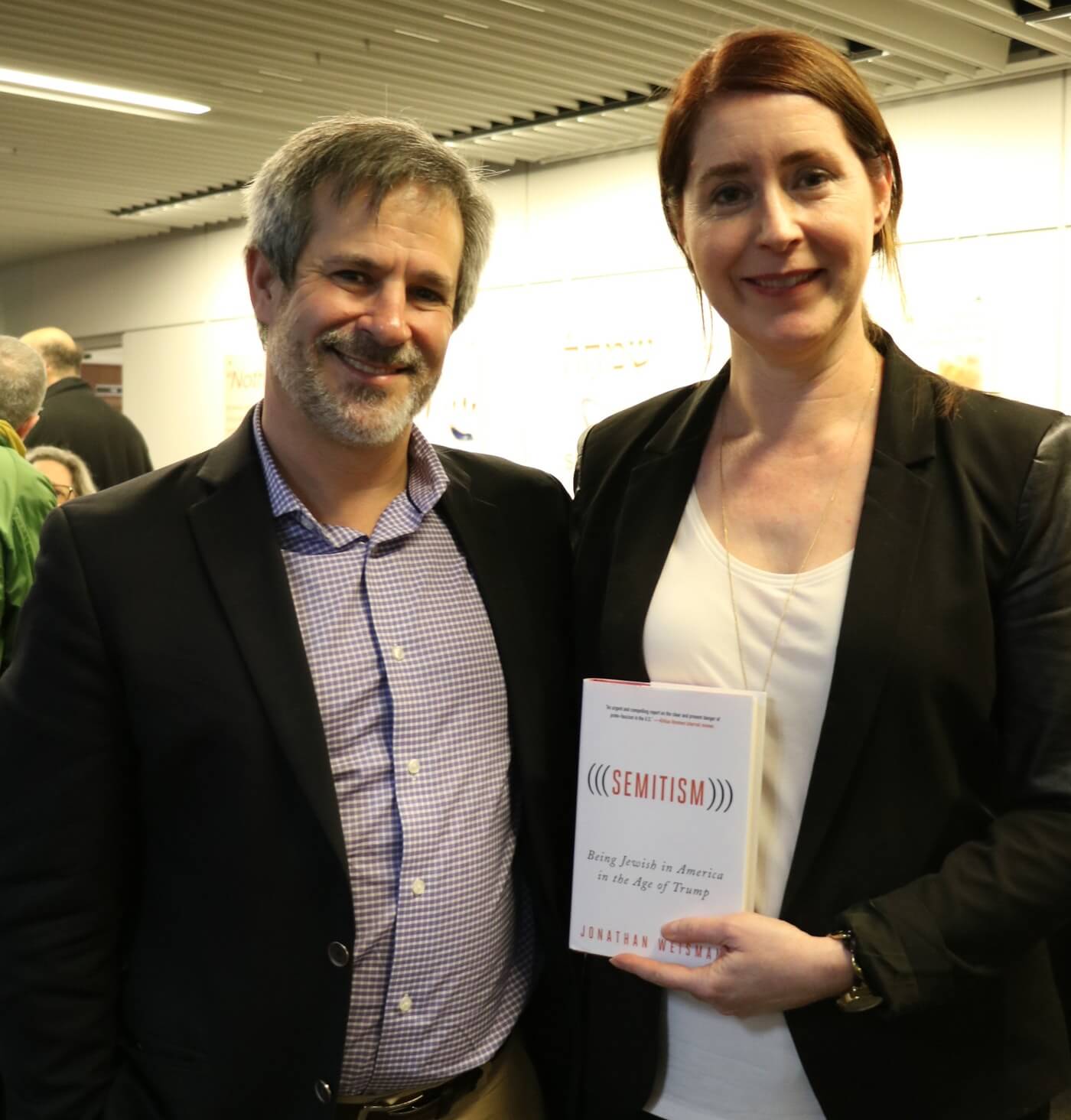
Jonathan Weisman, deputy Washington editor of the New York Times, praised the American Jewish community’s role in “maintaining political support for Israel” because it “is a very small country in a very hostile neighborhood.” Weisman’s definition of the Jewish community was all Zionist organizations, leaving out the anti-Zionists of Jewish Voice for Peace; and he credited the view that anti-Zionists are anti-Semites.