Israeli forces disguised as hospital workers and civilians entered Jenin’s Ibn Sina Hospital and assassinated three Palestinians as they slept. The brazen killing marks an unprecedented escalation in Israel’s war on Palestinians in the West Bank.


Israeli forces disguised as hospital workers and civilians entered Jenin’s Ibn Sina Hospital and assassinated three Palestinians as they slept. The brazen killing marks an unprecedented escalation in Israel’s war on Palestinians in the West Bank.

Thousands of Israelis protested in Tel Aviv and Jerusalem calling on Netanyahu to resign, while others attempt to block aid trucks from entering Gaza. Meanwhile, the UN said it has suspended the employees who Israel alleges took part in October 7.
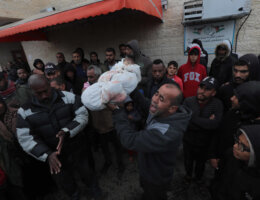
At least five countries have pulled their funding from the U.N. agency for Palestinian refugees over Israeli claims that staff members participated in the October 7 attack. Israel keeps killing Palestinians in Gaza and the West Bank.
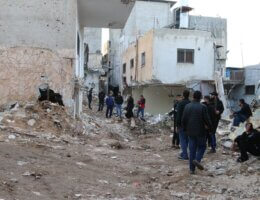
Israeli drone strikes have killed nine Palestinians in Nablus and Tulkarem during a massive ongoing army operation in the West Bank. As many as a 1,000 Palestinians have been detained in what locals are calling a “collective punishment” campaign.
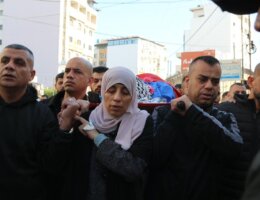
Israeli forces raided Tulkarem in the occupied West Bank, where they killed three young Palestinian men, shooting at their incapacitated bodies before running over them.
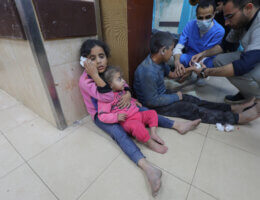
Ten children in Gaza are losing a limb every day in Gaza to Israeli airstrikes, as Israeli politicians say the Gaza onslaught will last at least another nine months.
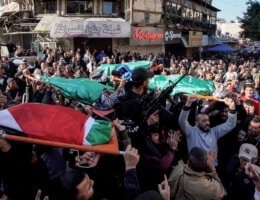
At least 11 Palestinians were killed in the West Bank on Sunday, including seven who were killed in a single Israeli airstrike on Jenin. “They’re dealing with us like Gaza, attacking civilians,” a fighter with the Qabatiya Brigade tells Mondoweiss.

Israel’s opposition welcomes Supreme Court ruling against Netanyahu’s law restricting judicial powers. Israeli forces kill four Palestinians in a single West Bank village, and a seventh Palestinian prisoner dies in Israeli prisons.
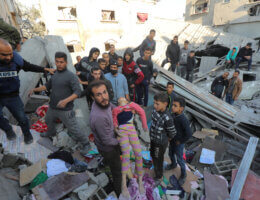
Israeli airstrikes kill another Palestinian journalist in Gaza, as the Wall Street Journal writes that the current Israeli rampage in Gaza ranks among the most devastating in modern history. Israel slams South Africa’s ICJ case as “blood libel.”
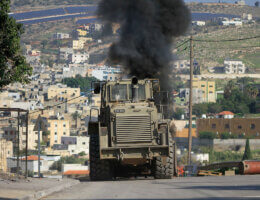
Amid ongoing attacks on Gaza, Israeli forces attacked ten cities across the occupied West Bank, breaking into homes, seizing 2.7 million dollars from businesses, and killing one Palestinian.