A scandal over fabricated documents allegedly leaked by an aide to Benjamin Netanyahu has revealed Israel’s efforts to sabotage Gaza ceasefire negotiations.
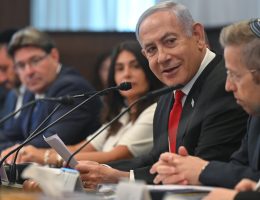

A scandal over fabricated documents allegedly leaked by an aide to Benjamin Netanyahu has revealed Israel’s efforts to sabotage Gaza ceasefire negotiations.
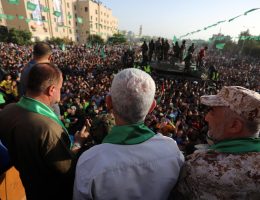
Yahya Sinwar’s last stand laid bare Israel’s weakness, exposing the truth about its post-heroic army that only survives from a distance and remains shielded by armor, unwilling to face its enemies head-on.

This week brought the extraordinary news that Yahya Sinwar, leader of Hamas in Gaza and…

A letter from the Biden administration to Israel this week threatening to possibly withhold weapons raised hopes among some, but the delivery of a missile defense system and deployment of U.S. soldiers sent the real message.
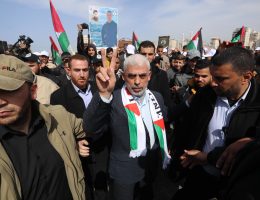
Israel has committed a new massacre in Jabalia as it continues its siege on northern Gaza.

The Israeli army said on Thursday that Hamas chief Yahya Sinwar had been killed in combat during an armed confrontation with an Israeli army patrol in Rafah.

Media sources have misunderstood how the leadership of Hamas operates, drawing simplistic binaries between the “moderate” Ismail Haniyeh and the “extremist” Yahya Sinwar. In reality, Hamas decision-making is far more institutionalized.
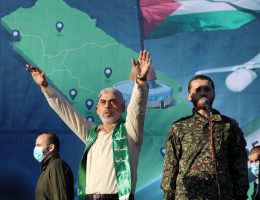
The concepts of self-sacrifice, asceticism, and security awareness were crucial to Yahya Sinwar’s philosophy of resistance. The revolt that culminated with October 7 was the direct application of his political thought.
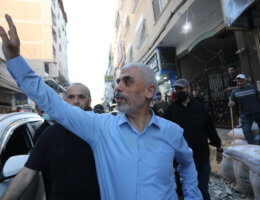
Yahya al-Sinwar’s autobiographical quasi-novel “Thorns and Carnations” shows the Hamas leader has lived a life focused on faith and an obsessive project to build an infrastructure of resistance in Gaza.

The Israel Policy Forum, an Israel lobby group, hosted Israeli reserve Colonel Michael Milshtein, a former expert on Palestinians in Israeli Military Intelligence, to spout anti-Palestinian comments.