The news the Obama will appoint George Mitchell as Middle East envoy on the first day of his administration has been widely celebrated. One particularly impressive endorsement came from Mark Perry, co-director of the organization Conflicts Forum:
The excitement comes partly from who he isn't. It also comes from Mitchell's experience leading a fact-finding mission after the failure of the negotiations held in 2000 at Camp David. One of the main findings of that report called for an end of settlement construction. This simple, commonsensical recommendation earned Mitchell plaudits for uncommon balance for a US process. In fact, some in the Congress felt it contained a bit too much balance. Chuck Schumer complained:
Issues like
the future of settlements need to be formally discussed by the parties
at the negotiating table with a final peace agreement in view, not
as "confidence building measures" while the Israelis are
staring down the barrel of a gun. . . Secretary of State Colin Powell's stated desire to involve the
United States in helping find a solution to the spiral of violence
is encouraging, but I hope he will not use the Mitchell report's recommendations as a guideline.
Okay, so maybe Schumer has changed his mind in the past seven and a half years (probably not). Regardless, the focus on the personalities – whether they're Mitchell, Ross, Indyk or Miller – obscures the fact that there needs to be a change in policy and not just people.
Mitchell's report, for all its balance, must be remembered for the fact that it was essentially ignored. Even more damning, Mouin Rabbani's analysis of the Mitchell Report from 2001 called it "Oslo's Last Gasp," and noted that its own recommendations were undercut by the fact the report contained no timeline for implementation.
And that's the rub. What accountability mechanisms will the US be willing to put in place? And while Mitchell might be welcomed for being balanced, we don't need a
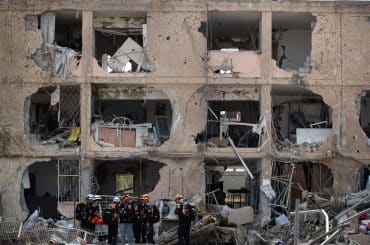
balanced approach. It is not a balanced situation. After a conflict
where the ratio of those killed was over 100:1, who can honestly argue
this? Especially after Gaza – Palestinians need support,
Israel needs to be stopped.
There are already signs that the US might be planning to cut $1 billion in loan guarantees to Israel due to settlement construction. This would be a great first step, but not nearly enough. Will US aid be on the table? Will the US use its diplomatic power to prevent Israeli aggression rather than promote it?
In the end, its not so much a matter of Mitchell, but whether US foreign policy will continue to aid and abet Israeli militarism and expansion. If it does, then it doesn't matter what individual is guiding the process. (Adam Horowitz)