

My initial interest in an op-ed column column about Tunisia actually appearing in the New York Times yesterday (after having ignored the entire debacle for weeks on end) was quickly tempered by the first sentence, and soon turned to outrage and ranting to anyone who would listen about the blatant - and disgraceful - orientalist-imperialist perspective from which Robert Kaplan writes.
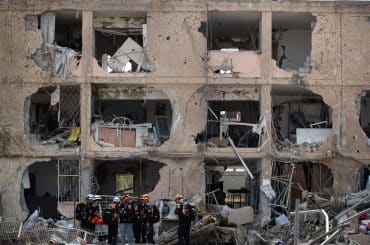
Kaplan begins by describing "a month of peaceful protests.” This brings to mind Kumbaya, weed, and light-hearted movies about Vietnam draft-dodging. But this doesn't describe Tunisia. To what peacefulness is he referring? Perhaps the demonstrators were non-violent, but he ignored the riot police and soldiers beating, gassing, and spraying protestors. This does not non-violence make. If you've seen any of the pictures (like these ones), they are pretty much exactly what you see in IDF violence against demonstrators in Israel/Palestine. Clearly, this dude has not been following the same reports on Tunisia that the rest of us have.
I don't know as much about the history and politics of North Africa as I probably should, but I'll take his facts as facts and his analysis with a large grain of salt. In any case, his initial point that Tunisia is probably not a reliable measurement of the future of revolution in the Arab World is well taken and, I think, accurate. Tunisia is historically and geographically distinct from the post-colonial conglomerates you see across much of NA and the ME.
But after he made this point, he should have stopped. Instead, he continues, to inform us that the "benighted countries in the Arab world" are too primitive to be trusted to rule themselves or elect their own leadership, and we must trust governance of the Middle East to Westernized autocrats.
I will gloss over the blatant disregard for popular support for the Muslim Brotherhood in Egypt and Kaplan's referral to "Islamic extremists" in Egypt "waiting in the wings" to ostensibly take over the country ASAP. Did I imagine this, or wasn't there something recently about how the Muslim Brotherhood was all for cooperating with minorities in Egypt? He lists the political and national disasters in Lebanon, Syria, Iran, and Iraq, but completely ignores any interventionism, meddling, or colonial/post-colonial repercussions. Revisionism to prove Orientalism.
And still, it gets so much better.
Another thing to keep in mind: in terms of American interests and regional peace, there is plenty of peril in democracy. It was not democrats, but Arab autocrats, Anwar Sadat of Egypt and King Hussein of Jordan, who made peace with Israel. An autocrat firmly in charge can make concessions more easily than can a weak, elected leader — just witness the fragility of Mahmoud Abbas’s West Bank government. And it was democracy that brought the extremists of Hamas to power in Gaza. In fact, do we really want a relatively enlightened leader like King Abdullah in Jordan undermined by widespread street demonstrations?
So here's what I learned today:
1. American interest = regional peace ≠ democracy. So much for American propaganda.
2. Peace with Israel is the penultimate product of a friendly Arab regime, supporting Israel being apparently in the interest of the world, which evidently coincides with the narrow interest of Israel itself and misguided American strategy.
3. Abbas' West Bank government is "elected", which here means "installed as a puppet by the Israeli military-security state".
4. Hamas's one trait is "extremism."
5. Deerfield Academy- and Oxford-educated British-English speakers are the most enlightened leaders ever to reign over Trans-Jordan. It's still 1946, right?
6. Street demonstrations are a dirty dirty behavior. Do. Not. Participate.
Democracy is bad, because it leads to popularly elected parties and leaders. We enlightened Westerners know better what ignorant Arabs need than they themselves do. Let's sure hope those demonstrations don't get out of hand and, God forbid, popular governments are installed anywhere in the Middle East ever again. (Then again, if Israel is the standard for Middle Eastern democracy, I might be able to get on Kaplan's page here.)
Well, I don't know why I'm surprised; Kaplan is a fellow at the Center for a New American Security. I probably should have stopped reading as soon as I read his bio. I just hope someone writes something less heinous and the Times actually prints it. I know, I know, keep dreaming.

Keep up the good work and thanks for bringing Kaplan’s revisionist Orientalism to the fore. Light is the best disinfectant.
Audrey, say it again, and say it LOUDER! You nailed the NYT. (Again. sigh.)
An interesting revision/reversal of the old Fukuyama thesis that democracy always leads to peace. I’d say that autocrats can indeed make treaties but that if they are made in the teeth of public opinion they are unlikely to last.
When a right wing writer belittles the importance of a popular mass uprising in what had been a longstanding dictatorship, know that the truth has to be exactly the opposite, that not only does this potential revolution portend what lies ahead for the rest of North Africa, but that, fasten your seat belts, ladies and gentlemen, because the future could be coming towards us faster than anyone heretofore might have imagined. The latest reports from Tunis back this up, with demonstrations once again heating up, this time with demands that the interim government shed itself of Prime Minister Mohamed Channouchi and President Faoud Mebazaa, leftovers from the exiled dictator’s party, the Constitutional Democratic Rally. This demand makes sense since it’s difficult to conceive of a revolution unfolding under the leadership of the former dictator’s henchmen. More likely their role here is to stall long enough so as to undo this revolutionary opportunity. As a matter of fact the sole guarantor of this embryonic revolution would be the permanent mobilization of the Tunisian people, such that any provisional revolutionary government will never be able to distance itself from the revolutionary “heat.”
There is indeed plenty of peril in democracy. It gave us George W Bush. It gave us Barack O’Bomber. It gave us a Congress totally owned by the agents of a foreign power.
Democracy passes into despotism. – Plato
Stop dreaming and start worrying, Audrey. The US that was fully aware of Ben Ali’s funny business is now offering to “help” set up a new democracy in Tunisia. The super fixer dispatched for the job by the State Dept is Jeffrey Feltman that has been failing to put out Hizbullah’s lights for 6 years. Feltman’s pet project since 2005, the pro-US Hariri government failed to get reappointed by the majority of the Lebanese legislature today and it makes a second US failure in a short time. From the VOA on Feltman’s Tunisian trip and America’s sudden great concern to see democracy in Tunisia:
“The Obama administration has sent a senior envoy to Tunisia to underscore U.S. support for efforts there to transition from authoritarian rule to democracy. The United States is offering Tunisian authorities help in organizing promised elections.
The dispatch to Tunisia of Assistant Secretary of State for Near Eastern Affairs Jeffrey Feltman underscores U.S. interest in seeing a peaceful and democratic outcome to the political upheaval there that ousted President Zine Abidine Ben Ali.
… Announcing the Feltman mission several hours after his departure for Tunis, State Department Spokesman P. J. Crowley said the assistant secretary will seek a “first hand view” of the situation and sound out the new authorities on how the United States can assist in building a stable democracy.
“We support the transition that is underway, and we hope that this transition will be peaceful. We understand that Tunisian civil society has questions about the nature of the government. Clearly after decades of mistrust, there are questions that the people continue to raise. The government is trying to be responsive. W e know that this is hard. And we know that the government will at times have missteps along the way,” he said.
Secretary of State Hillary Clinton on Saturday telephoned Tunisian Prime Minister Mohammed Ghannouchi to commend the interim government’s call for elections within six months and initial steps to investigate corruption and past abuses.
… Crowley said U.S. officials are encouraged by steps the interim government has taken to begin dialogue with civil society groups, release prisoners and ease media curbs. But he said that a “lot of work” remains to be done.
He said part of Feltman’s mission will be to evaluate how the United States can support the electoral process in Tunisia, perhaps through technical assistance by U.S. non-governmental groups that have been active in democratization efforts elsewhere.
Feltman, a former U.S. ambassador to Lebanon, is to have a second day of meetings in Tunis on Tuesday before returning to Washington.
link to voanews.com
to evaluate how the United States can support the electoral process in Tunisia, perhaps through technical assistance by U.S. non-governmental groups that have been active in democratization efforts elsewhere.
ha! yes i am well aware of these non-governmental groups who provide special asset voting machines. hello. they used them in africa (and ohio).
Why are you falling into the same trap that the Bush administration fell into in Iraq? There is nothing better than a stable democracy, but being too optimistic about being able to get there will lead to carnage and much instability. That is what happened in Iraq and it will be much worse in Syria, Egypt and Jordan because there will not be the US presence to help temper the civil war. Yugoslavia did not work. Czechoslovakia did not work. Belgium does not work. And of course Iraq does not work. There is no reason to believe that Syria, Jordan and Egypt will work. Be careful what you wish for.
eee, I told you one before that your take on Syria is wrong. The country unlike its immediate neighbours is very stable and the people for some reason appear to love Assad, so he must be doing something good. You’re using an outdated MFA Q&A manual.
Not only do they love him, 97% of them vote for him!
Bashar is so great, he did nothing to help the millions of people hit by the drought in Syria.
link to irinnews.org
Bashar in fact is in the most precarious of situations. His apartheid regime of Alawites is suppressing the Sunni majority by pure intimidation. When the Asad regime falls, it will be the biggest blood bath of all. That is why, even though he is an enemy of Israel, I hope he is able to stay in power and navigate reforms peacefully. But I am not optimistic.
eee, you gave me a wrong link; the one you provided said that Syria was improving its services to those affected by the drought although more needs to be done but you didn’t read beyond the title. The hasbara handbook you’re using to work this blog is the pits. If you want to talk about the Alawites, you should look up what they are about; you’d find them interesting and you’d be puzzled how the minority Alawites (a Shia sect) are ruling the Sunni majority Syria under Sunni civil and religious laws as well as a Sunni educational system. Maybe one day, if you’re lucky, you’ll end up living under Syrian rule.
eee….The hasbara handbook you’re using to work this blog is the pits.
lol. the mfa needs to update.
Oh yes, the Alawite regime is great, they just run one of the most oppressive regimes in the world and a regime that has produced one of the worst economic performances in the last 40 years. Not to mention that they are brutally ruthless:
link to en.wikipedia.org
In short, you are not pro-democracy, you are just anti-Israel. Good to know. And if you think the regime there is so great, kindly go live there.
eee, I never said that the Syrian regime was great. In fact, I’m not even a fan. I said that your talking points about Syria that appear to come out of a Q&A about Syria from some Zionist pamphlet are faulty and their president is not hated as much as you were led to believe. I’d choose living in Syria over the racist Israel anytime.
“I’d choose living in Syria over the racist Israel anytime.”
That is the funniest thing you ever wrote. Very, very few Arabs in Israel would agree with you if at all. The Arabs in Israel have 100 times more rights than the Arabs in Syria. Is there any popular website that is not blocked in Syria? They already blocked facebook in 2007 because the regime is so “popular”.
And enjoy this:
link to google.com
Why wouldn’t such a regime be “popular”? It is only popular in your dreams.
there are so many crooks that get caught simply because they can’t resist bragging about their ill-gotten loot.
buy your way out of hell with your gdp, eee.
As usual you miss the point PG. Israel in fact could do much better. Compare us to Sweden or Finland or Switzerland for example. We are getting there. What you can’t see is the fact the Syrian government, the one Walid says is “popular” has been robbing the Syrians blind and continues to do so.
I’ll confess that I had to consult the link to convince myself that Audrey Farber wasn’t just making up the absurd, inflammatory nonsense quoted above. But she wasn’t — it’s the concluding paragraph.
Kaplan is such an Israel-Firster that all principle goes by the boards. If it’s good for Israel, then it’s good, period. If pedophilia, leprosy and cannibalism could somehow advance Israel’s interests, Kaplan would cheerfully endorse those blessings too.
Both Kaplan’s essay and its media vehicle — the New York Times — exhibit a deep, corrosive streak of anti-Americanism. Bending themselves into pretzels to advocate for another country, they end up trashing our own values.
As Peace Laureate O’Bomber speaks tonight, he presides over a foreign policy that’s a hollowed-out anachronism: a lost war in Afghanistan; a sham peace process outed by the Palestine Papers; and demonstrators spending the night in Cairo’s Tahrir Square as he speaks. What can he possibly say? The whole rotten, anti-liberty edifice looks ready to collapse under its own weight.
Nahum Barnea, writing in Yedioth Ahronoth, takes up Kaplan’s antidemocratic theme:
link to guardian.co.uk
PA repression = ‘majority support’ = good for Israel
Appalling …
several weeks ago a participant on Flynt and Hillary Leverett’s Race For Iran blog posed a question to Drs. Leverett:
“If you could choose between Egypt being ruled by Sadat/Mubarak—the first of which you both have spoken so approvingly of—or by a democratic leader who could well be as hostile to Israel as Ahmadinejad, which would you choose? If you choose Sadat/Mubarak, then is your opposition to attempting regime change in Iran solely on the basis that such a regime change is implausible? If Iran could be destabilized to the point that the US could impose a leader like Sadat or Mubarak is feasible, would you then support that?”
Flynt Leverett and Hillary Mann Leverett responded:
A few points:
1. The Leveretts’ guiding philosophy is that American foreign policy should be conducted to further American interests.
2. Why are views like the Leveretts’ NOT given space in NYT, WaPo, etc?
3. Hillary Mann Leverett is Jewish; she’s even a reformed neocon (a reformed neocon is a person who was mugged by the reality of the utter failure of neocon prescriptions and was smart enough to formulate another plan).
This is not about Jews. It’s not about neocons, even. It’s about advancing the best interests of the American people. Within that rubric, as Walt and Mearsheimer have recommended, Israel should be treated as one among many other interests the US has in the world, no more and no less well treated than any other nation.
Supporting the views of Flyntt and Hillary Leverett is NOT “antisemitic;” it IS pro-American, for those who are concerned with the direction the US is headed.
Isn’t it time for the Kaplans and their fellow travelers to exit stage rear?
this is an excellent post by farber. w/so much going on yesterday i totally missed it til now. it deserves widespread attention. accurate, essential and concise.
thanks!