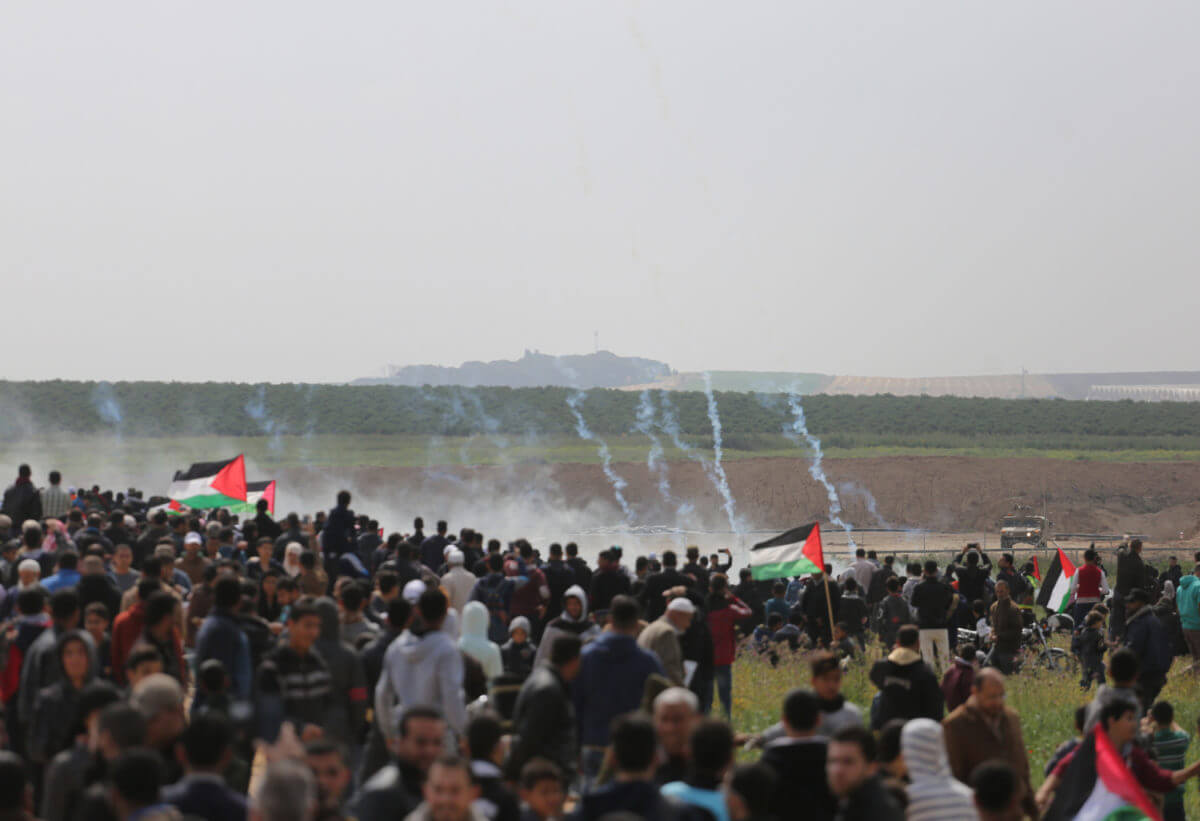
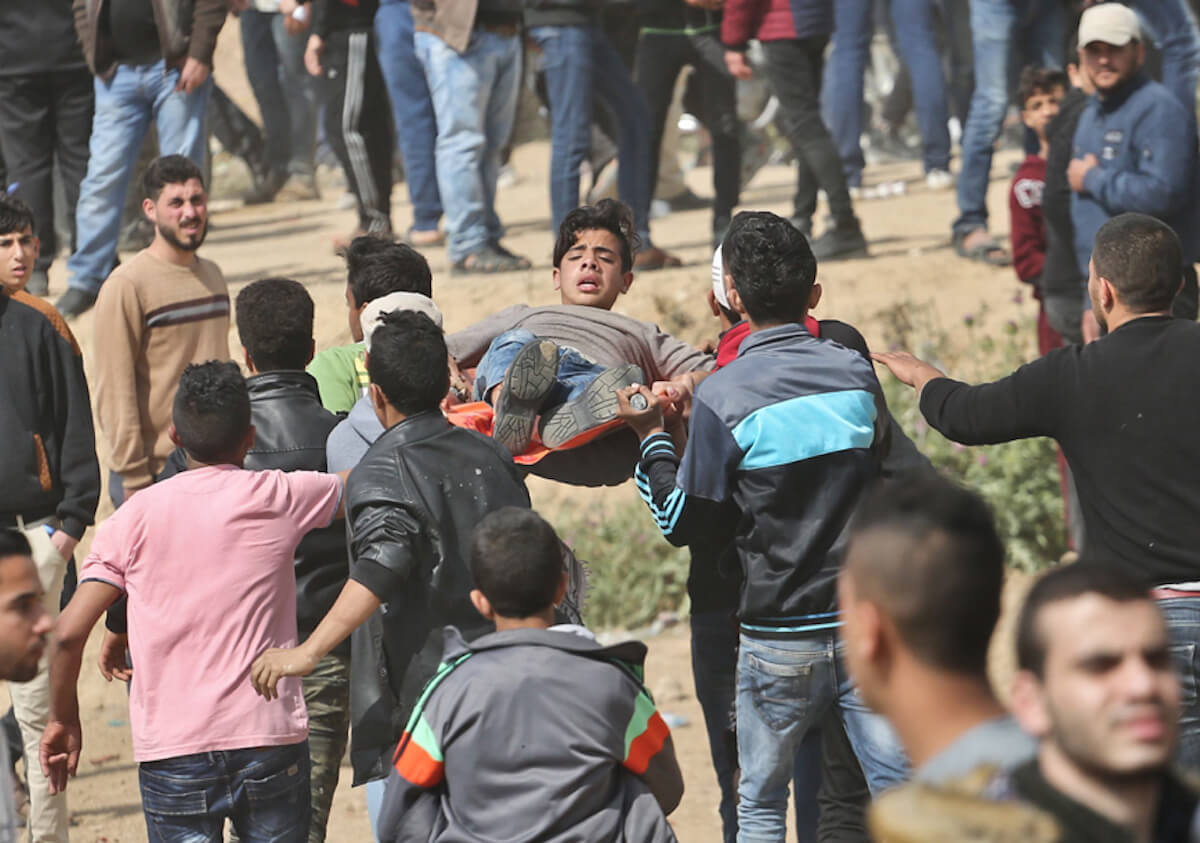
Bethlehem University’s Jamil Khader writes of the Great March of Return: “The importance of the Great March of Return lies in the way it staged a raw and unmediated confrontation between the brute high-tech power of one of the most powerful armies in the world and the bare life of thousands of unarmed people in their humanity and dignity . . the message of the march reframes the right of return and freedom not only within international human rights law, but also within an emancipatory and utopian future for all.”
Another datapoint in the discourse’s march to the left. On Fox News, Geraldo Rivera says that the Israel Palestine conflict is the “original sin” of the United States, from which “a lot of our problems stem”. And his big regret is that he did not back the oppressed Palestinians during the Second Intifada.
Hours after announcing a watershed deal with the United Nations High Commissioner for Refugees to relocate African asylum seekers in Israel to Western Europe and Canada, Israel’s Prime Minister Benjamin Netanyahu reneged, saying he is “suspending implementation of the agreement,” throwing the fate of tens of thousands into uncertainty. Some Israeli supporters of Netanyahu were angry the multi-lateral resettlement program would send asylum seekers to Western nations instead of deporting them to harsh conditions in third-party African nations.
You already know that last Friday in Palestine tens of thousands of dedicated Palestinians made their way to the border between Gaza and Israel, and that the Israeli armed forces used snipers to pick off individuals and intimidate nonviolent protesters. Mondoweiss reported from the Great March of Return, and will continue to provide photo, video and oral documentation of this historic statement of sumud—and the atrocities in response. We truly believe that our work reporting on this systematic violence is a vital tool in fighting against it and building a better future. If you agree that truth-telling is mighty and necessary, please consider signing up for a regular contribution to be processed every other week.
Something has shifted in the discourse of Israel since the Friday killings of 17 Palestinian protesters in Gaza, many of them plainly unarmed, by Israeli snipers from across a security fence: the hasbara– Israeli propaganda– is not working. The country has plainly done something indefensible. The usual defenders are silent, and the criticism from the left/center is stronger than ever.
Evoking memories of the South African apartheid regime’s massacre of peaceful protesters in Sharpeville in 1960, Israel’s military committed a new massacre against Palestinian civilians as they were peacefully calling for an end to Israel’s brutal blockade of Gaza and asserting the UN-stipulated right of return for Palestinian refugees. The Palestinian BDS National Committee, the largest coalition in Palestinian society and the leadership of the global BDS movement, calls for effective accountability measures against Israel, particularly a two-way military embargo, as was imposed against apartheid South Africa.
As Nada Elia crosses the U.S.-Mexico border at a crossing on the divided town of Nogales, her mind turns to the parallels of on-going dispossession experienced by the Palestinian people, and Native Americans across Turtle Island: “The few days I spent with my Native friends cemented in me the determination not just to recognize that all of Turtle Continent is indigenous (something I already grasped), but that my decolonial struggle, as a Palestinian, is incomplete if I do not link it with the decolonial struggle on this continent. More than ever before, as we discussed the need to liberate the land, I felt that, if I am not an active part of the solution, then I am contributing to the problem.”
The New York Times is using a new tactic to downplay Israel’s March 31 murderous assault on Gazan demonstrators: dueling narratives. Today’s article can be summarized as: ‘Israel says “X.” Palestinians say “Y.” Who really knows the truth?” But the article continues to ignore a central fact: Israel killed 15 Palestinians, and injured as many as 1000 more, but not a single Israeli soldier got as much as a scratch.
The battle over Israel that has roiled the Labour Party in Britain is going to come to the Democratic Party here before long. And Bret Stephens and Bari Weiss of the New York Times are all set for it, smearing critics of Israel as anti-Semites. Stephens goes after John Mearsheimer, Weiss after Jean-Luc Melenchon. The Times is a vital political ally for Israel.
Israel killed 17 unarmed Palestinians protesters on Friday, and many are outraged. But if you look over Israel’s history, you find that the massacre has been a ready tool in the Israeli war-chest, going back to the Deir Yassin massacre of more than 100 civilians in a village outside Jerusalem in 1948, by Zionist militias commanded by a future prime minister. Many of these massacres have brought international outrage, but Israelis have never been prosecuted for them. So they continue.