


One of the great reliefs of Gaza’s strangely cold winters is knowing that strawberries are coming to life in December. The strawberry season graces the Gaza Strip once again.
Across the entire Strip, the town of Beit Lahia in the northern Gaza Strip has become famous for its sweet and juicy strawberries. Beit Lahia is ideal to grow strawberries due to its warm climate during winter, very fertile soil, and quality water used for irrigation. During harvest, the owner of one of the strawberry farms, Akram Abu Khoosa, tells me that the average yield per acre is around 3 tonnes in ideal conditions.
Strawberries are considered to be a key fruit for the majority of farmers in the town of Beit Lahia.
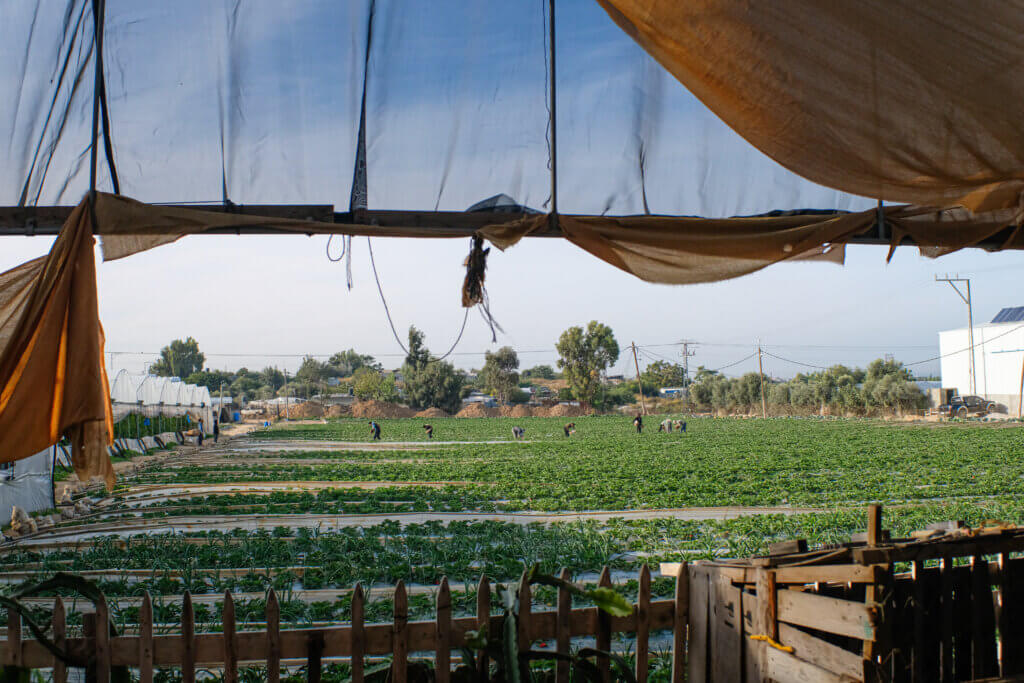

In recent years, farmers like every other person caged in the Gaza Strip, has been subjected to the cruel reality of the siege. Their inability to export their product outside the besieged Gaza Strip hurts them immensely since farmers are forced to sell the strawberry at very low prices since residents in Gaza lack the financial means to purchase strawberries at profitable prices for farmers; a quandary. Such circumstances of siege and financial constraints weaken the businesses and badly affect the agriculture sector and the economy in general.
Their luck has turned this year however, as the farmers have been be granted permission by Israeli authority to export their crop yields early in the season, headed towards markets in the West Bank and Israel. By exporting outside of Gaza, the entire equation changes, and they can sell at a much higher price leaving the farmers and the workers well compensated, which in turn boosts the agricultural sector of the town of Beit Lahia.
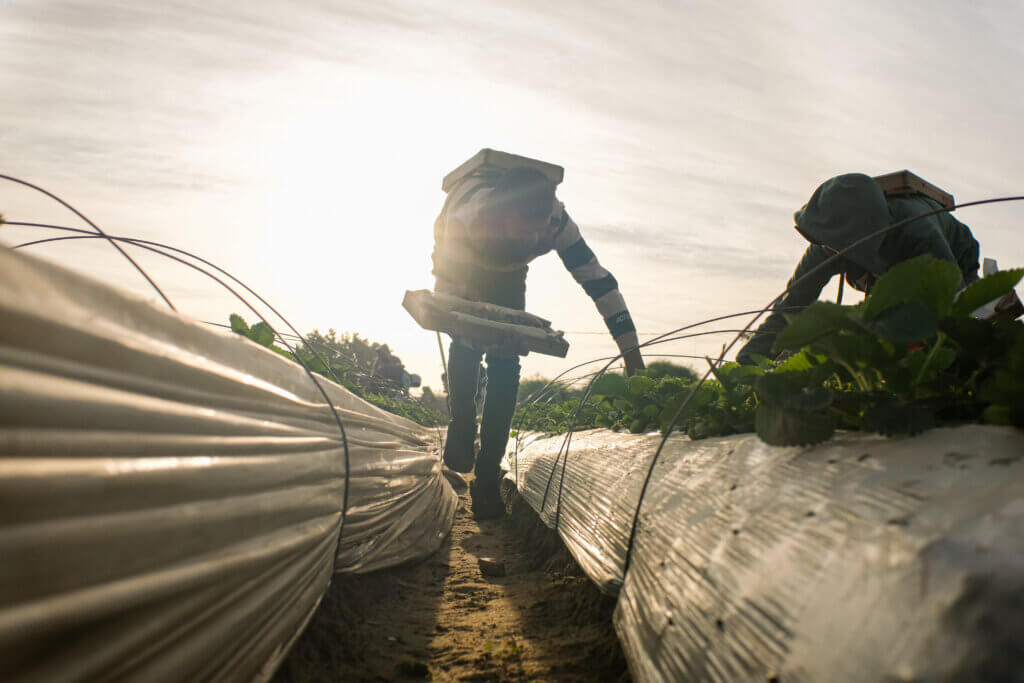
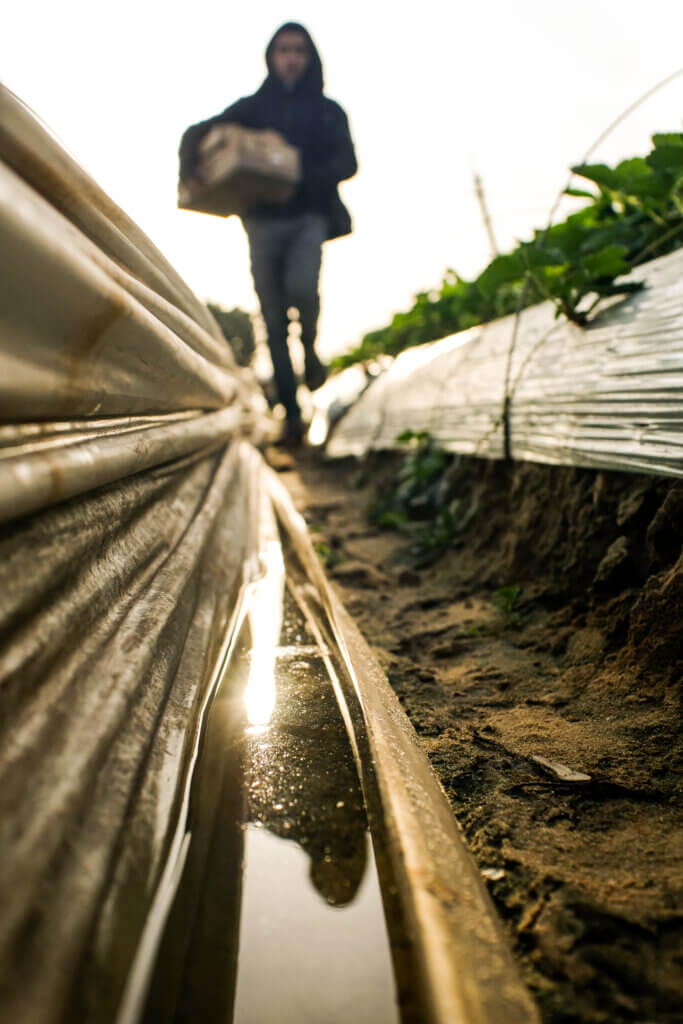
The issues we see faced by farmers during the strawberry season, and within the agriculture industry as a whole, is a microcosm of the struggle of Gaza’s people. The siege is crippling, and has plenty of human as well as economic consequences. A broken economy, empty pockets, and very little income join together to destroy the purchasing power of the people within the Gaza Strip as well as hinder the movement of products. They are left to do nothing but to ponder their reality and accept their losses. As the siege continues, so does the human crisis, it eats away at everything. If it is not strawberries, then its citrus, if it’s not agricultural, then it’s industrial products.


Mahmoud Nasser
Mahmoud Nasser is a documentary/street photographer born and raised in Gaza City. He was lucky to leave Gaza for Canada with his family during times of turmoil in 2008, but even luckier to see himself back in even worse times in 2021 after nearly 13 years of living abroad. His love for photography has seen him back in a place where many are literally dying to leave at the drop of a dime.
Ok, we’re talking food here:
The late celebrity chef Anthony Bourdain did a series “Parts Unknown” ( https://en.wikipedia.org/wiki/Anthony_Bourdain:_Parts_Unknown ) in which he travels to various places, samples the food, observes the culture and politics, etc. In season two there’s an episode “Jerusalem”, in which Bourdain visits a Jewish settlement, a restaurant run by a Jewish-Palestinian couple, and Gaza.
Watch the settlement segment very closely, watch Bourdain carefully as he questions the settlers.
He knew exactly what was going on.